Collectors who are new to VeVe often look at the floor first when browsing the Market. That makes sense: The lowest visible price seems like the quickest point of reference. But it is not enough to make informed decisions.
On the secondary market, fees, royalties, spread, demand, listing depth, and collector incentives all interact. This guide explains the reasons behind these mechanics without price predictions or promises of returns.
Disclosure: This article contains affiliate links. If you sign up through one of them, VeVe Insider may receive a commission at no additional cost to you.
TL;DR
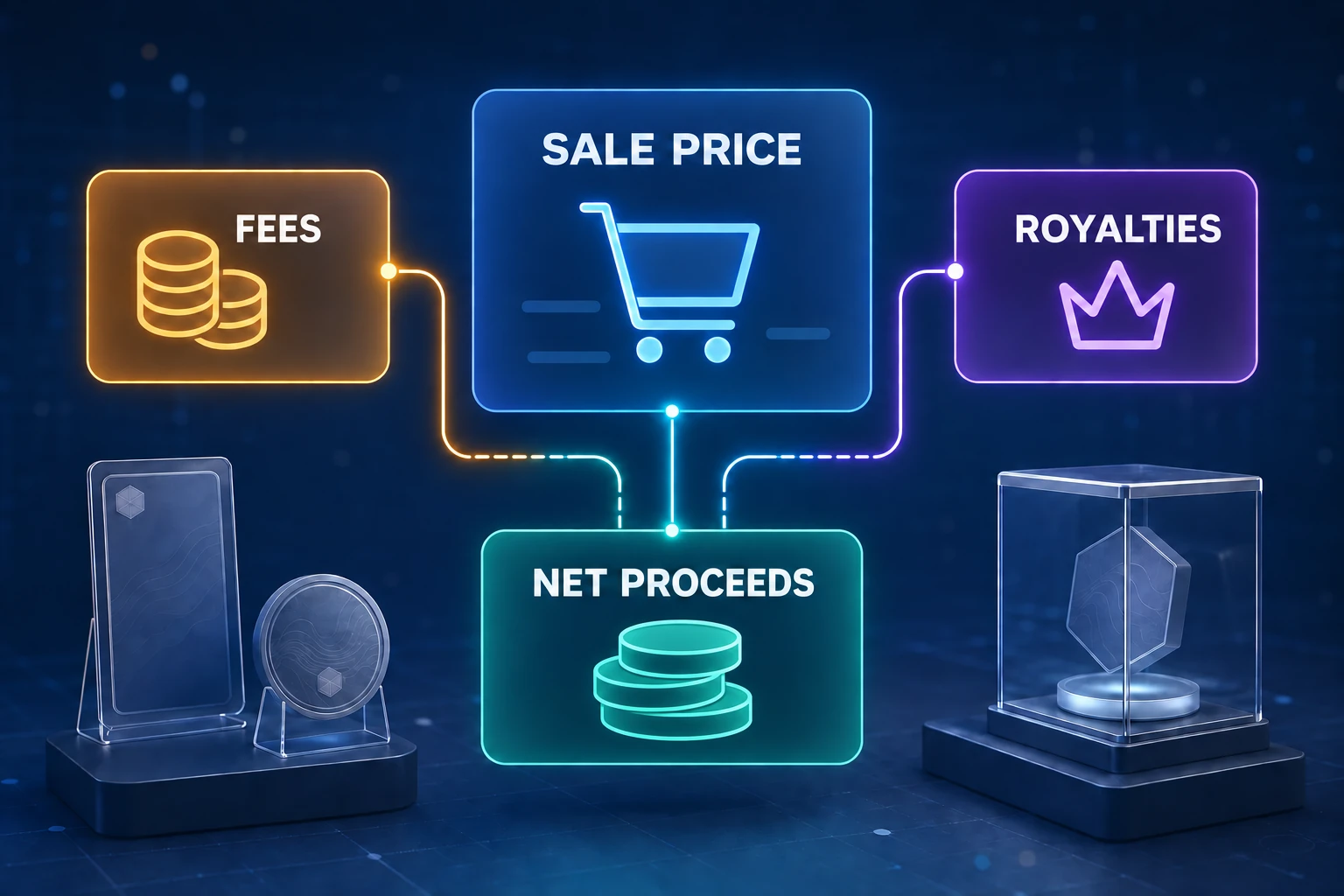
- Fees are not just “costs.” They are part of the market structure, helping fund platform operations, transaction processing, safeguards, and, in some cases, rights and licensing models.
- Royalties can allow rights holders or creators to share in secondary sales. At the same time, they affect how appealing quick flipping can be.
- Liquidity does not mean “the price is going up.” It means there are enough real buyers, sellers, and verifiable transactions that the market is not defined by a few isolated prices.
- Collector-first means defining your collecting goal, budget, and net cost before comparing listings.
Why do fees and royalties exist?
A digital marketplace involves more than simply “someone sells and someone buys.” The platform provides the app, Market, account systems, payment infrastructure, support, security checks, and listing infrastructure. Fees are one way to fund that infrastructure.
There is another consideration with digital collectibles: Many collectibles are based on well-known brands, characters, comics, or franchises. Royalties or similar revenue-sharing models can help rights holders, licensing partners, or creators continue to participate in secondary market sales after the initial sale.
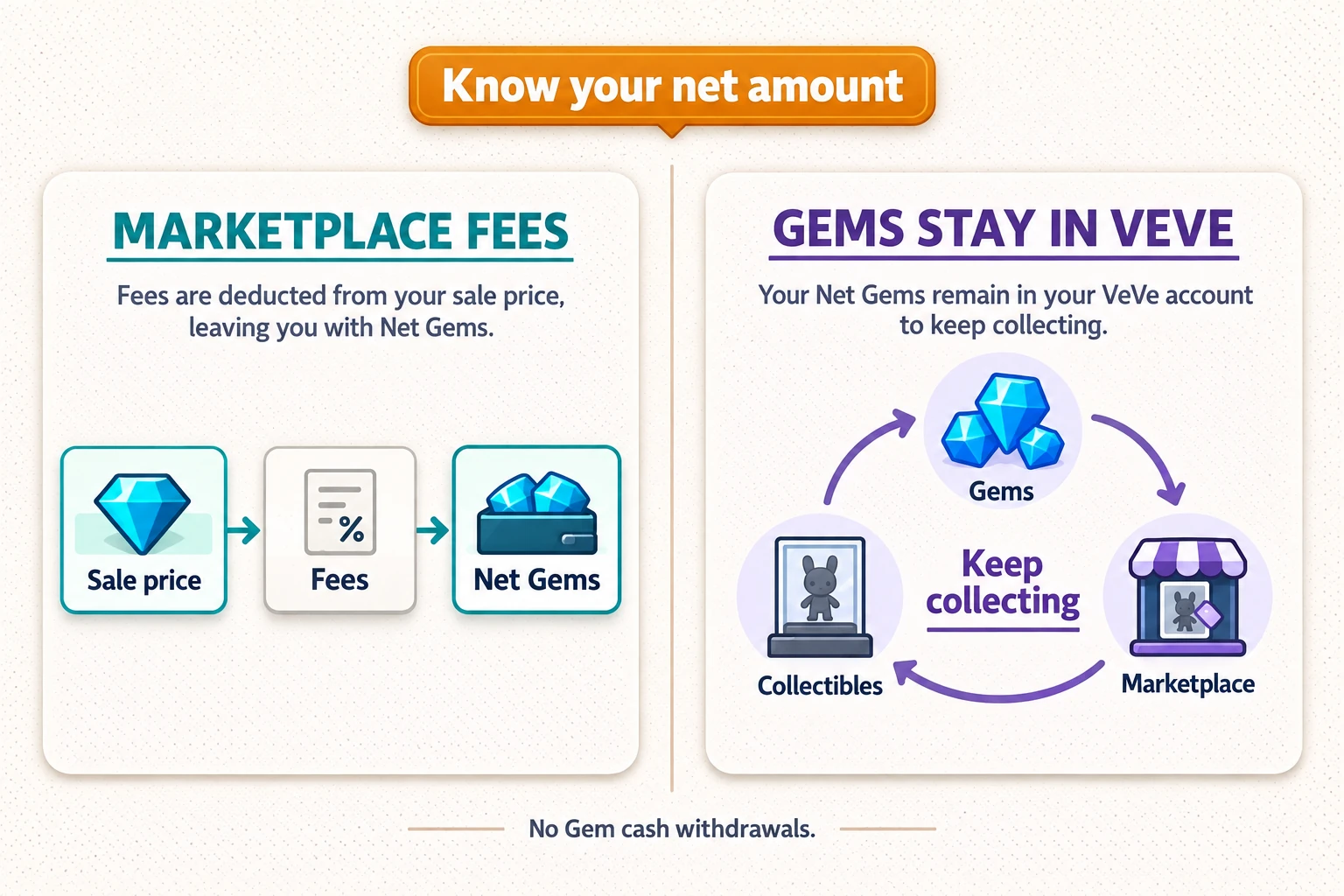
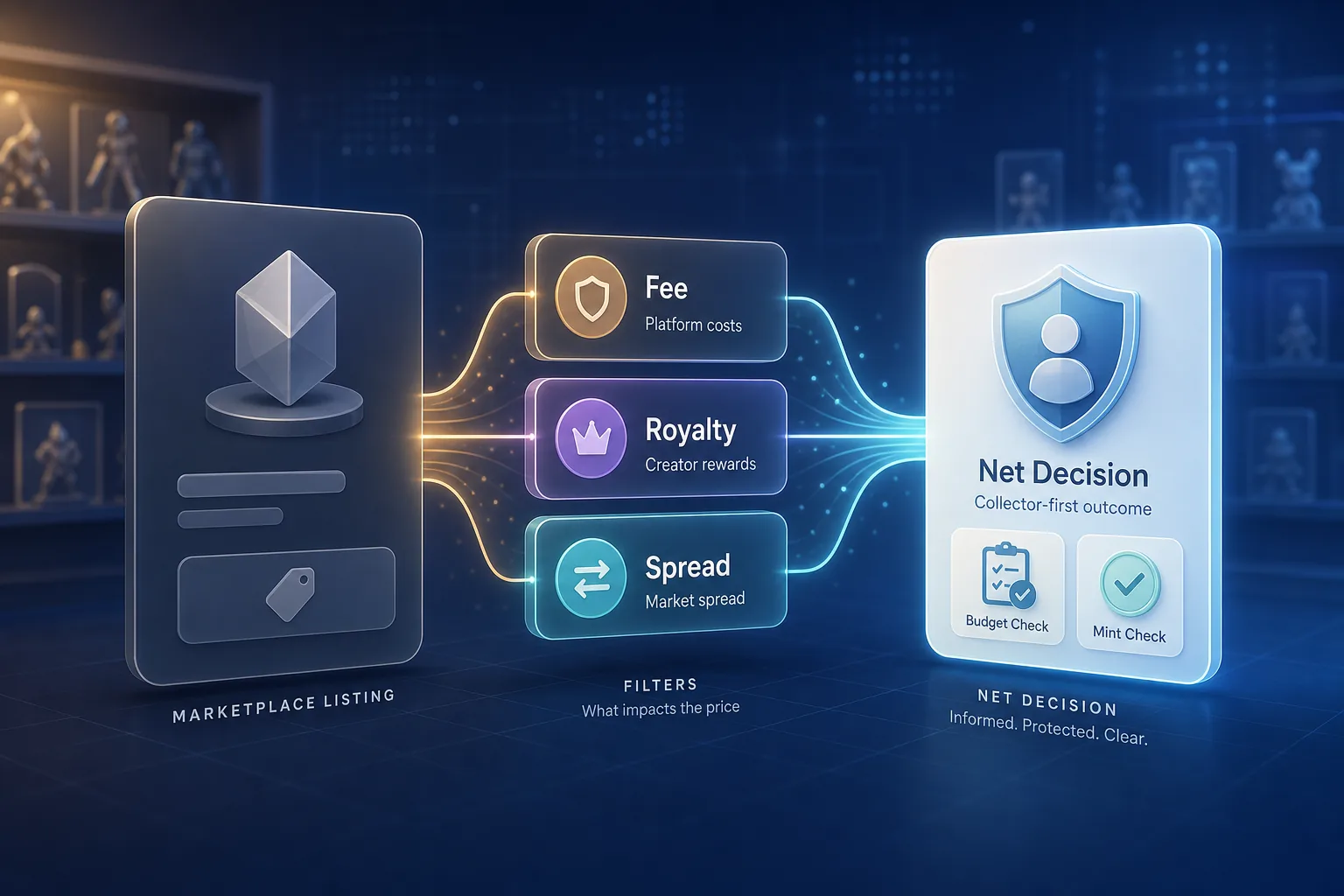
For collectors, the key point is that fees change the net calculation. The sale price is not automatically the amount you can ultimately use. If you want to explore the cost structure in more detail, read our guide to VeVe fees and costs next.
Fees are an incentive system, not just a deduction
Fees act like small speed bumps in the market. They make very short-term buying and selling less attractive because every trade can incur costs. That matters to flippers, but also to collectors who buy too quickly by mistake and want to sell again soon afterward.
That does not mean fees are “good” or “bad.” They simply change the calculation. Someone who genuinely wants to collect an item will evaluate it differently from someone hoping for a quick resale.
Here is a simple example without specific numbers: If you buy an item and immediately sell it again, the market movement first has to offset the fees, spread, and potential price differences. That short-term friction matters less for a favorite piece you intend to hold long term.
Flipping vs. collecting: two completely different perspectives
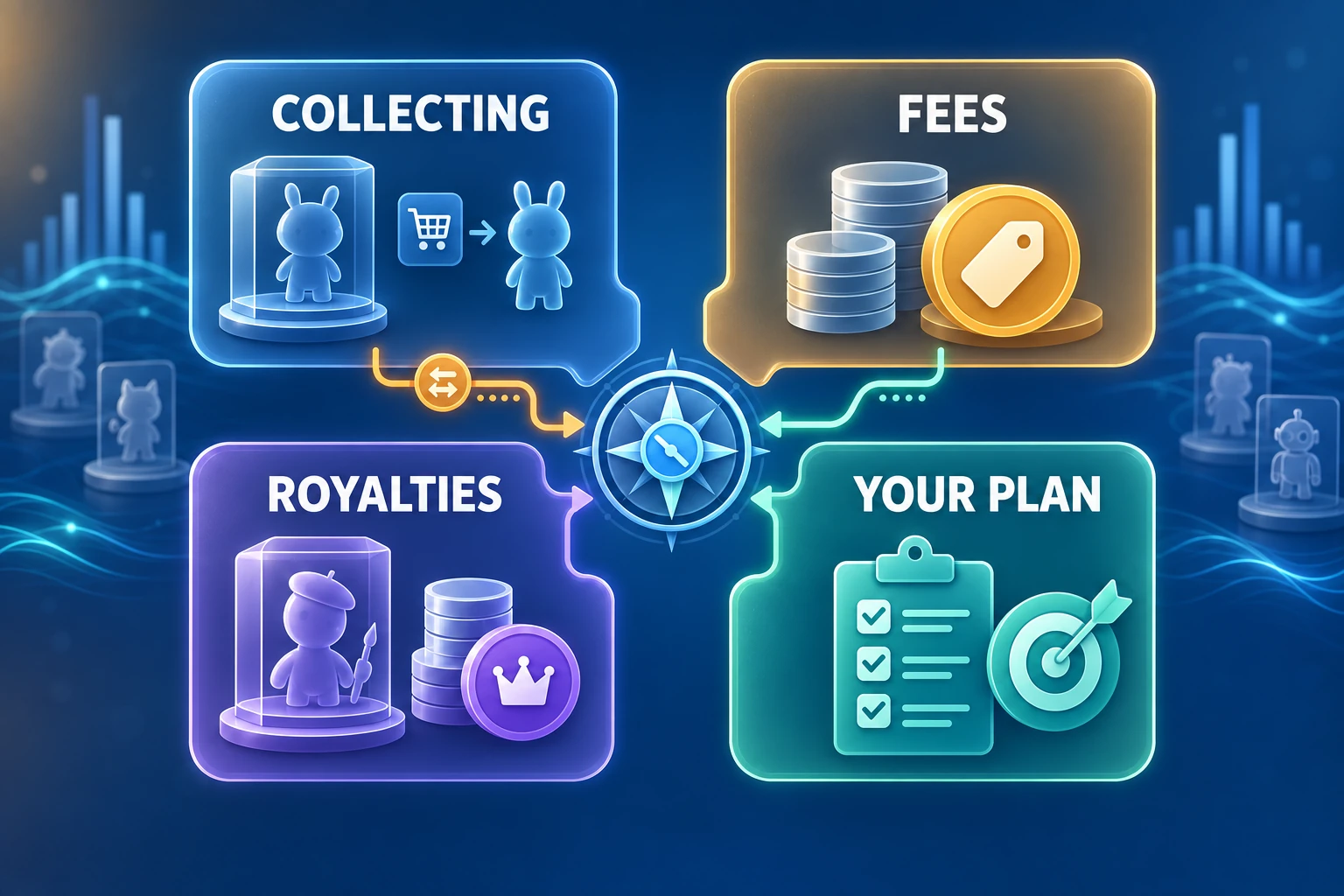
Flipping focuses on speed, scarcity, attention, and timing. Collecting focuses on personal relevance, set goals, favorite IP, display value, long-term enjoyment, and budget control. Both perspectives can be present in the Market, but they lead to different decisions.
A flipper asks, “Can I get out again quickly enough?” A collector asks, “Does this item fit my collection, budget, and plan?” That is exactly why two users can evaluate the same listing very differently.
Problems arise when beginners mix the two perspectives. Someone who wants to collect but acts like a flipper because of FOMO will often buy too quickly. Someone who wants to trade but ignores fees, spread, and liquidity will underestimate the difficulty of exiting a position.
How royalties can influence behavior
Royalties mean that secondary sales do not take place solely between a buyer and seller. Part of the market structure may be tied to rights, creators, or licensing models. Collectors should view this layer objectively as part of the total cost.
The more a market is designed around long-term collecting, the more important a healthy balance becomes: Creators and licensing partners should not be completely excluded from secondary sales, while buyers still need fair, transparent costs. Each platform approaches this balance differently.
If you are interested in comparing other platforms, see our checklist covering NFT marketplaces, fees, security, and liquidity. It takes a broader look at how collectors can compare marketplaces systematically.
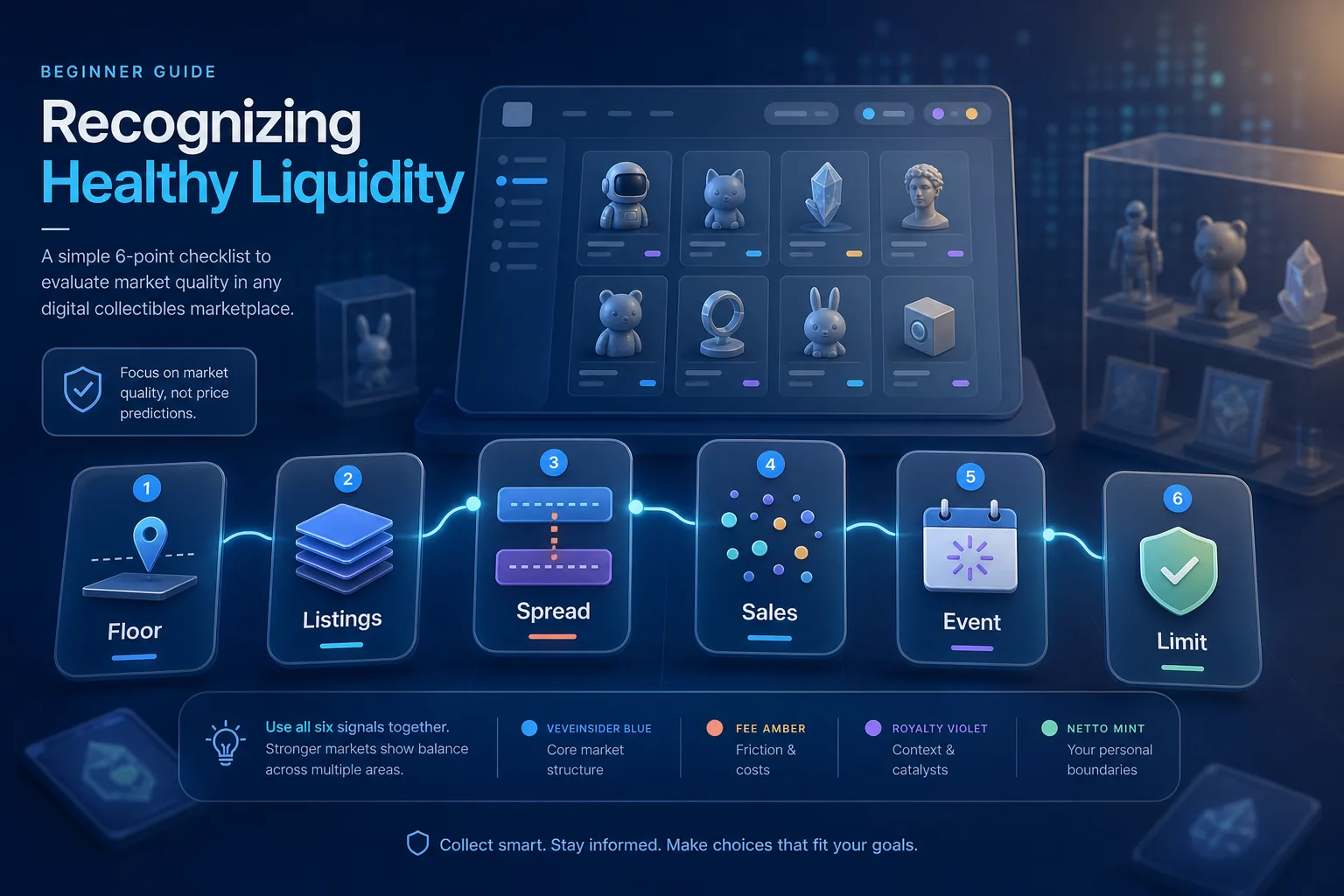
How to identify healthy liquidity without making price predictions
Liquidity is often misunderstood. It does not mean that a collectible “has to go up.” Healthy liquidity means you can more realistically assess whether active buyers and sellers are present and whether a price range is supported by more than one isolated listing.
A single low floor can be misleading. It could be an outlier, a quick sale, an error, or one seller under pressure. The picture becomes more meaningful when several listings sit within similar price ranges and sales occur more than sporadically.
Quick check for healthier liquidity
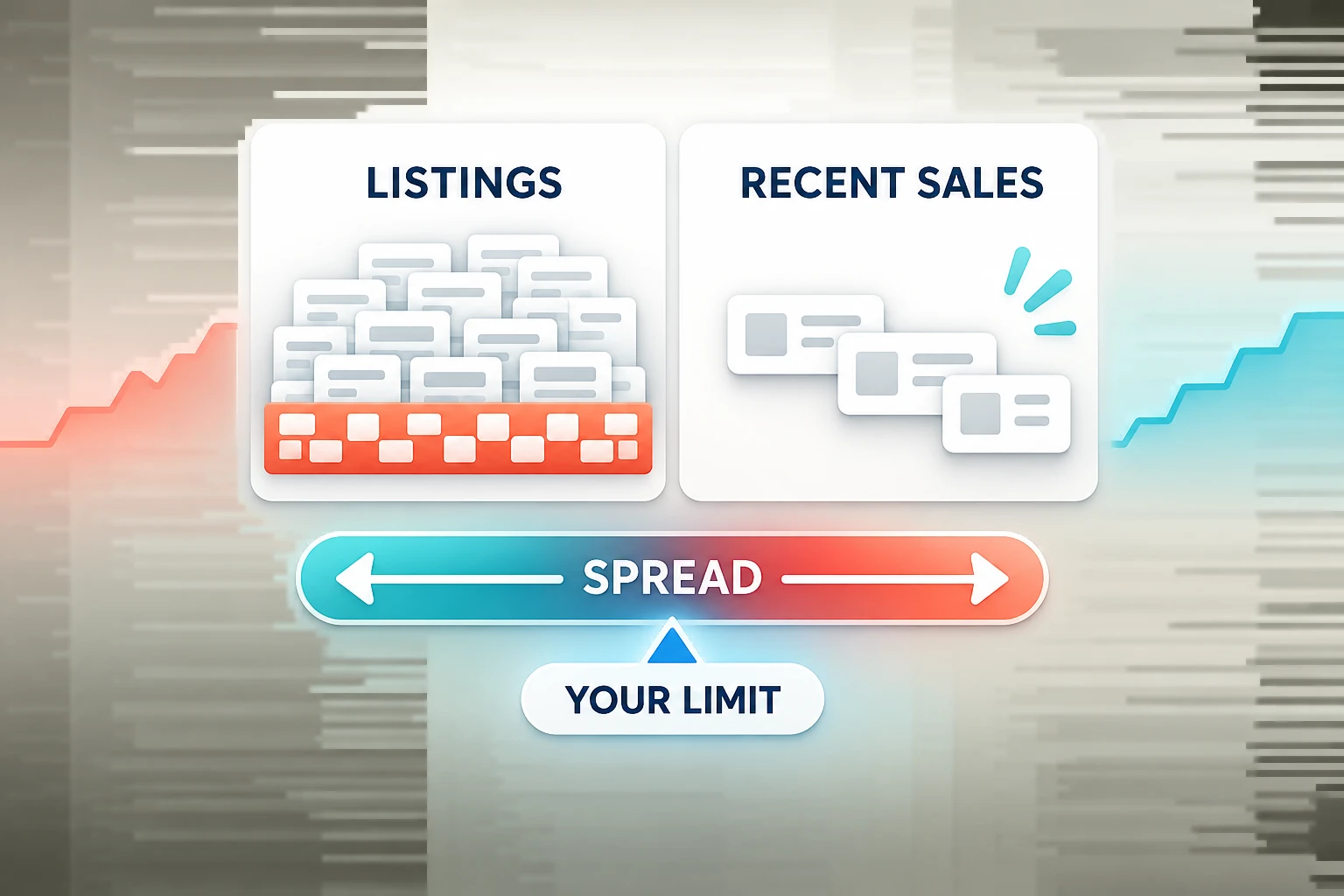
- Check listing depth: Are many listings priced close together, or is there a large gap immediately above the floor?
- Watch the spread: How far apart are the lowest available listings and realistic resale expectations?
- Look for activity, not asking prices: Are there verifiable sales, or just many listings with no movement?
- Consider the edition and target audience: A broadly appealing item from a major fandom behaves differently from a highly specialized niche piece.
- Separate event effects: Drops, crafting events, or airdrop speculation can temporarily create more activity that later cools off.
For a broader introduction to the VeVe Market, see our VeVe Market guide to buying, selling, risks, liquidity, and timing.
Key terms explained
Floor price
The floor price is the lowest currently visible listing price. It is a signal, but not a complete measure of market value. In thin markets especially, a single listing can significantly distort the picture.
Spread
The spread describes the gap between the price at which you can buy quickly and the price at which you could realistically sell quickly. The wider the gap, the more expensive impatience becomes.
Thinking in net terms
Thinking in net terms means accounting for fees, royalties, potential deductions, and practical usability. A gross listing price often looks simpler than the calculation behind the actual decision.
Royalties
Royalties are a share of secondary sales. In a collecting context, they are part of the market structure and should not be evaluated in isolation, but alongside fees, demand, and your personal goals.
Closed loop
With in-app currencies, it is important to distinguish between your balance, collectible purchases, and payout expectations. In the VeVe context, it is worth reviewing the VeVe Gems Terms explained in plain English so you do not automatically treat Gems like freely withdrawable cash.
Collector checklist: before every Market purchase
- Collecting goal: Am I buying for a set, an IP, a favorite design, or only because of FOMO?
- Budget: Would I still be comfortable with this purchase if the price falls later?
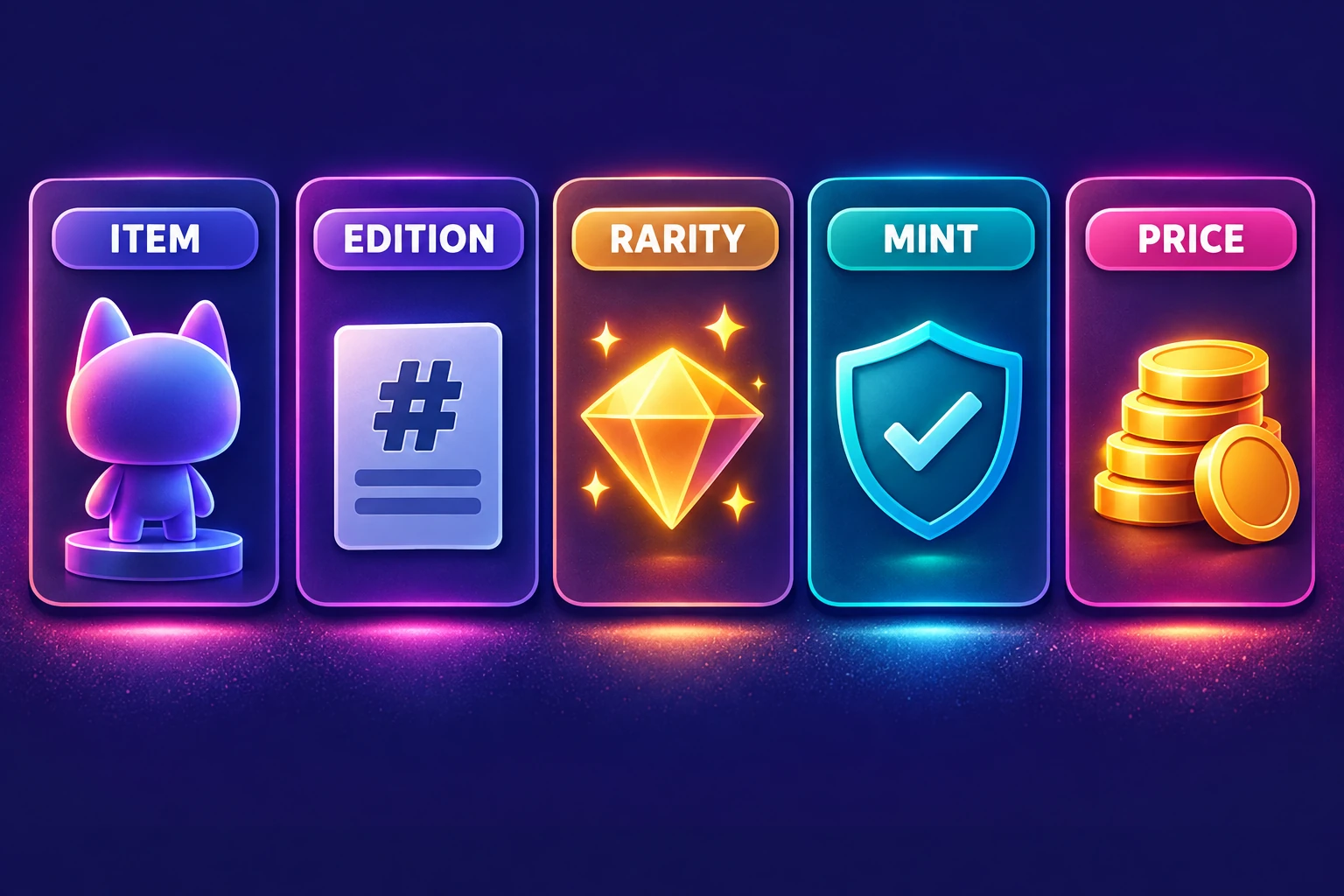
- Listing details: Have I carefully checked the edition, rarity, mint number, series, and item type?
- Fees: Do I understand that the amount from a later sale will not equal the gross listing price?
- Liquidity: Are there multiple similar listings and signs of actual demand?
- Timing: Am I buying during a hype cycle, immediately after a Drop, challenge, or event?
- Rules: Have I checked current in-app notices, eligibility requirements, and terms before reacting to rumors?
Common secondary market mistakes
Mistake 1: Confusing the floor with fair value
The floor is only the lowest visible listing. It does not automatically tell you how many buyers are active at that price or whether the price will remain stable. The floor can fluctuate significantly, especially for collectibles with few listings.
Mistake 2: Not noticing fees until you sell
Many beginners consider only the entry price when buying. Later, they realize that selling and reinvesting require a net calculation. Accounting for fees in advance can lead to calmer decisions.
Mistake 3: Confusing event hype with lasting demand
Drops, upgrades, challenges, or social media discussions can generate a burst of short-term activity. That does not automatically translate into long-term liquidity. Ask yourself: Would I still want to hold this item without the current hype?
Mistake 4: Treating off-market offers as a shortcut
If a deal outside official channels sounds better than the Market, proceed with caution. With digital collectibles in particular, DMs, fake links, and unverifiable payment methods create unnecessary risk. Use official app and support channels, and carefully verify any security-sensitive action.
Beginners may also benefit from our guide to common VeVe beginner mistakes and how to fix them. Many Market problems are caused not by a lack of pricing knowledge, but by stress, impatience, and unclear processes.
Why good incentive systems can protect collectors
A healthy market should not be designed solely to maximize trading speed. Collectors need items to be listed clearly, rights and rules to be understandable, fees to be sufficiently transparent, and fraud to be made as difficult as possible.
Fees and royalties can play a stabilizing role because they do not reward every small trade. At the same time, they should not be so opaque that users cannot understand their net position. The best approach is therefore neither to ignore nor condemn fees, but to consciously include them in every decision.
How to make better decisions without price predictions
You do not need to predict where a collectible will be priced in a few weeks or months. Instead, you can decide whether the purchase fits your goals today. This takes pressure off the decision and helps prevent you from turning every Market movement into a story.
- For collectors: Set clear priorities, such as a favorite IP, completing sets, display value, or personal enjoyment.
- For budget-conscious buyers: Use firm limits and let listings pass when they are not a good fit.
- For market watchers: Monitor spreads, listing depth, and activity without turning them into price promises.
- For newcomers: Take small, easy-to-understand steps and document your purchases instead of acting under time pressure.
If you also want to understand whether an item purchased from the Store or Market may be eligible for future features, read our guide to Store Only vs. Marketplace Eligible. For crafting, airdrops, or rewards in particular, the terms may matter more than the lowest purchase price.
FAQ: VeVe fees, royalties, and liquidity
Are lower fees always better?
Not automatically. Lower fees can make trading less expensive, but fees are only one part of evaluating a platform. Security, user experience, support, licensing clarity, and liquidity also matter.
Do royalties make a collectible less appealing?
It depends on your goal. Additional costs can be noticeable for very short-term trading. For collectors holding an item because of its IP, design, or place in a set, royalties play a different role.
Is a high floor a sign of healthy liquidity?
Not necessarily. A high floor can also mean that few sellers are listing or that there is very little actual activity. Healthy liquidity is better indicated by multiple realistic listings, verifiable demand, and a narrower spread.
Can liquidity checks predict price movements?
No. Liquidity checks help you better assess market quality. They are not a substitute for a prediction and do not constitute financial advice.
What is the most important tip for beginners?
Think in net terms and put collecting first. Do not buy only because the floor looks low. Buy when the item, budget, rules, and your collection all align.
Conclusion: The secondary market rewards patience
Fees, royalties, and liquidity are not minor details. They shape how users behave in the market, how appealing quick flipping is, and how well collectors can distinguish genuine opportunities from short-term noise.
If you want to understand the VeVe secondary market, do not start by guessing prices. Start by asking what your goal is, which costs actually matter, and whether a segment of the market has enough activity to be supported by more than a few isolated outliers.