At first glance, VeVe auctions sound simple: bid, wait, win. In practice, however, most mistakes happen when users confuse two different systems: the standard Marketplace auction in the VeVe app and the Silent Auction for VeVe Artworks in the web app.
This guide clearly separates the two formats. You will not find price predictions or bidding recommendations here, but reliable guidance: which rules apply, when you need to pay, why timers can be confusing, and what to do if you think you won but do not see a confirmation.
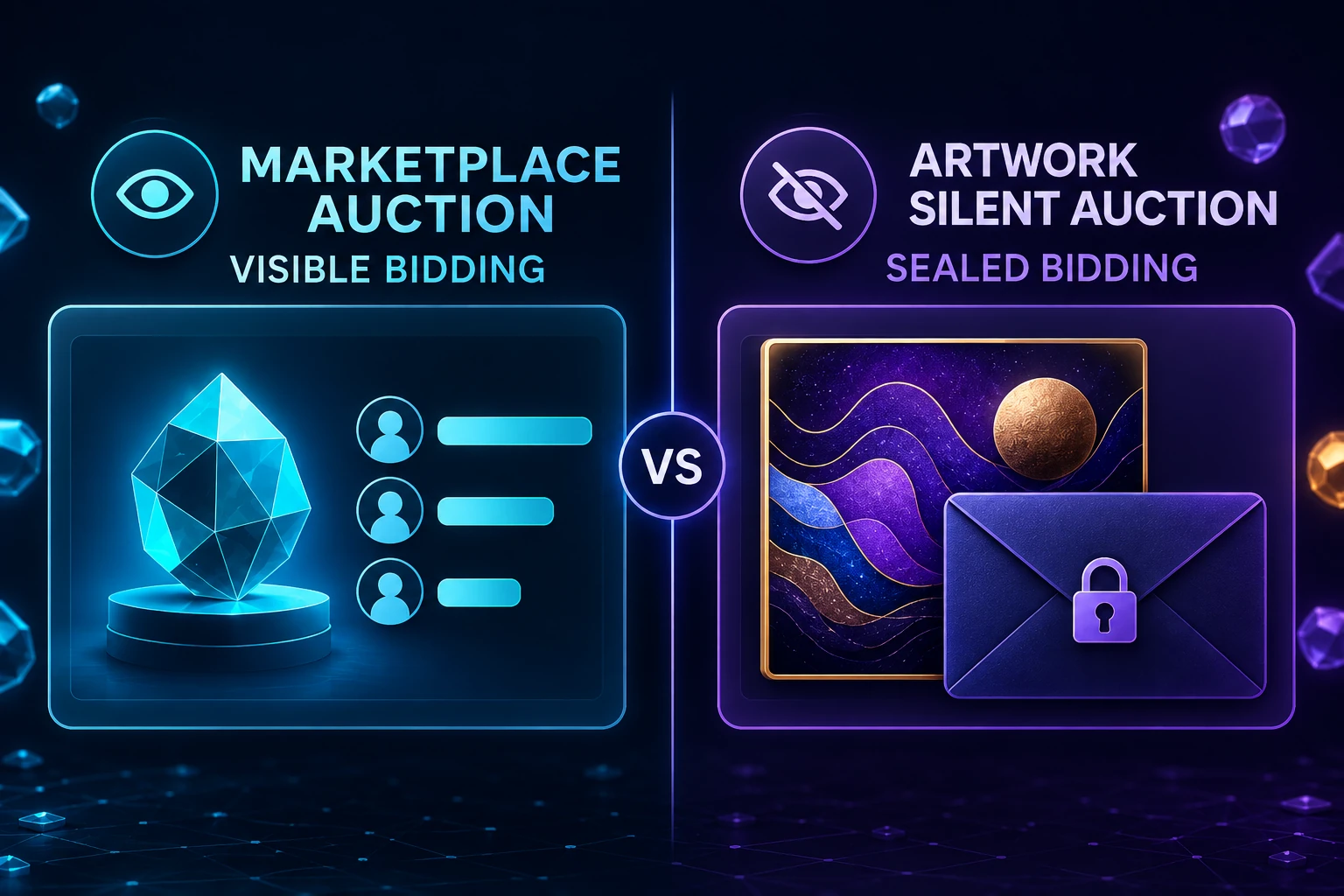
TL;DR: Standard Marketplace auctions are open-bid auctions on the secondary market. VeVe describes them as 24-hour auctions that display the current highest bid and time remaining. Silent Auctions for Artworks work differently: bids are hidden, typically run for four days, allow only one active bid per Artwork, have a cooldown for changes, and lock bids during the final hour. According to VeVe, an Artwork winner has 24 hours to pay; if the winner does not pay, the Artwork may be offered to the second-highest bidder.
Why VeVe auctions are easy to misunderstand in 2026
The term “auction” does not always mean the same thing on VeVe. Marketplace auctions involve secondary market listings for collectibles, comics, or Artworks that users are selling from their collections. Silent Auctions for Artworks, by contrast, feature highly limited digital artwork, often 1-of-1 pieces or small editions, auctioned through the web app.
The problem is that both formats use Gems, both end with a winner, and both create time pressure. However, bid visibility, payment rules, options for changing bids, and the consequences of nonpayment differ. Collectors who bid based only on community comments may mismanage their Gems, miss deadlines, or put their Market access at risk.
If you are still getting familiar with VeVe overall, start with What Is VeVe?. For the practical side of the Market, the VeVe Marketplace Guide is also useful because auctions are only one part of the secondary market.
Marketplace auctions in the VeVe app: visible, short, and market-driven
The standard Marketplace auction is the format many users encounter first. Instead of listing an item at a fixed price, a seller lists it as an auction. Buyers can see the current highest bid and the remaining time, allowing them to decide whether they want to keep bidding.
VeVe describes Marketplace auctions in 2026 as 24-hour auctions. The highest bid wins when the auction ends, and payment is handled in Gems. One important point for sellers: according to VeVe’s description, once a bid has been placed, an auction can no longer be freely edited or stopped. There is no room for a spontaneous change of heart; it is a binding Market process within the platform.
Common Marketplace pitfalls
- Looking only at the floor: The floor price is not automatically fair value. The spread, actual sales, rarity, edition, and demand all matter.
- Trying to outbid someone in the final seconds: Open-bid auctions can easily create the urge to snipe. That may lead to bids that no longer fit your budget.
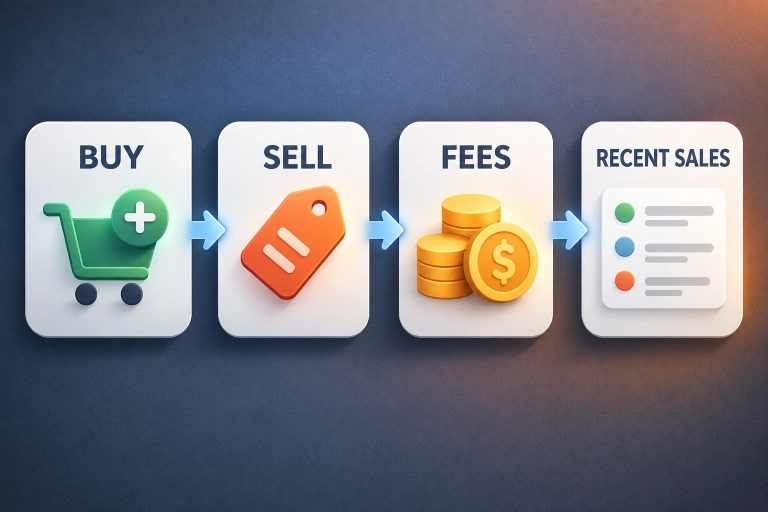
- Overlooking fees: Before listing, sellers should check how much they will receive after fees and royalties. For more detail, see our guide to secondary market fees and royalties.
- Confusing a Marketplace auction with an Artwork Silent Auction: Bid visibility, duration, and payment consequences are not the same.
Silent Auctions for VeVe Artworks: hidden, more strategic, and less frantic
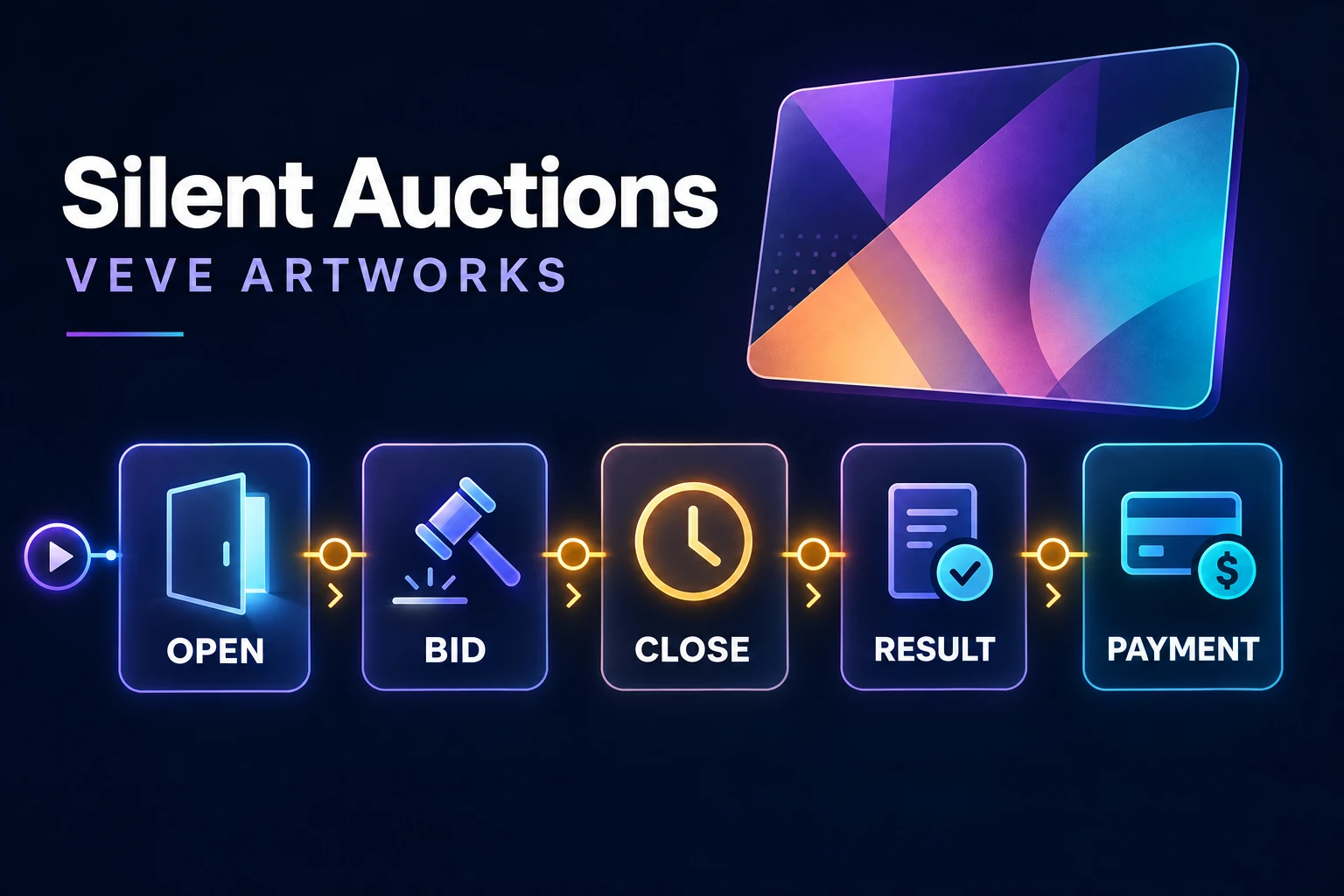
Silent Auctions for VeVe Artworks work very differently. According to VeVe’s introduction to Artworks, bids are hidden: you cannot see what other collectors are bidding. This shifts the strategy away from real-time outbidding and toward an honest question: What is the most this Artwork is worth to you?
VeVe generally specifies a four-day bidding window for these Artwork auctions. You can have only one active bid per Artwork. If multiple editions are available, you must choose one edition rather than placing multiple active bids on the same Artwork at the same time.
According to VeVe, bids can generally be changed or withdrawn, but not as often as you like. A three-hour cooldown applies to changes. Bids cannot be changed during the final hour before the auction ends. That final hour is one of the most important pitfalls because it eliminates the option to “make one quick adjustment” at the end.
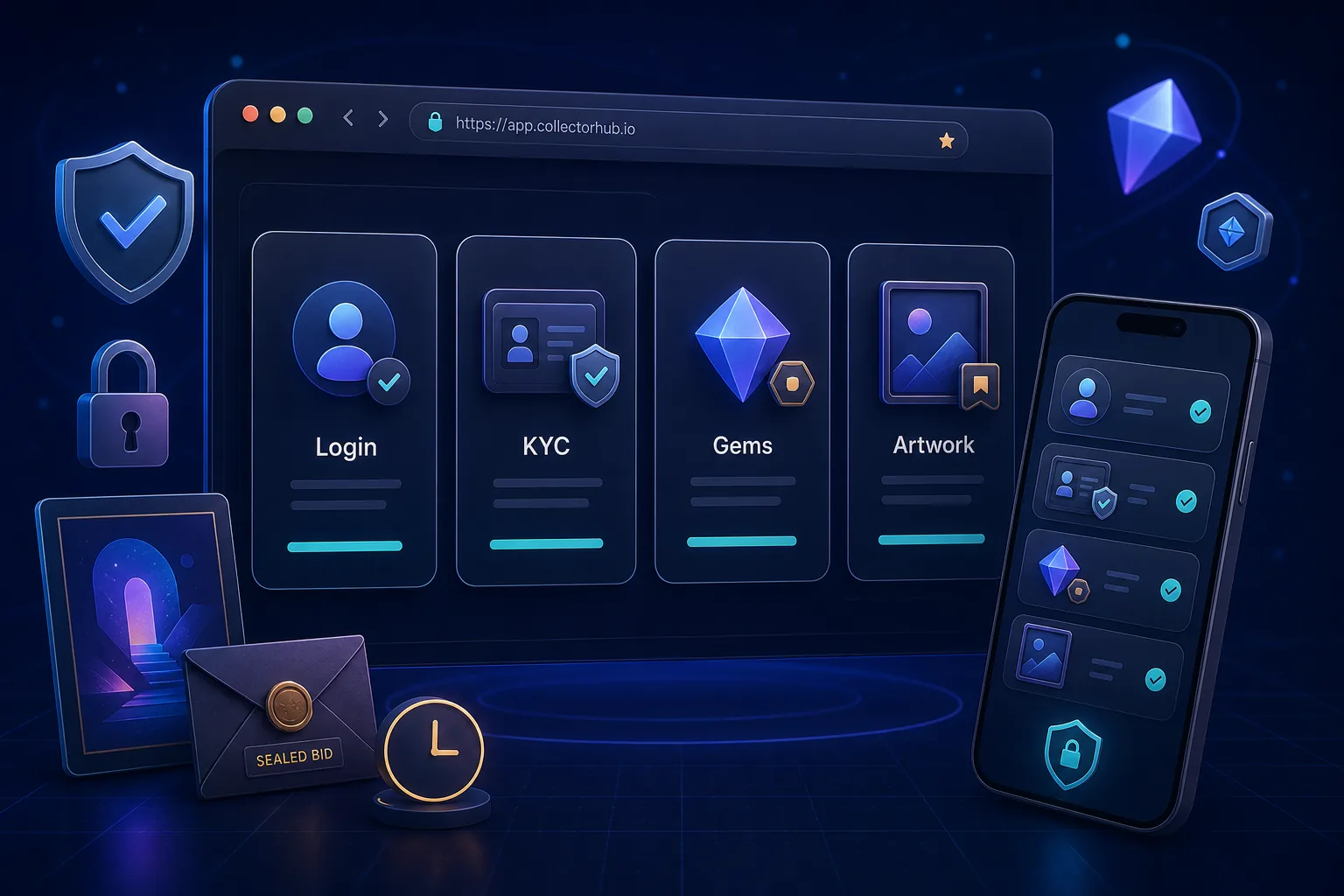
Real-world example: Artwork auctions in February 2026
One useful example from 2026 is the VeVe Artworks page featuring several 1-of-1 auctions. These included Marvel Artworks by Nicoletta Baldari for Fantastic Four #8, with a Silent Auction window from February 9 through February 13, 2026. Dynamite Artworks – Frank Thorne Red Sonja #5 was also listed with a window from February 23 through February 27, 2026, both through the VeVe Web App.
Why does this matter? These examples show the practical difference from standard Marketplace auctions: they are not arbitrary 24-hour listings created by users, but curated Artwork auctions with their own process, dedicated detail pages, and private bidding format.
The key difference: visible highest bid vs. hidden maximum bid
In a Marketplace auction, you react to visible signals: the current bid, time remaining, and the broader Market. A Silent Auction removes that signal entirely. You cannot know whether you are narrowly ahead, far behind, or bidding unnecessarily high.
For collectors, that can actually be an advantage. Instead of being pulled into a visible bidding war, you can set a personal maximum in advance. That maximum should reflect your interest as a collector, not the fear of missing out on a 1-of-1.
If you want a more structured way to evaluate whether a digital collectible or Artwork belongs in your collection, see the framework for collector-worthy digital collectibles. With Artworks in particular, “Do I want to own this long term?” is often a better question than “What might someone else pay for it later?”
Payment and nonpayment: where it gets serious
According to VeVe, if you win a Silent Auction for VeVe Artworks, you will be notified in the web app and by email and will have 24 hours to pay for the auction. If the winner does not pay, the piece is not simply handled like a standard in-app auction; it may be offered to the second-highest bidder.
For standard Marketplace auctions, the process has historically been a frequent source of debate in the community: users have reported outstanding payments, incomplete purchases, and temporary Market restrictions. In 2026, do not rely on old forum rules. Check the app and official notices to see what applies to your specific transaction.
The safest principle remains the same: bid only if you intend to pay and are able to do so. Bidding without checking your Gems, payment method, or account status treats a binding bid like a casual watchlist entry. That is where many problems begin.
Timer myths: “Closed” does not always mean “everything is complete”
A common myth is that the moment a timer changes to “closed,” it is immediately clear who won and what happens next. It is not always that simple. Particularly with web app auctions, there may be a difference between the visible end of the auction, internal processing, notification, and the payment window.
That does not mean you should refresh the page in a panic. It simply means you should treat the timer as the end of the auction, not automatically as complete delivery or payment confirmation. The notification, email, web app status, and specific payment request are what matter.
If community members claim that an auction is “already closed” or “should have finished by now,” check your own official displays first. Screenshots showing the time, item details, bid status, and email inbox are more useful than a chat thread full of speculation.

Quick start: How to prepare for a VeVe auction

1. Check the format first
Is it a standard Marketplace auction in the app or a Silent Auction for Artworks in the web app? This distinction determines the duration, bid visibility, and what happens after the auction ends.
2. Check your account and KYC
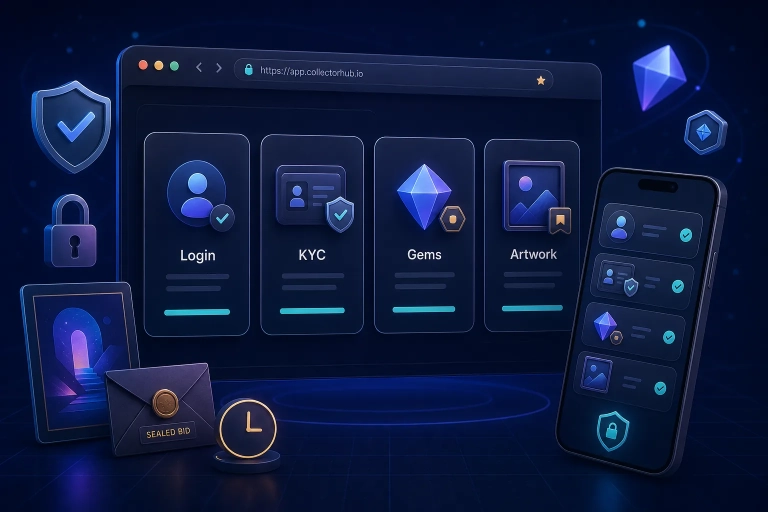
A restricted or improperly verified account is the wrong starting point for a time-sensitive transaction. For identity verification and common issues, see the VeVe KYC Guide 2026.
3. Prepare your Gems and payment method
Do not wait until the final minute to arrange your Gems. App store fees, web purchases, declined payments, or regional restrictions can take time to resolve. If you are buying Gems, first read the comparison Buying Gems: Website vs. App.
4. Set your maximum bid in advance
Write down your limit before you bid. This is especially important in Silent Auctions because you cannot see competing bids. In Marketplace auctions, it protects you from an impulsive final bid.
5. Save your documentation
Make a note or take screenshots of the auction page, bid confirmation, time remaining, item details, Gem balance, and later notifications. For support cases, clear documentation is often more valuable than a general description. The guide to VeVe receipts and proof of purchase explains what is worth saving.
Common mistakes collectors should avoid
- Missing the final-hour rule for Artworks: Once you can no longer change your bid, it is too late to make corrections.
- Misunderstanding the one-active-bid rule for Artworks: If multiple editions are available, you must choose one. “Bidding a little on everything” does not work there as you might expect.
- Ignoring the entry fee: According to VeVe, some Artwork auctions may require an entry fee. It may be nonrefundable regardless of whether you win. Always check the specific auction page.
- Treating Gems as cash that can be withdrawn: Gems require particular care in the VeVe ecosystem in 2026. Read VeVe Gems Terms Explained Simply for more information.
- Looking for off-Market deals as a solution: If an auction goes wrong, DMs, external payments, or private arrangements are not a safe solution. Use official app, web app, and support channels.
Troubleshooting: You think you won but do not see a confirmation
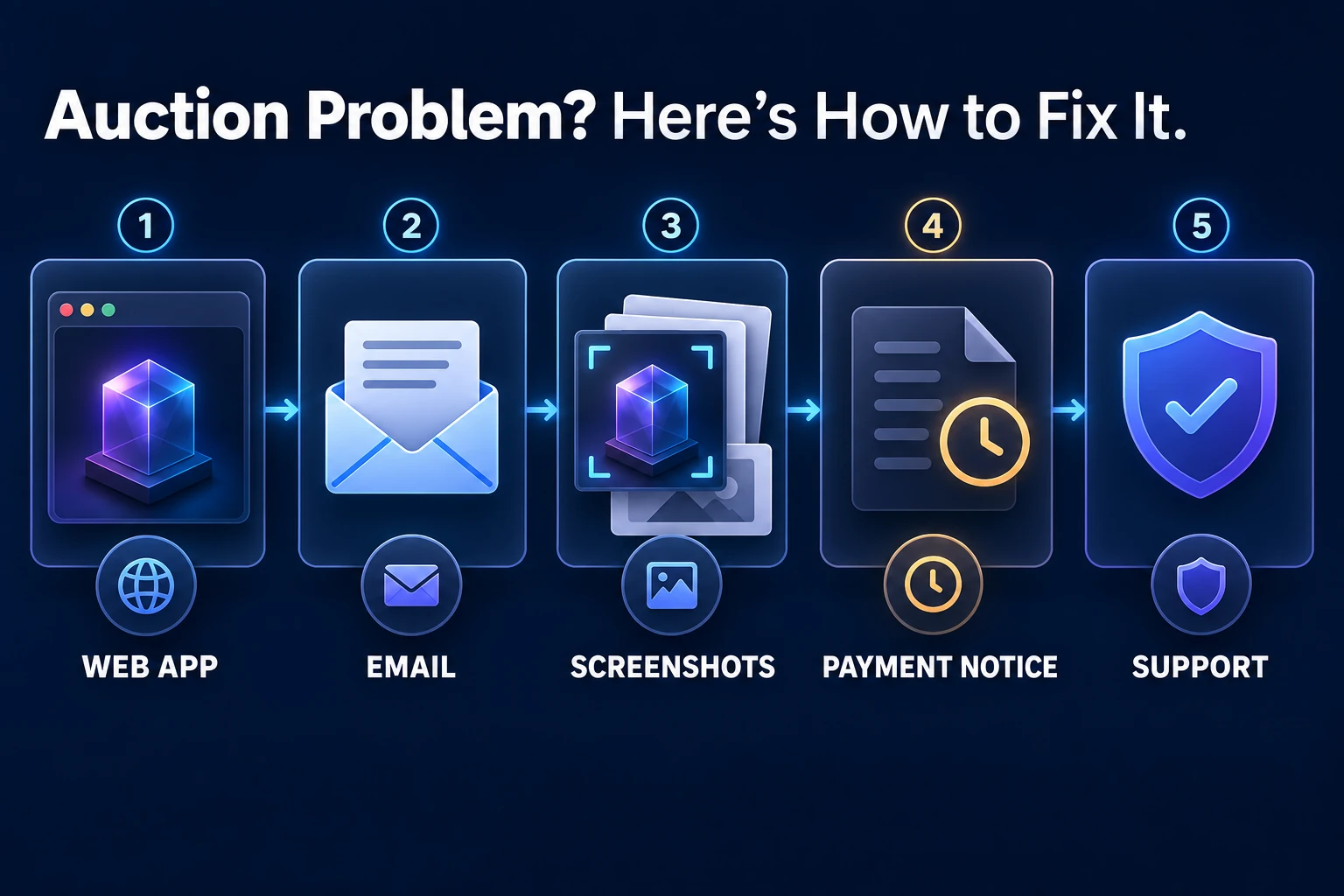
First, stay calm. With Artworks, there may be a short delay between the visible end of the auction and the notification. Check the web app, your email inbox, spam folder, and the status on the auction page.
If you see a payment request, watch the deadline and pay only through the official process. If you do not see a confirmation but believe you won, collect screenshots and do not wait until shortly before a possible deadline to contact support.
If your account appears restricted, do not log in through links sent by DM or create a second account to bypass the restriction. Instead, take a structured approach: document the status, check the official app or web app, and submit a support ticket with the basic details. Learn more in the immediate action plan for Restricted Access and disabled accounts.
Key terms explained
- Marketplace auction: An auction on the secondary market where users list items from their collections.
- Silent Auction: A sealed-bid auction where other bids are not visible.
- Artwork: On VeVe, usually a highly limited piece of digital artwork, often classified as an Artist Proof or 1-of-1.
- Cooldown: The waiting period before you can change or withdraw a bid.
- Payment window: The period after winning in which you must complete the purchase.
- Market restriction: A restriction on Market access that may occur following rule violations or problematic transactions.
VeVe Auctions 2026 FAQ
Can I see whether I am in the lead in a Silent Auction?
No. The defining feature of a Silent Auction is that bids are hidden. Instead of trying to “read” other bidders, set your own maximum bid in advance.
Can I change my Artwork bid at the last minute?
According to VeVe, bids cannot be changed during the final hour before the auction ends. A cooldown for changes also applies before then. Do not plan on making a last-minute adjustment.
What happens if the winner of an Artwork Silent Auction does not pay?
VeVe states that if the winner does not pay, the piece may be offered to the second-highest bidder. This distinguishes the format from a standard in-app auction.
Should I buy Gems before bidding?
You should at least make sure you have a realistic payment method and can meet the deadline. However, do not buy Gems out of panic. Base the decision on your set limit and collecting goals.
Is a VeVe auction an investment opportunity?
This guide looks at auctions from a collector’s perspective. Prices can rise or fall, liquidity may be limited, and there is no guarantee of resale or profit. Bid only if you are comfortable owning the item as a collector.
Conclusion: Bid like a collector, not a timer chaser
The biggest advantage comes from recognizing the correct format. Marketplace auctions are visible Market processes with a short duration. Artwork Silent Auctions are sealed, curated auctions with their own rules, payment window, and clear restrictions on bid changes.
The best strategy is straightforward: check your account, plan your Gems realistically, set a limit, save your documentation, and use only official channels. This approach reduces stress and helps you avoid the common pitfalls that repeatedly come up in community discussions.
Sources