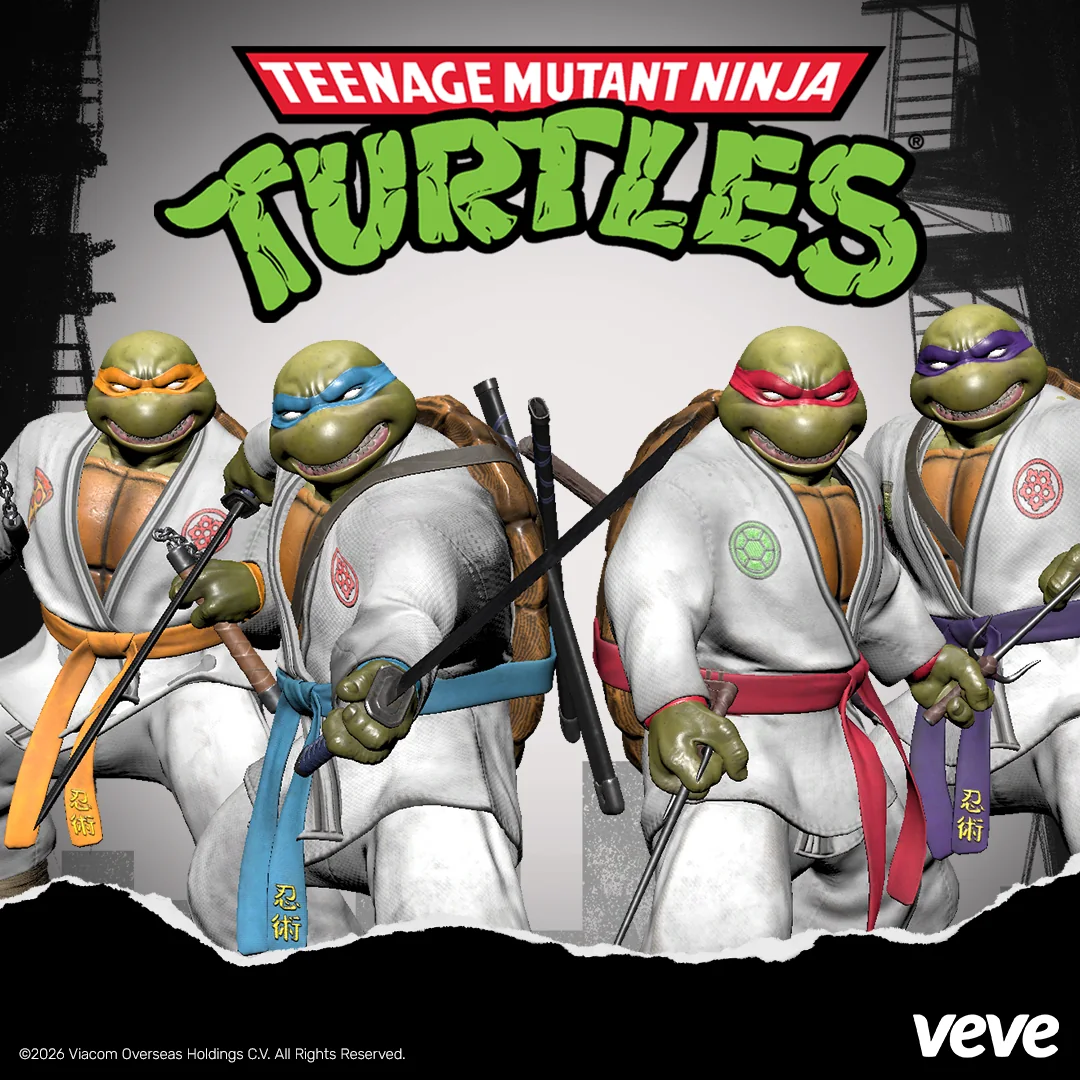
With Teenage Mutant Ninja Turtles – Dojo Discipline, VeVe shifts the focus away from another street fight and toward the foundation of the Turtles’ skills: training under Master Splinter. Leonardo, Raphael, Donatello, and Michelangelo wear white dojo gis while retaining their individual mask colors, weapons, and personalities.
That makes the series especially interesting for TMNT fans. Rather than four nearly identical figures, it presents a cohesive team concept in which each Turtle embodies a different interpretation of discipline.
TL;DR: Dojo Discipline consists of four clearly distinct Turtle designs built around a shared outfit concept. Collectors should consider more than a potential rarity tier, comparing the pose, weapon presentation, character connection, display impact, and cost of completing the quartet. The final details in each VeVe listing are always definitive.
What Is TMNT Dojo Discipline on VeVe?
Dojo Discipline is a digital collectible series centered on the four Teenage Mutant Ninja Turtles. The unifying element is the white gi, visually returning the brothers to the place where their different temperaments are shaped into a well-coordinated ninja team.
The concept fits TMNT’s long history. Kevin Eastman and Peter Laird self-published the first Teenage Mutant Ninja Turtles comic in May 1984. The original black-and-white comic grew into a franchise spanning comics, animation, movies, games, and an exceptionally broad physical toy culture.
VeVe and Paramount began their multi-year digital TMNT collecting journey with releases designed for augmented reality. Dojo Discipline continues that approach with a highly cohesive look: matching training gear, but four individual fighters.
Comparing the Four Turtles
The most important difference within the quartet is not the base outfit, but the body language. Collectors who choose based on a personal connection to the characters get four clearly different interpretations of the same theme.
Leonardo: Focus and Control
Leonardo wears his blue mask and presents his katanas in a forward-facing pose. The perspective makes the weapon especially prominent and reinforces his role as a disciplined tactician.
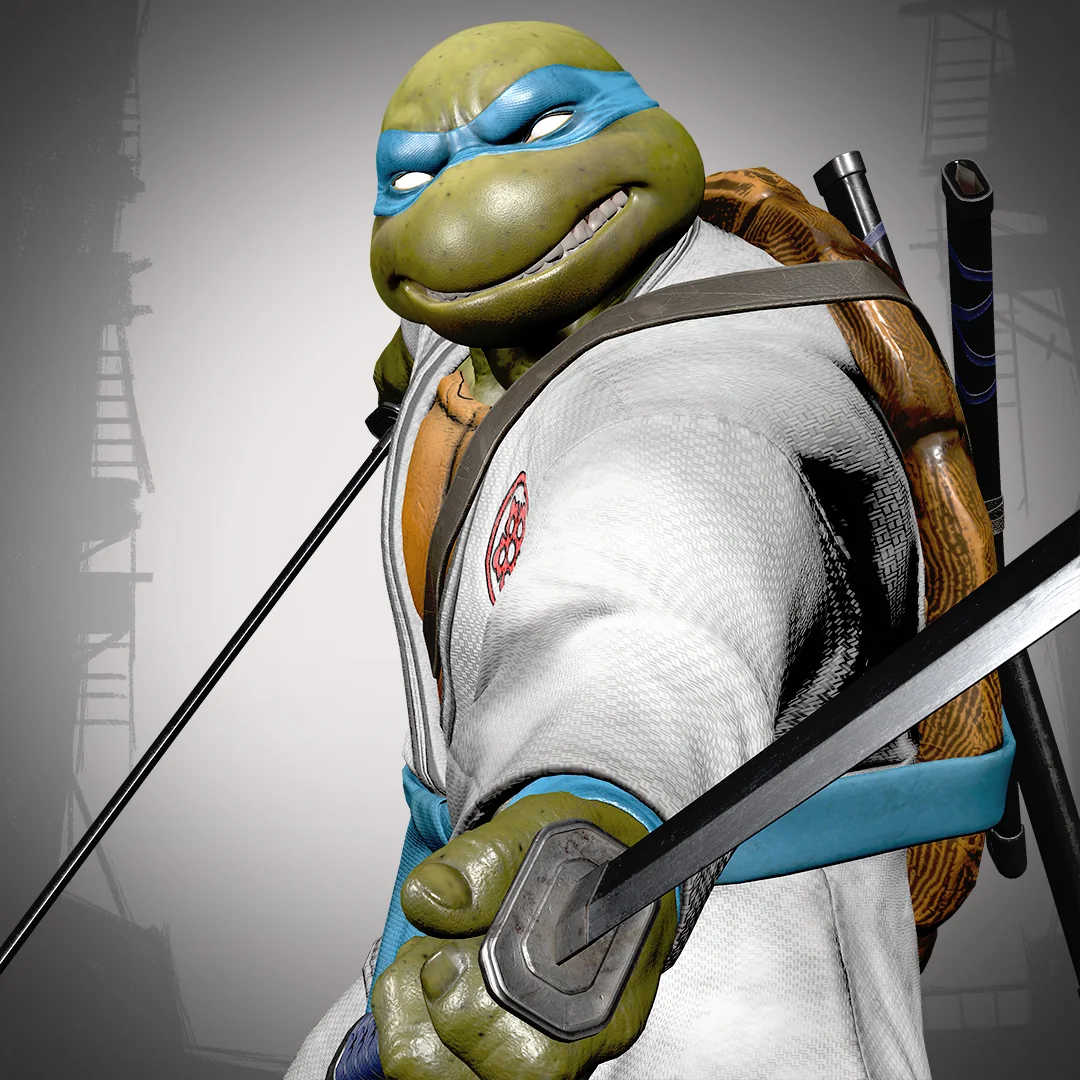
For collectors, Leonardo feels like the classic centerpiece of the series. His stance combines the calm spirit of the dojo with a battle-ready silhouette. Anyone interested in comparing earlier digital versions of the character can find more context in the VeVe TMNT Leonardo Drop Guide.
Raphael: Intensity and Instinct
Even in a white gi, Raphael remains the most direct fighter. His red mask, red belt, and pair of sai create a strong color contrast with the light outfit.
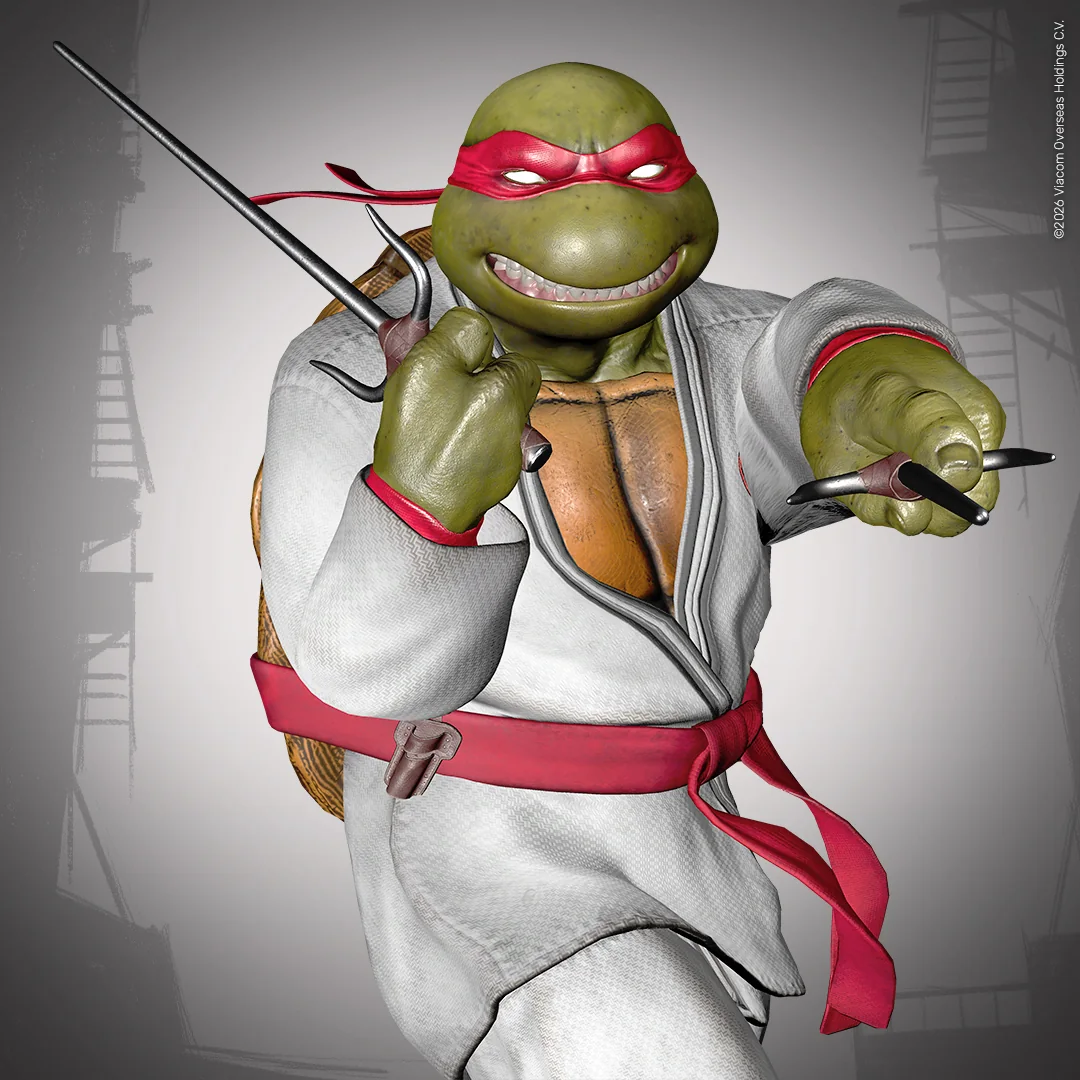
His pose is aggressive without breaking from the series’ shared concept. That makes Raphael particularly appealing to collectors looking for a figure with a strong front-facing presence and clearly recognizable weapons.
Donatello: Technique and Precision
Donatello’s interpretation has a calmer composition. His purple mask and matching belt provide the color accents, while his bo staff is integrated along the side of the design.
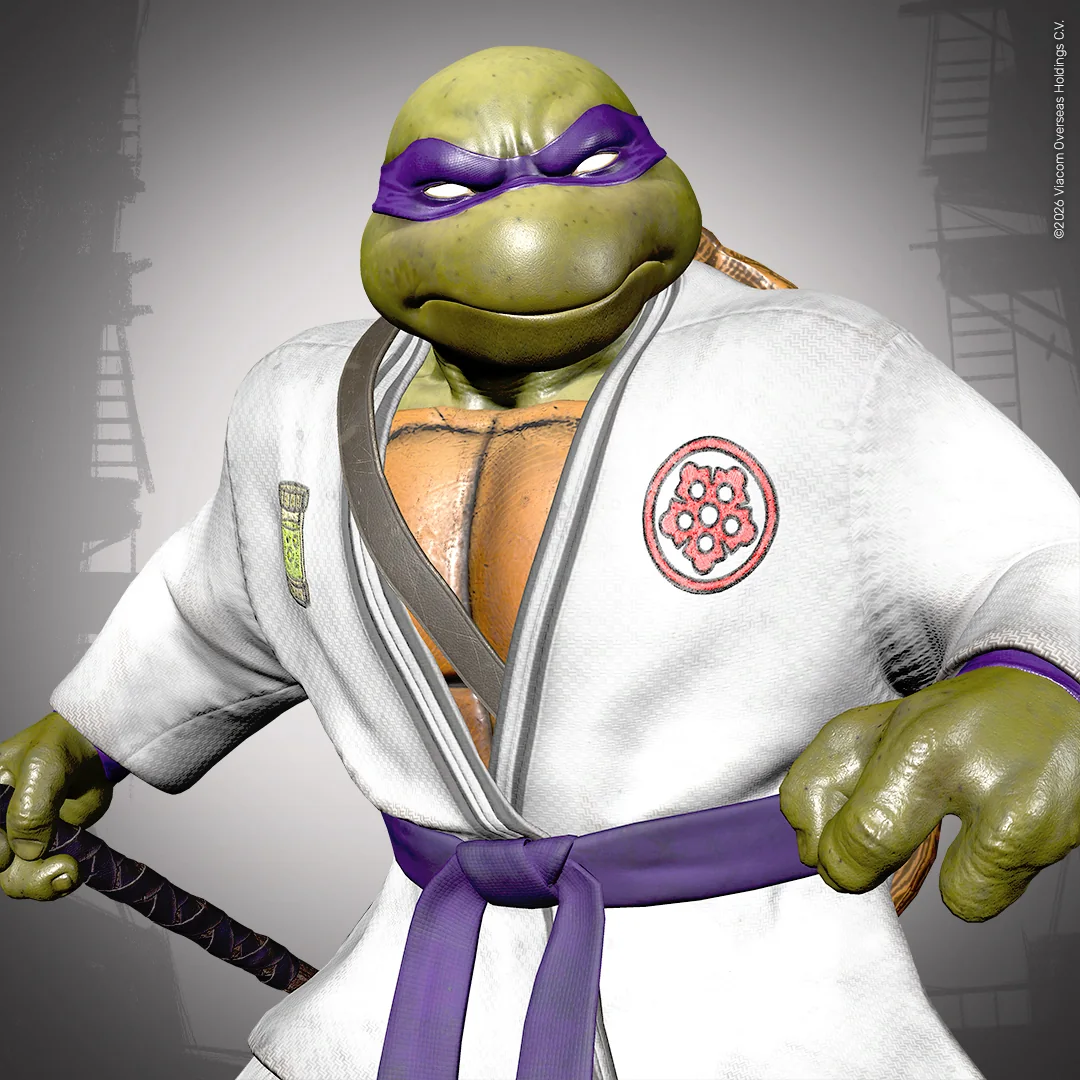
The gi’s texture and attached patches are especially noticeable in this design. Donatello may therefore appeal to collectors who prefer material details and a controlled, less aggressive presentation.
Michelangelo: Movement and Personality
Michelangelo brings the most playful movement to the quartet with his nunchaku. His orange mask and belt provide the familiar color focus, while the pizza patch carries his humorous personality directly into the dojo outfit.
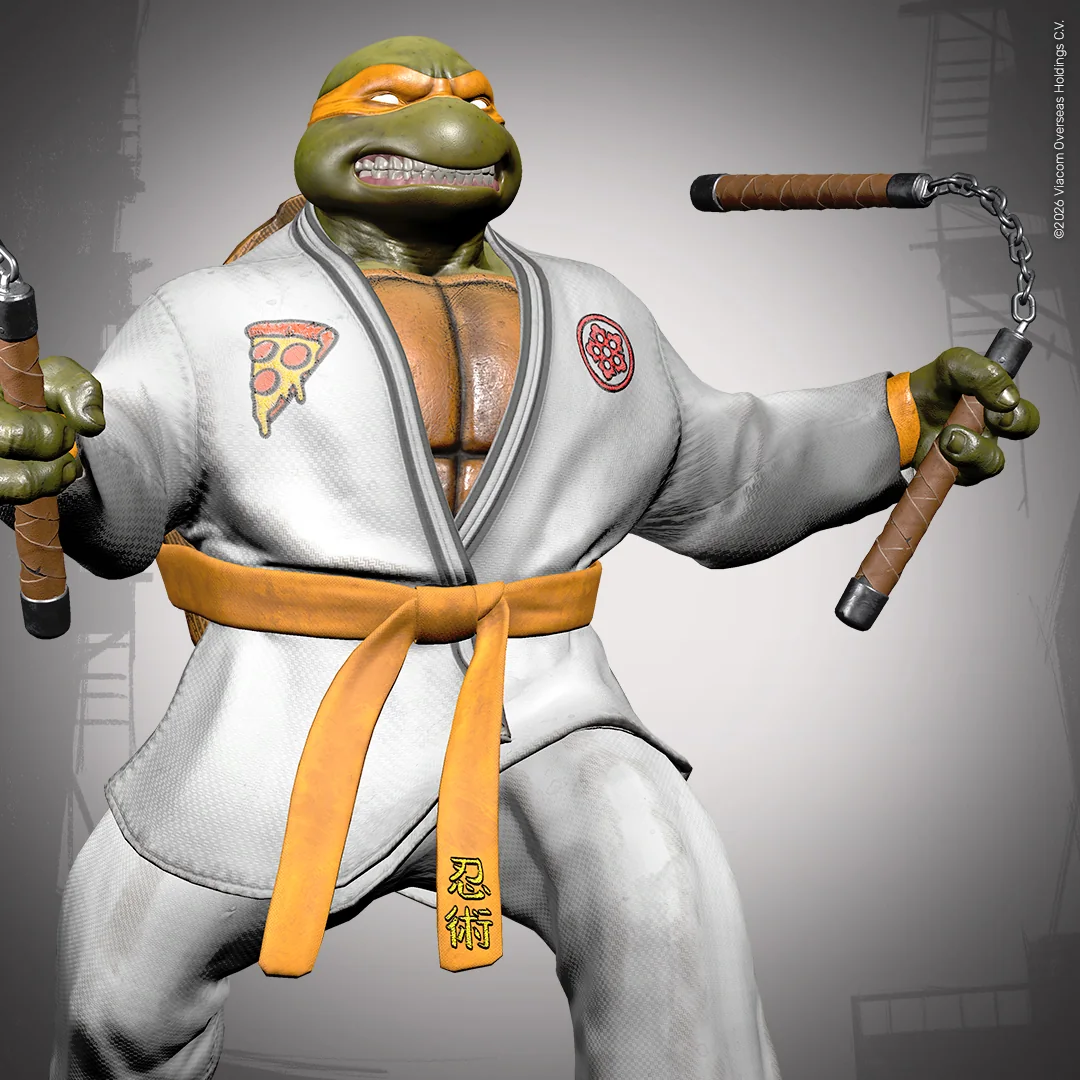
The design combines training and lightheartedness without reducing Michelangelo to a purely comedic character. For more background on his different VeVe looks, see our Michelangelo Collector Guide.
Why the Quartet Works as a Set
Many figure series only read as a group through a shared base, matching color palette, or continuous scene. Dojo Discipline achieves that effect through the white gis, recurring patches, and color-coordinated belts.
At the same time, the silhouettes remain distinct. The katanas, sai, bo staff, and nunchaku create different lines, preventing the four Turtles from looking like simple color variants of the same figure when displayed together.