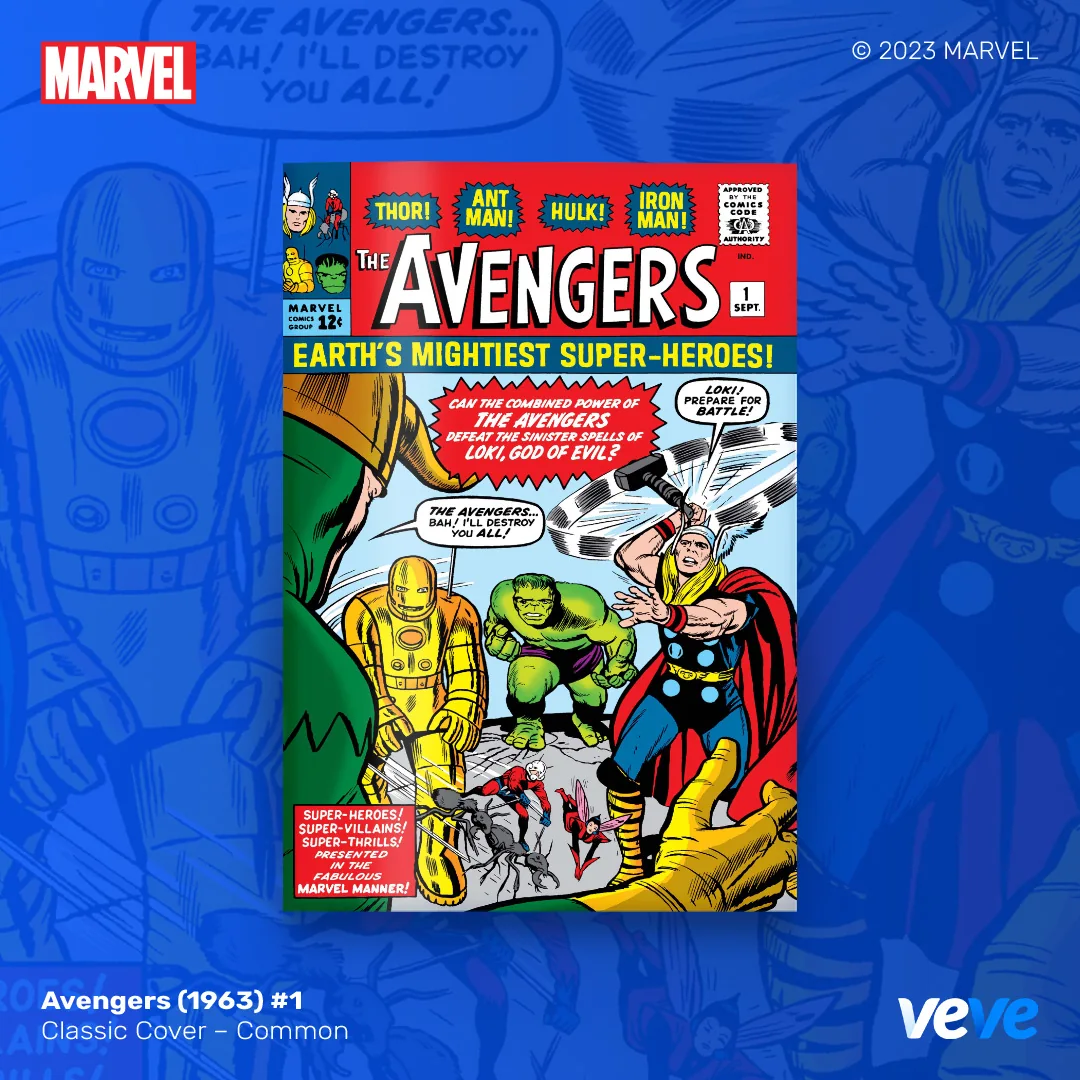
The Avengers (1963) #1 on VeVe lets you read the original team-up and collect one of five digital covers. The founding roster is Thor, Iron Man, Hulk, Ant-Man and Wasp, brought together by Loki’s scheme. If your image of the Avengers comes from later comics or films, this first issue is a useful reset: the team’s starting point is a specific story, not a permanent roster.
Why does this first issue matter?
Marvel dates the original to September 1963 and credits Stan Lee as writer and Jack Kirby as penciller. Loki tries to use the Hulk as a weapon against Thor. His plan draws several heroes into the same conflict. Rather than letting Loki define Hulk as the enemy, the heroes identify the threat behind the apparent trouble and join forces. The new group calls itself the Avengers. The premise is simple, but it opens the door to decades of changing friendships, arguments and lineups.
Captain America is strongly associated with the team, yet he is not one of the five founders in this issue. That distinction helps when you compare an original cover with later posters and merchandise. Here the recognizable lineup includes two characters who can be overlooked in modern shorthand: Ant-Man and Wasp. Wasp is part of the founding moment, not a later footnote. Hulk’s presence is equally striking because his position in the team changes quickly as the series continues. The first issue captures a fragile alliance before the team’s identity settles.
Read this issue for the meeting itself. The heroes do not arrive as a polished organization with a headquarters and shared rules. They bring separate powers, habits and interests to a problem larger than one character’s solo adventure. Kirby’s crowded action and Lee’s dialogue make the collision feel busy and sometimes unruly. That texture explains why a team comic could do more than line up familiar faces on a cover: it could let those faces react to each other.
What exactly is VeVe selling?
VeVe’s licensed release is a fully readable digital version of the 1963 story. Its August 31, 2023 launch used a waitlist blind box with five cover variants. The original total was 10,000 editions: Classic Cover at Common had 6,000, Vintage Variant at Uncommon 2,250, Hero Variant at Rare 1,000, Vibranium Variant at Ultra Rare 500, and True Believer Variant at Secret Rare 250. VeVe credits David Yardin and Edgar Delgado for exclusive Rare and Ultra Rare art. These are different visual presentations of the same comic, not five separate Avengers stories.
On VeVe’s issue page checked September 24, 2026, the original total of 10,000 appears alongside 9,999 editions in circulation and one burned edition. The release blog’s list price and waitlist describe the 2023 launch, not a guaranteed current price or a fresh drop today. Check the current listing for the particular cover, edition number and live availability. A rarer tier offers a different cover and smaller original allocation; it does not promise future value.
A search for “Marvel comic NFT” can lead to several different Avengers number ones. Verify the year: this VeVe entry is Avengers (1963) #1, the Lee and Kirby team origin. A later Avengers (2012) #1 starts a different volume and is not interchangeable with it. A numbered digital edition also is not a physical copy of the 1963 comic or ownership of Marvel’s characters.
Which cover should a reader choose?
Start with the Classic Cover if historical context is the draw. It preserves the immediate link to the first issue’s original presentation. Consider an exclusive variant if its artwork is what you want to display in a digital collection. The choice should follow the art you actually enjoy, because the reading experience returns to the same founding story. Compare official images at full size, including lettering and composition, instead of assuming a rarity label tells you which picture you will prefer.
For paper reading, Marvel’s The Avengers Omnibus collects issues #1–30. It provides the 1963 first issue and enough subsequent chapters to see how the initial team changes. That hardcover is a modern collected edition, not an original newsstand copy. It is a useful counterpart for readers who want a longer historical arc, while the VeVe release offers one issue with collectible cover choices in the app. Marvel’s issue page is also a direct way to confirm the year, creators and volume before buying any format.
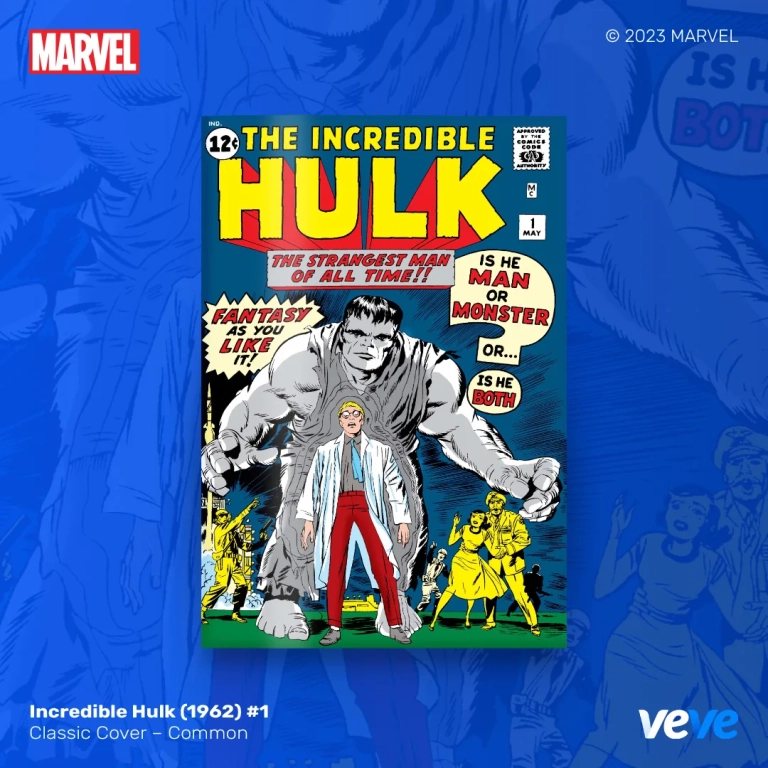
The most rewarding comparison is between this team origin and Hulk’s own 1962 debut. In his first solo issue, Bruce Banner is learning what happened to him. In Avengers #1, other heroes must decide what to make of him. That shift turns a personal crisis into a group dynamic. It is why the two comics deserve separate guides even though the same green—or originally gray—figure appears in both histories.
If you only want one starting point for early Avengers comics, begin with the issue number and year here. See how Loki’s manipulation causes the meeting, notice who is actually present, and then choose a cover or print edition that suits how you read. The history is in the pages; the five VeVe covers offer different ways to carry it into a collection.