Transparency notice: This article contains links to my landing page. These are promotional links. If you get started through them, I may receive a commission—at no additional cost to you.
Quick Overview
- OMI is the utility token behind VeVe, the leading app for officially licensed digital collectibles & comics (including Disney, Marvel, and Star Wars). OMI is an ERC-20 token on Ethereum and connects to Layer 2 infrastructure such as Base for lower-cost use cases.
- Key utility in 2026:
- Buy and sell collectibles with OMI through the external marketplace StackR—including OMI burns through the applicable transaction mechanics.
- OMI rewards in the Master Collector Program (MCP) through the applicable official OMI/StackR wallet setup on Layer 2.
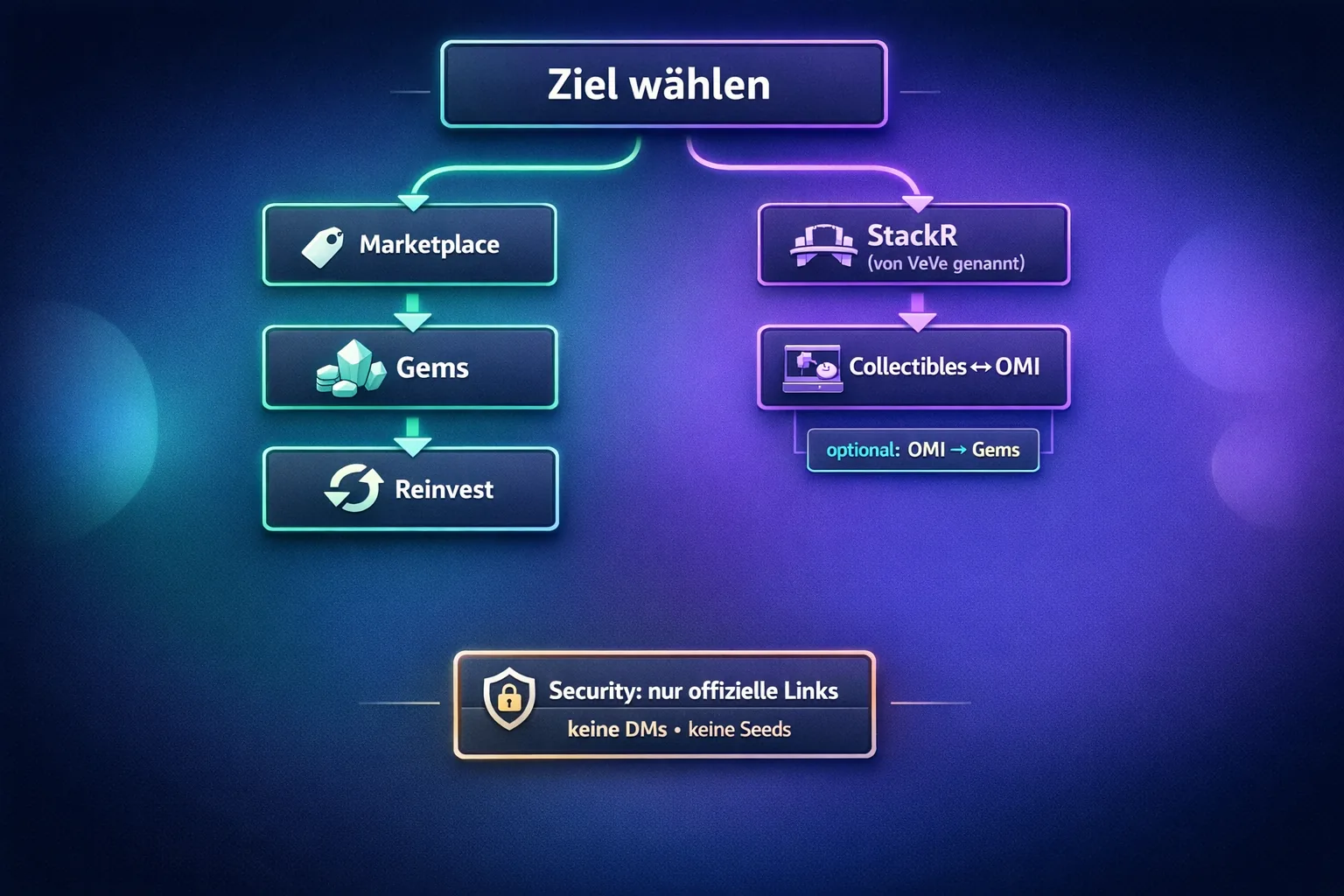
- OMI → Gems has been available through StackR since November 19, 2025, allowing OMI to be converted into VeVe Gems for use in the app.
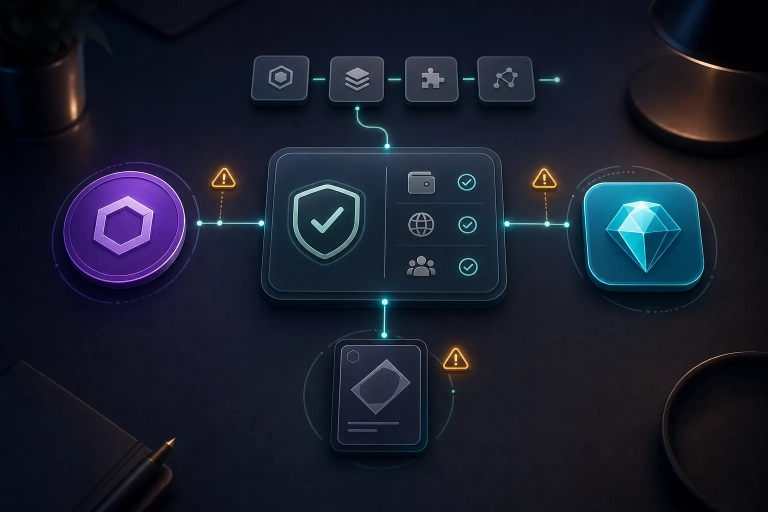
- Technology & security: Official migration and contract information remains essential. Watch out for fake contracts, incorrect networks, and phishing sites.
- Tokenomics: Circulating supply figures vary slightly depending on the tracker and methodology. Deflationary elements come from burns tied to certain OMI use cases.
What Is OMI—and Why Does It Matter to VeVe Collectors?
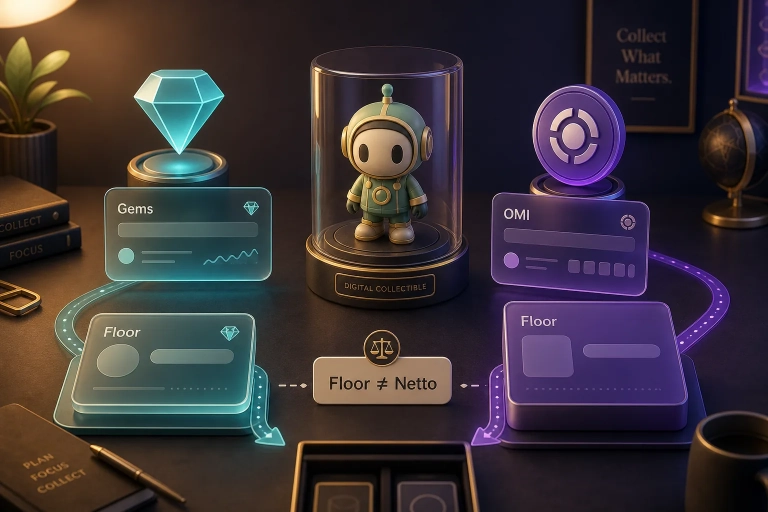
OMI is the utility token from ECOMI, the company behind VeVe. While the VeVe app has traditionally used Gems as its in-app currency, OMI has opened up additional utility since 2024/2025: collecting & earning rewards through MCP/OMI rewards, external trading of collectibles through StackR, and, since November 19, 2025, OMI → Gems conversion for in-app purchases. This makes OMI more relevant to both collectors and crypto users, although clear risks and changing rules remain.
OMI originally launched as a GO20 token on GoChain. In early 2022, the token migrated to Ethereum (ERC-20). Anyone still holding legacy GoChain OMI or wOMI should rely exclusively on official information to determine whether and how a swap to ERC-20 OMI is possible. Always use only official instructions and links, and never test contract addresses found at random.
The 3 Most Important OMI Utilities in 2026
1) Buy and Sell Collectibles with OMI Through StackR
With VeVe’s integration of external marketplaces, you can trade VeVe collectibles directly with OMI. Transactions are handled through StackR and typically use lower-cost Layer 2 infrastructure such as Base. Depending on the transaction and current rules, OMI may be burned or fee components may be included in the burn mechanics—the actual impact depends on real usage volume.
Practical example: You spot a Rare Marvel cover on StackR and pay for it with OMI. Later, you can list the same asset on VeVe and sell it for Gems—or hold it long term. Starting with an official wallet setup is important for a safer setup process; for a more in-depth overview, see the guide to StackR, VeVe, and OMI.
2) OMI Rewards in the Master Collector Program (MCP)
Collectors who hold OMI on Layer 2 and deposit it through the applicable official OMI/StackR wallet setup may receive additional MCP points and seasonal benefits such as tickets, depending on the current Season. Keep in mind that reward rules, caps, Season durations, and eligible wallets can change. L1 OMI held in a standard Ethereum wallet generally does not qualify for rewards automatically.
3) OMI → Gems Since November 19, 2025
The major utility upgrade is now live: OMI can be converted into Gems through StackR, and those Gems can then be used in the VeVe app for Store purchases, Drops, and Market purchases. The direction matters: Since the change, Gems cannot simply be freely cashed out or converted back into OMI. For a practical walkthrough, see this separate guide to converting OMI into Gems through StackR.
Multi-Chain Infrastructure: Ethereum & Base
- Ethereum (L1): Home of the current ERC-20 OMI. Always verify the contract address through official sources and the appropriate explorer.
- Base (L2): Key infrastructure for StackR, lower-cost transactions, and OMI use cases such as marketplace trading, OMI rewards, and OMI-related wallet features.
Best practice: Before every bridge, swap, or wallet connection, access links through official hubs and bookmark them. Never blindly click Google ads, DMs, or community links.
Tokenomics at a Glance: Circulation, Burns, and Supply
- Circulating supply: Depending on the tracker and methodology, circulating supply is roughly 270 billion OMI, although figures from individual data providers may differ. These numbers always reflect a specific point in time.
- Deflationary mechanics: Burns tied to certain OMI use cases permanently remove tokens from circulation. The actual impact depends on usage, trading volume, fee mechanics, and official implementation.
- 2024/2025 adjustments: Non-circulating holdings, burns, and updated tracker methodologies have significantly changed the discussion around OMI tokenomics. As a result, old supply charts and older social media posts have limited value.
Step by Step: How to Use OMI Effectively
A) Still Holding Legacy GoChain OMI?
- Open the official migration information and check whether the relevant swap route is still supported.
- Add networks and tokens to MetaMask or another wallet exactly as described in the official instructions. Transfer a small test amount first.
- Swap to ERC-20 OMI only through verified methods. Never share your keys, seed words, or recovery phrases.
B) Earn OMI Rewards in the MCP
- Move OMI to the appropriate Layer 2 setup and hold it through the official OMI/StackR wallet route.
- Review the Season rules: start and end dates, caps, points structure, tickets, and potential changes. The basic principle remains the same: Only eligible holdings count.
C) Buy or Sell Collectibles with OMI
- Connect your StackR wallet, verify the network, and make OMI available on Base if necessary.
- Select a collectible and pay with OMI, or list one of your own assets for OMI.
- Optional: Decide how the asset fits into your StackR and VeVe activity—for example, buying with OMI and later selling for Gems on the VeVe Market.
D) Use OMI → Gems
- Review the current FAQ, limits, and fees, prepare your StackR wallet, and correctly connect your VeVe account.
- Complete the OMI → Gems conversion through the official StackR route, then use the received Gems in VeVe.
- Keep in mind: Since the change, Gems can no longer be freely transferred or cashed out. For a clear overview, see the article about the VeVe Gems rules since November 2025.
Security & Compliance: 5 Golden Rules
- Use only official addresses and portals for contracts, bridges, StackR, VeVe, and wallet connections.
- Use small test amounts for first-time bridges, network changes, or new wallet processes.
- Watch out for phishing: Domains, interfaces, and support profiles can be fake. Legitimate support will never ask for your seed words or recovery phrase.
- Understand the fees: L1 fees, L2 fees, spreads, operations fees, and potential burns are separate things.
- Market risk: Crypto is volatile. This is not financial advice—make your own decisions and keep clear records of your transactions.
FAQ
Can OMI be used in the VeVe app?
Which contract address is correct?
How much OMI is there?
How do OMI burns work?
Do I need Base for everything?
Bonus: Get Started with VeVe
If you want to try VeVe without setting up crypto:
👉 Visit my landing page for a starting credit: Get started
Option A: Use Gems only—no personal crypto setup required.
Option B: Set up OMI alongside VeVe if you want to use rewards, StackR trading, or OMI → Gems.
Notice: This article does not constitute financial advice or financial guidance. Crypto assets are volatile and risky. Research thoroughly before making decisions and always review the latest official sources.