Since the November 19, 2025 change, one question has become much more important for many VeVe collectors: What is a collectible actually worth if it has a floor in Gems on the VeVe Market but a different floor in OMI on StackR?
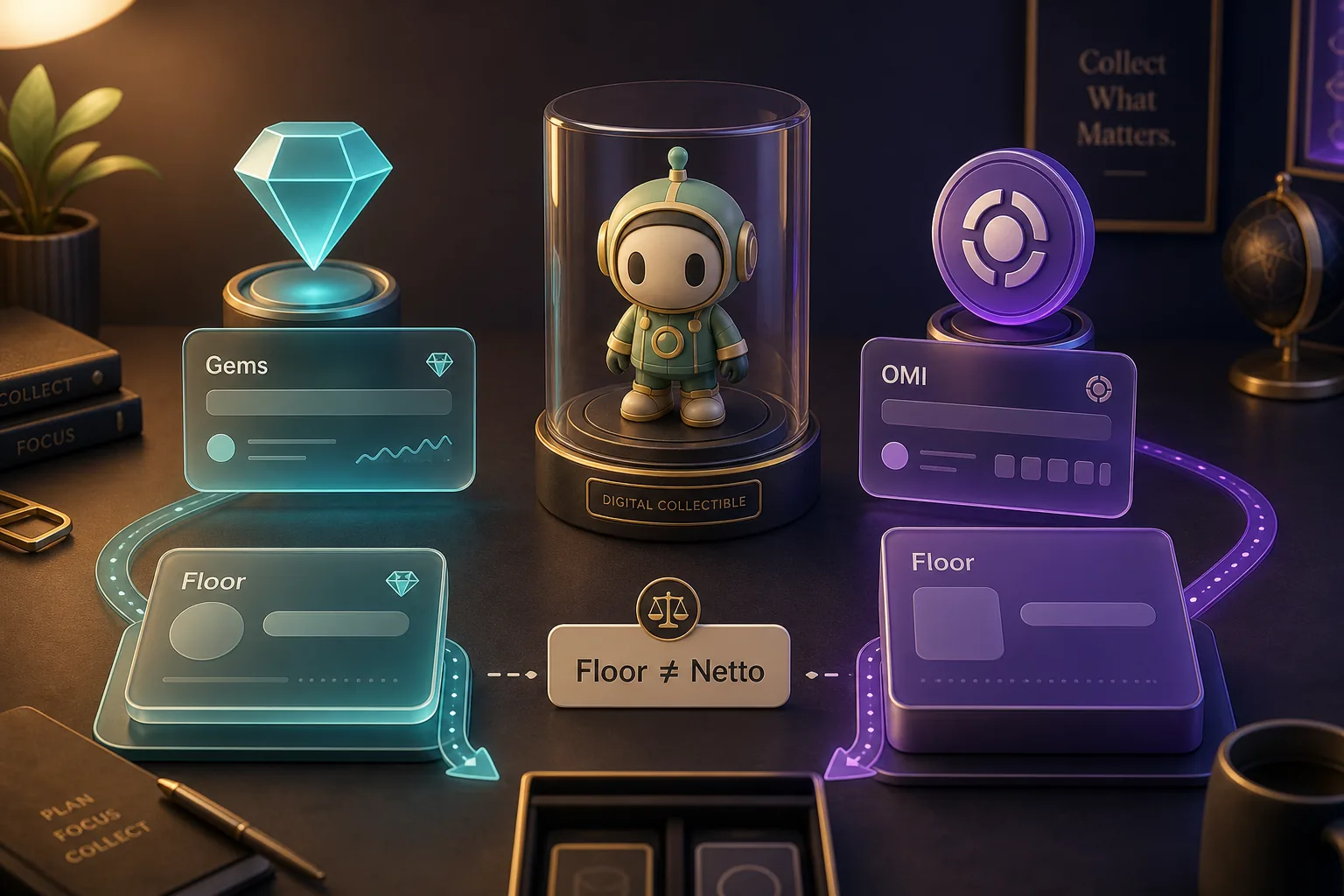
The short answer: They are two different markets with different currencies, buyers, friction, and risks. The VeVe floor shows what a buyer would need to pay in Gems within the VeVe app. The StackR floor is closer to the OMI price a buyer is willing to accept in the external StackR and wallet environment. Both can be useful, but they are not the same.
TL;DR
- VeVe Market: Trading within VeVe, priced in Gems, and well suited to collecting and reinvesting within the app ecosystem.
- StackR: An external marketplace in the VeVe ecosystem where VeVe collectibles can be traded for OMI.
- Two floors are normal: The buyer base, liquidity, OMI price, fees, KYC, wallet familiarity, and licensing rules can all differ.
- The VeVe floor does not automatically represent external value: Since the change, Gems are no longer part of the traditional cash-out route.
- Best decision: Start by defining your goal—collecting, reallocating within VeVe, or accessing external value through OMI.
VeVe Market and StackR in Plain English
The VeVe Market is the familiar secondary Market within the VeVe app or web app. Collectibles are typically listed, bought, and sold there in Gems. Collectors who want to keep collecting, complete sets, prepare for Drops, or use Gems within the ecosystem will usually look to this Market first.
StackR, by contrast, is the external trading route identified by VeVe for trading VeVe collectibles with OMI. According to VeVe, StackR enables users to buy and sell selected VeVe collectibles with OMI, complementing the in-app Gem Market. StackR is not simply a different interface for the same Market. It is a separate route with its own buyer base and its own layer of risk.

Keeping the units separate is essential: A Gem price on the VeVe Market is not an OMI price. An OMI price on StackR is not a guaranteed equivalent in Gems. That alone can make the same item appear very different on each platform.
Why Can the Same Collectible Have Two Different Floors?
A floor is simply the lowest currently visible list price. It is not a sale price, a guarantee, or an objective measure of collector value. Once two trading venues operate under different rules, two different floors can emerge.
1. Different Buyer Bases
Buyers on the VeVe Market are primarily users who already hold Gems or want to trade within the VeVe environment. StackR buyers are more likely to hold OMI, understand wallet and crypto processes, or specifically want to use the external route. These groups overlap, but they are not identical.
If many collectors on VeVe want to reinvest their Gems, the Gem floor may appear more stable. If fewer OMI buyers are active on StackR, the OMI floor may be lower. The opposite can also happen if OMI buyers are specifically looking for that collectible on StackR.
2. OMI Volatility
StackR prices are denominated in OMI. OMI is a crypto token, and its market price can fluctuate. As a result, the external value of a StackR listing can change even if the number of OMI in the listing stays the same.
For collectors, that means evaluating not only the collectible on StackR but also the token environment. A seemingly inexpensive OMI floor may look different once exchange-rate movements, spread, or the exit route are factored into a conversion to another currency.
3. Liquidity and Patience
A floor is only as reliable as the demand behind it. A low floor with few buyers tells you less than a market where comparable sales happen regularly. That is why liquidity is often more important than a single floor number.
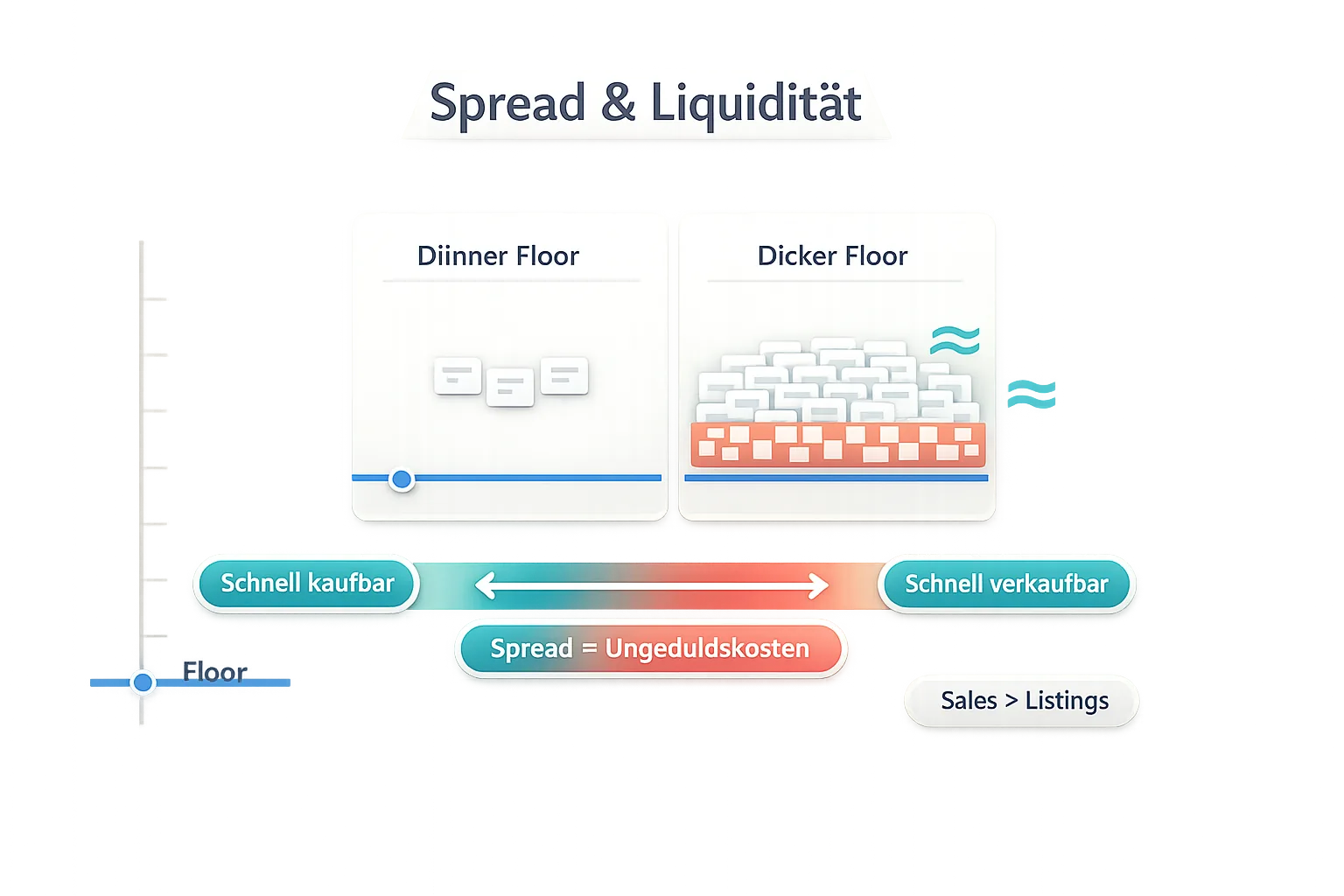
If you want to sell quickly, do not look only at the lowest list price. Consider realistic execution as well. How many similar listings are there? How large is the gap to the next price? Is there visible buyer activity? And how long have comparable items been listed on the Market?
4. Fees, Royalties, and Net Proceeds
What matters when selling is not the gross list price but what remains after fees, possible royalties, network or conversion costs, and spread. VeVe notes that StackR fees may vary by licensor and that some fees or mechanics may be connected to burns.
The practical takeaway is simpler than the underlying technology: Never compare only one floor with another. Always compare the expected net route. A higher visible Gem floor may be less useful if you want to access value outside VeVe. A lower OMI floor may make more sense if you intentionally choose the OMI route and accept its risks.
5. KYC, Wallet Familiarity, and Technical Barriers
The VeVe Market is more convenient for many collectors because trading happens in a familiar environment. StackR adds more steps: an account, linking, a wallet, a network, OMI, and possible swaps or transfers. That can deter some buyers and affect demand.
For security-sensitive steps in particular, use only official routes, check domains carefully, and never share seed phrases, recovery words, or 2FA codes. If you do not understand the wallet and exchange layer, a small test amount makes more sense than a large first attempt.
6. Licensing and Product Rules
Not every collectible will necessarily be equally available or tradable through every route. Licensors, collection rules, platform approvals, and technical restrictions can affect what can be listed and where. You should not automatically assume that every VeVe item has the same market on StackR as it does in the app.
Why the VeVe Floor Does Not Automatically Represent Real External Value
The biggest misconception is: “My item has a floor of X Gems on the VeVe Market, so it is worth X outside VeVe.” That assumption has become more problematic since the change.
Gems still function within VeVe. You can use them to buy collectibles, trade on the Market, and build your collection profile. However, the traditional direct-payout concept is no longer the same as it was before. For a detailed look at the change, start with our guide, VeVe Cash-Out After November 19, 2025.
For many collectors, StackR is therefore not “the better floor,” but a different valuation lens: What will an OMI buyer pay in an external, more crypto-oriented environment? The answer can be very different from what a VeVe collector would spend in Gems on the same item.
Quick Start: How to Compare Both Floors
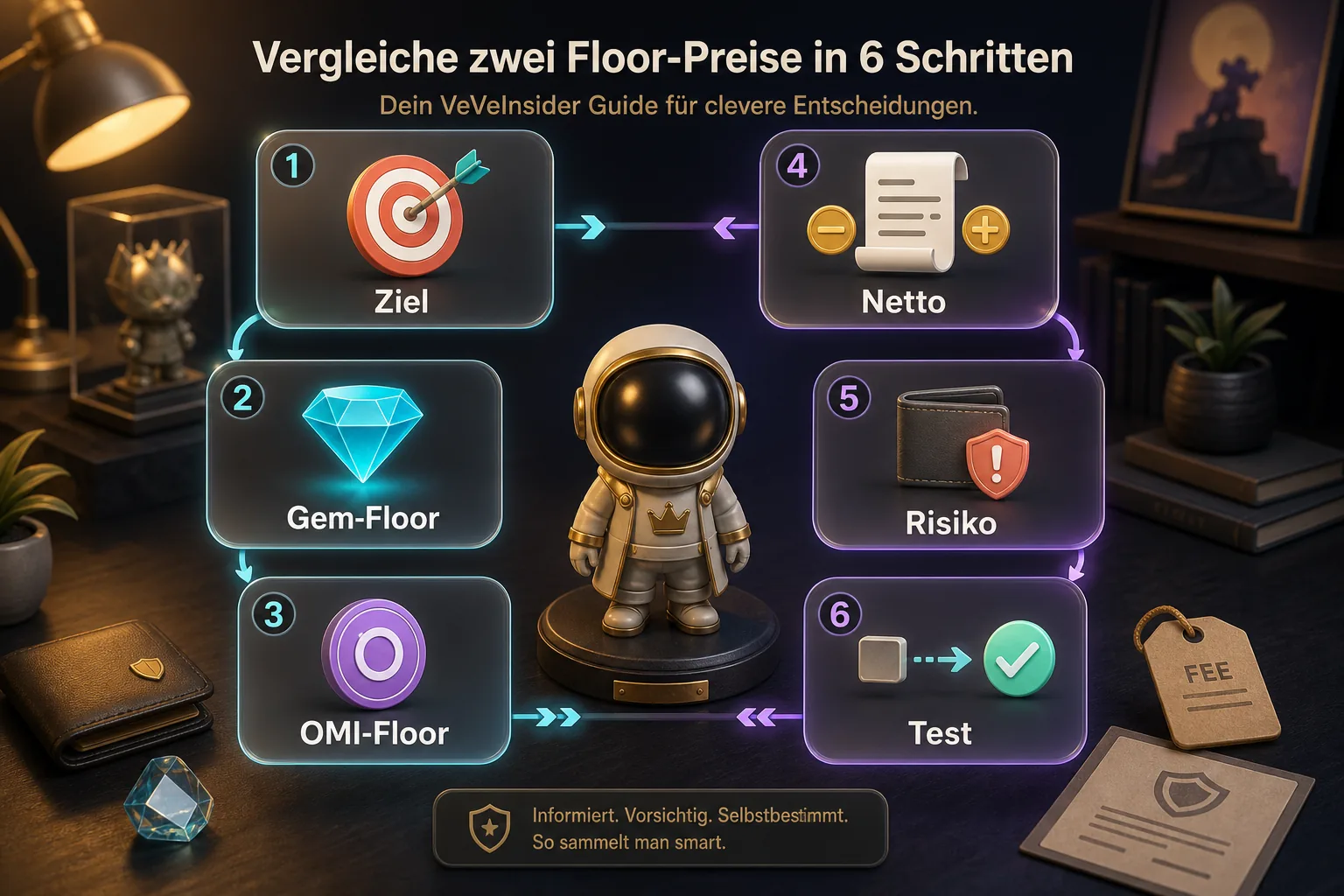
When evaluating a collectible, do not rely on instinct alone. Use a simple routine:
- 1. Define your goal: Do you want to hold, reallocate within VeVe, or access external value?
- 2. Check the VeVe floor: Look beyond the lowest price and review listing depth, edition number differences, and spread.
- 3. Check the StackR floor: Realistically assess the OMI price, demand, available listings, and likely execution.
- 4. Think in terms of the net route: Account for fees, royalties, token volatility, and network and exchange steps.
- 5. Assess the risk: Honestly evaluate KYC, wallet, network, phishing, incorrect transfers, and liquidity.
- 6. Test instead of jumping in: When using a new process, start small and document each step.
For the basics of buying and selling within VeVe, see the VeVe Marketplace Guide. For a deeper look at StackR as a separate route, see How to Set Up StackR Safely.
New to VeVe or still unsure how to get started? Our VeVe Signup and Starting Credit Guide walks you through the process step by step. When you sign up through the route explained there, you will receive $10 in free starting credit—without any promise of value or profit.
Practical Guide: Which Route Fits Your Goal?
There is no universally correct route. The better option depends on what you are trying to achieve.
I Want to Collect
If your goal is collecting, displaying, completing sets, earning MCP points, using the Showroom, or simply enjoying the collectible, the VeVe Market is often the more relevant reference point. You think in Gems, buy through the familiar interface, and do not need to translate every step into OMI or exchange withdrawals.
You should still consider market fundamentals. A low floor is not automatically a good purchase. Review the edition, rarity, edition number, set relevance, visual preference, and your budget. The lowest price is only a starting point, not the entire decision.
I Want to Reinvest Within VeVe
If you are selling an item to buy other VeVe collectibles, the Gem Market is especially relevant. Your proceeds remain usable within the VeVe environment. The StackR floor can serve as a second reference point, but it does not have to determine your decision.
It helps to understand fees and timing here. Our article VeVe Fees and Costs helps you separate gross value from net proceeds.
I Want to Access Value Outside VeVe
If your goal lies outside the Gem system, StackR becomes more important. In that case, you need to know not only the Gem floor but also whether a buyer on StackR is willing to pay OMI for your collectible. Additional steps may then include a wallet, swap, bridge, or exchange transfer.
This is where the risk increases. StackR may be the functional route, but it is not a button with a guaranteed outcome. You become more dependent on OMI liquidity, network support, exchange rules, and correct execution.
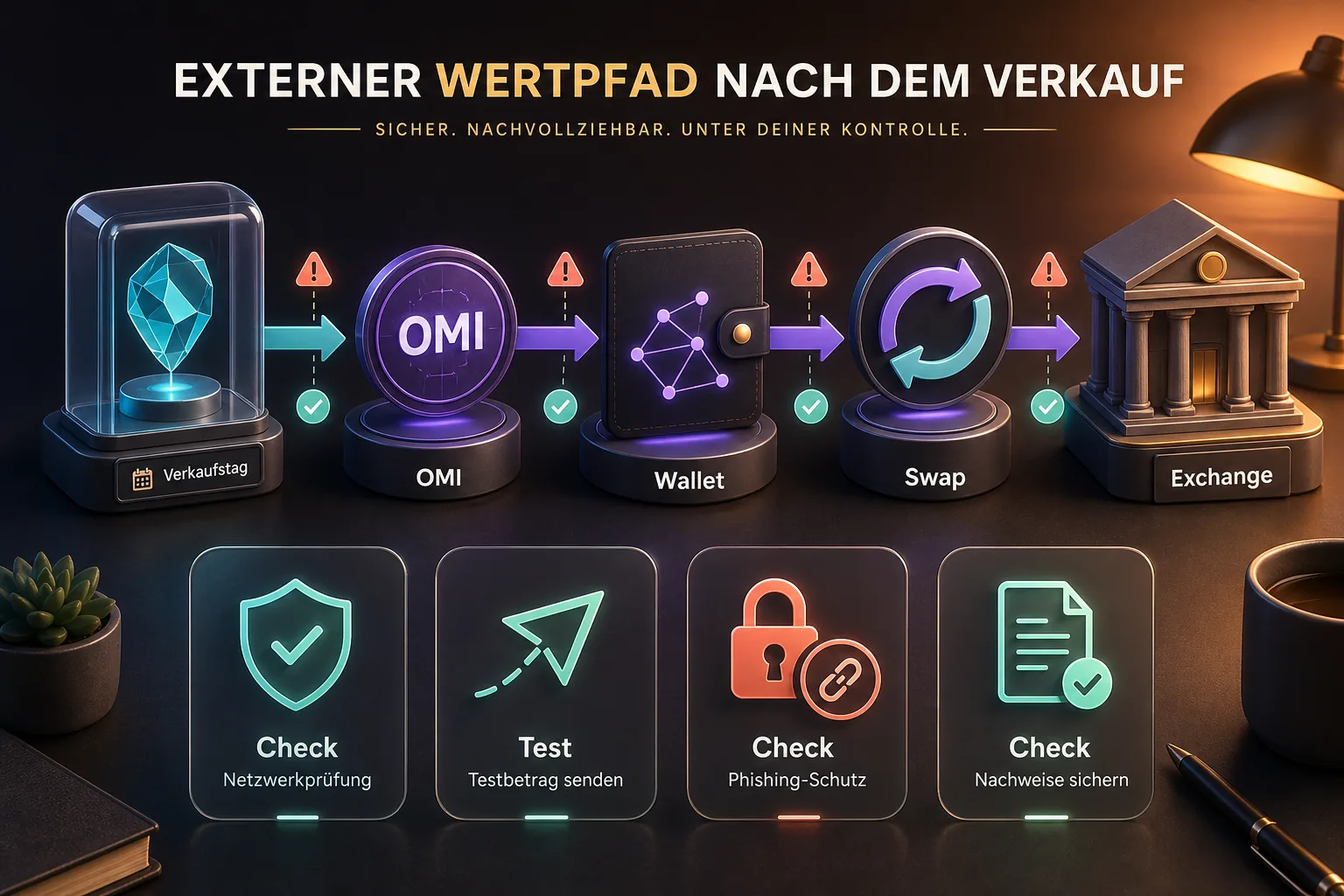
Risks in the StackR, OMI, Base, and Exchange Flow
StackR and OMI provide an external route, but that route is more demanding than an in-app sale. StackR states that the relevant network must be supported when sending OMI, ETH, or USDC to exchanges. Using the wrong network can result in permanent loss.

Treat this flow as a security chain:
- Official access points: Do not use links from DMs, comments, or third-party forms.
- Verify the network: The token and network must exactly match the destination.
- Use a test amount: Start small, especially with exchange transfers.
- Never share seed phrases: Do not provide recovery words or approve wallet requests sent through chats.
- Document everything: Save screenshots, transaction IDs, dates, amounts, and destination addresses.
- Plan for KYC: Depending on the platform, identity verification or account limits may apply.
If you are still unsure, also read Custody vs. Self-Custody. It explains the responsibilities you take on when using wallets and managing your own assets.
Common Mistakes When Comparing the VeVe Market and StackR
- Comparing only the lowest floor: A single listing may be an outlier. Market depth, demand, and realistic execution matter more.
- Treating Gems like fiat: Gems remain usable within VeVe, but since the change, they are no longer the direct payout route.
- Underestimating OMI risk: OMI can fluctuate. Its external value changes with the token market.
- Forgetting fees: The gross floor and net result are not the same.
- Moving into wallet steps too quickly: If you do not understand the network, bridge, swap, or exchange, do not start with large amounts.
- Looking for off-Market deals: Especially under pressure to cash out, DMs, escrow promises, and direct deals carry a high scam risk.
Key Terms Explained
Floor
The lowest visible list price for a collectible on a specific market. It does not mean the collectible will sell quickly at that price.
Gems
The in-app currency used within the VeVe ecosystem. Gems are central to buying and selling within VeVe, but since the change, they should no longer be viewed as a traditional cash-out route.
OMI
The ECOMI token used for certain external utility features in the VeVe and StackR ecosystem. For a useful introduction, see our OMI Token Guide.
Liquidity
Liquidity describes how easily an asset can actually be bought or sold. A large number of listings without buyers does not represent strong liquidity.
Spread
The difference between the price at which you could sell quickly and the prices at which others are currently listing. A large spread often means a higher cost for selling quickly.
Collector Checklist: Decide Before You List
- Do I really want to sell the collectible, or am I only reacting to a short-term floor?
- Do I need Gems for a purchase within VeVe?
- Do I want to access value outside VeVe, and am I prepared for the OMI and wallet steps?
- Have I accounted for fees, royalties, spread, and possible price movements?
- Have I checked whether the collectible is available and realistically tradable on StackR?
- Can I recognize an incorrect transfer or scam attempt?
- Would I make the same decision if the floor looked different tomorrow?
Conclusion: Two Floors Are a Signal, Not an Error
If a VeVe collectible has different floors on the VeVe Market and StackR, that is not a contradiction. It shows that you are looking at two different markets. One is Gem-based and closely tied to the app, while the other is OMI-based and closer to wallet and crypto mechanics.
For collectors, this can be useful when interpreted correctly. The VeVe floor shows how the item is positioned within the VeVe ecosystem. The StackR floor indicates whether there is external demand in the OMI environment. You can only make the better decision once you know your goal.
If you want to collect or reinvest, the VeVe Market is often the more practical starting point. If you want to access value outside VeVe, you need to assess StackR, OMI, liquidity, and security carefully. In either case: Do not rush, avoid off-Market shortcuts, and never compare floors without considering net proceeds.
FAQ
Why Is My Collectible Valued Lower on StackR Than on the VeVe Market?
Because StackR has a different buyer base, uses OMI as its currency, and involves different friction. If fewer OMI buyers are active or the external route requires more effort, the StackR floor may be lower.
Is the VeVe Floor Worthless?
No. It remains relevant for buying, selling, and reinvesting within VeVe. It simply does not automatically represent the external cash-out value.
Can I Cash Out Gems Directly?
Following the November 19, 2025 change, the traditional direct Gem payout is no longer the intended route. For accessing external value, VeVe points users to the StackR and OMI route.
Is StackR Automatically Better Than the VeVe Market?
No. StackR makes sense if you intentionally want to trade with OMI or assess external value. For collecting or reinvesting, the VeVe Market may be simpler and more suitable.
Should I Always Choose the Higher Floor?
Not automatically. What matters is whether you can realistically sell there, what costs apply, and what you plan to do with the proceeds afterward.
If you would like to try VeVe: Sign up through our affiliate link, Join VeVe and Get $10 in Starting Credit, and you will receive $10 in free starting credit. Disclosure: VeVeInsider may receive a commission; there is no additional cost to you, and you will receive $10 in free starting credit.
Sources