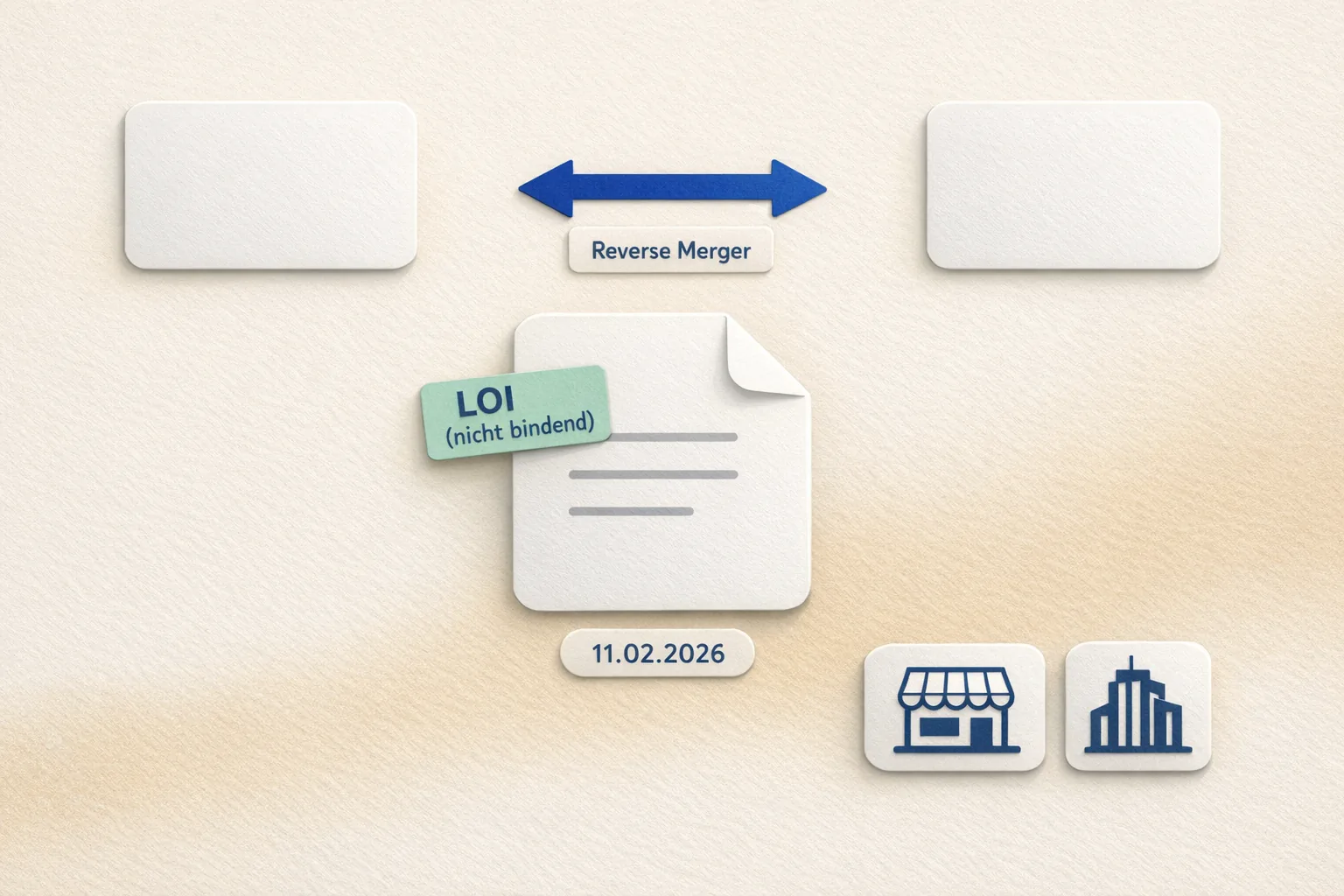
Update (as of June 2, 2026): The original target date of “on or around February 28, 2026” has passed. In an official update dated March 3, 2026, Orangekloud said the parties were continuing negotiations and needed additional time to finalize definitive terms. A non-binding LOI therefore still does not constitute a completed deal.
On February 11, 2026, it was publicly announced that Orangekloud Technology Inc. (NASDAQ: ORKT) had signed a non-binding Letter of Intent (LOI) with New Zealand-based Orbis Technology Limited. The same announcement describes a reverse merger as the proposed transaction and identifies VeVe as Orbis’ flagship consumer-facing brand and marketplace.
If you use VeVe, that may sound huge at first. But the key point for collectors is this: An LOI is not a completed deal. Until VeVe communicates clear, concrete next steps, the best approach is to stay calm, verify carefully, and avoid scams.
TL;DR (for collectors)
- There is a non-binding LOI—not a final merger or final terms.
- The original target date of “on or around February 28, 2026” was not confirmed as the date of a completed agreement; according to the March 3, 2026 update, the parties were still working on definitive terms.
- Proposed structure: reverse merger—often used to bring a private company to a public listing through an already listed company.
- Important for ORKT shareholders—and useful context for us: control shift. Orbis co-founders/shareholders are expected to hold a majority stake after the deal, meaning dilution and a change in control may be possible.
- For VeVe users today: Generally, there is no immediate change to the app, accounts, or collectibles—but there is a greater scam risk, including fake KYC requests, fake emails, and “wallet connect” prompts.
1) What Happened? The Facts Without the Hype
The key point from the February 11, 2026 announcement is that ORKT and Orbis signed a non-binding LOI. This letter of intent outlines a proposed reverse-merger transaction that would combine Orbis and ORKT.
In the same context, VeVe is described as Orbis’ flagship consumer-facing brand and marketplace. In other words, under the plan as described, VeVe would continue operating as the central consumer app and marketplace brand within the new structure.
Why “non-binding” matters so much
Put simply, an LOI is a shared statement that says, “We want to explore whether we can do this.” It may outline a framework, but it is generally not a final contract. Until a definitive agreement is signed, many details remain open, including the specific valuation, timeline, conditions, regulatory requirements, and board or shareholder approvals.
The stated target date: “on or around February 28, 2026”
According to the original announcement, the goal was to reach a definitive agreement “on or around February 28, 2026.” That window has now passed. In our March 3, 2026 update on Orangekloud, Orbis, and VeVe, we explain why the absence of a definitive agreement mainly means collectors should continue waiting for official updates rather than making speculative moves.
Majority ownership and control shift: relevant context, not a collector trigger
Another key point from the announcement is that Orbis co-founders/shareholders are expected to hold a majority stake after the deal. For ORKT shareholders, that would typically mean dilution and/or a change in control. For VeVe collectors, this is not an immediate app update, but it does indicate how the new structure could ultimately look if the transaction is completed.
2) What Is a Reverse Merger—and Why Use One?
A reverse merger, also known as a reverse takeover, is a transaction structure in which a private company—or an unlisted operating entity—merges with or is contributed to a publicly traded company. This gives it an indirect path to becoming publicly listed without following the traditional IPO process step by step.
This is not automatically “good” or “bad.” It is primarily a structure. What ultimately matters are the final terms, the level of transparency—including filings—and the operational changes that follow.
Common reasons for reverse mergers
- A faster path to a public listing, depending on the structure and requirements.
- Rebranding or repositioning an existing publicly traded entity.
- Access to capital markets and greater visibility, although this does not automatically guarantee new funding.
- Structural simplification or reorganization, including holding-company structures and ownership interests.
Typical process: from “we’re talking” to “the deal is closed”
The details vary, but many deals broadly follow this sequence:
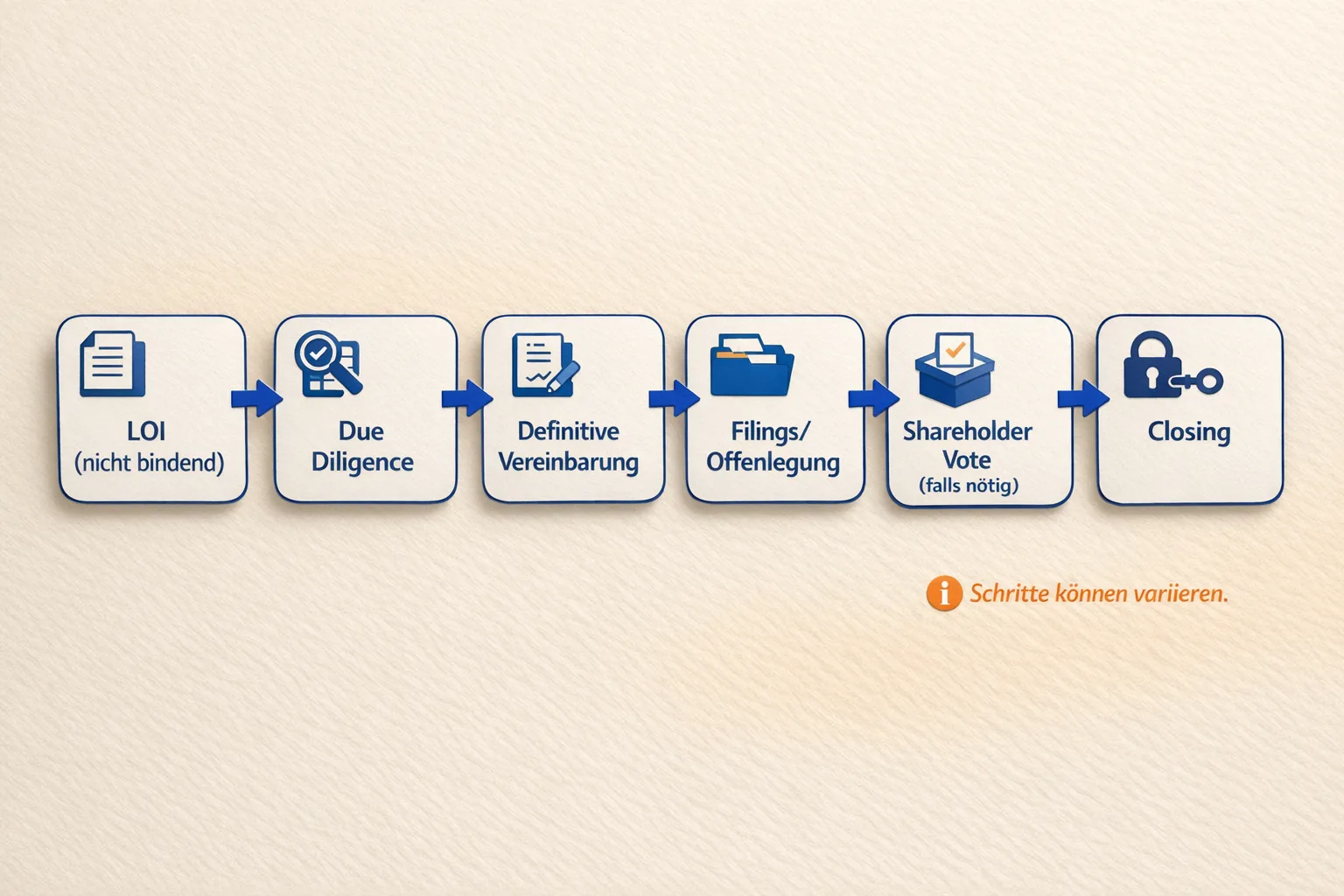
- LOI (letter of intent, often non-binding)
- Due diligence (review of finances, IP, contracts, risks, and compliance)
- Definitive agreement (final contract containing the terms and conditions)
- Regulatory steps (depending on the country and listing: filings, reports, and disclosures)
- Shareholder votes (if required)
- Closing (completion), potentially followed by rebranding, a ticker change, or management updates
Which parts are actually relevant to VeVe users?
As a collector, you probably care less about stock-market mechanics and more about practical answers. That is why these topics are worth watching—but only when they become official and specific:
- Communication from VeVe: Is there an official statement in the app, blog, or Announcements?
- Continuity: Will the app, Market, login, and collectibles remain available without changes?
- Compliance/KYC: Will verification requirements change? Be especially alert for scams.
- Terms/fees: Will fees, payout options, or terms of service change?
- Technology/chain: Will there be changes to wallet flows, migrations, or verification processes?
3) What Does This Mean for VeVe Users Today?
The straightforward answer is: Generally, nothing for now. A non-binding LOI is not a product change. Your accounts, collectibles, and comics have not automatically been “moved,” “reminted,” or otherwise changed because of it.
What can change immediately is the scam environment. Once terms such as “merger,” “NASDAQ,” or “reverse merger” start circulating in the community, fake emails and social-engineering attempts typically increase.
The most important collector safeguard: VeVe confirms it—or it is just noise
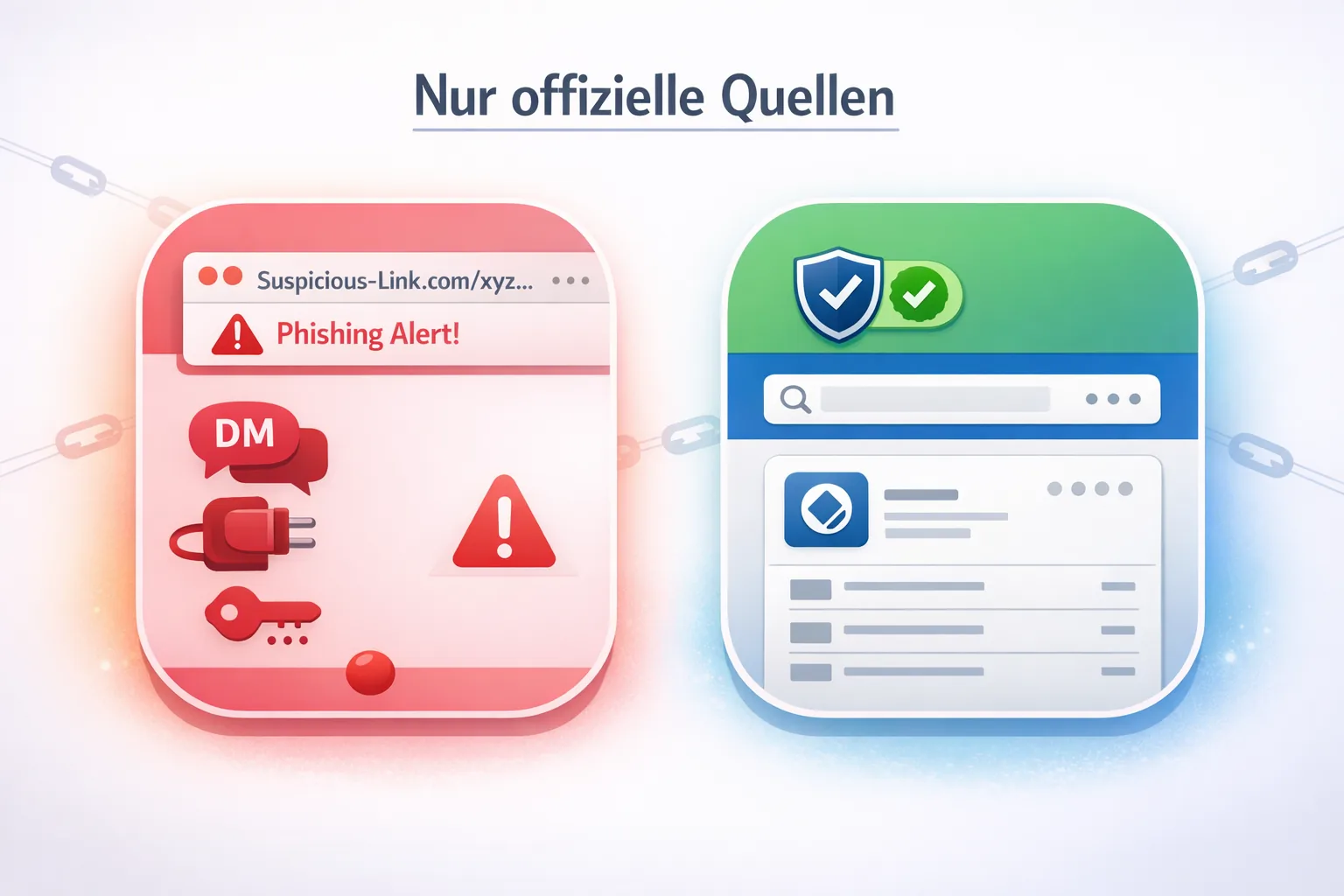
Unless VeVe itself announces specific actions, such as through official Announcements, remember: No legitimate process needs your seed phrase, no legitimate process starts in DMs, and no real KYC request will come through a stranger’s “merger link.”
Common scam stories that may become more likely
- “KYC required because of the merger—act now!” This may include a fake form or phishing site.
- “Connect your wallet for the migration.” The goal is to obtain access or signatures.
- Fake support through X, Discord, or Telegram: “We’ll help you with the merger.”
- Fake token or trading links: “ORKT x VeVe Airdrop” or “Claim now.”
If you want to strengthen your security habits in general, our guide to checking information through an explorer is a practical place to start—without taking any “wallet connect” shortcuts. Collect Block Explorer Guide: Verify Collectibles and Check Their History.
Quick Start: 7 Steps You Can Take Now
This quick-start guide is intentionally uneventful. It is designed to deliver the most value for collectors in 5–10 minutes: less risk and more clarity.
- Save the confirmed facts and dates: The LOI was publicly announced on February 11, 2026; the target date of “on or around February 28, 2026” has passed; and the March 3, 2026 update said there were still no final terms.
- Ignore any “merger KYC” request sent by DM or email link unless it has been confirmed through official VeVe channels.
- Open VeVe only through the app or website you navigate to yourself, not through someone else’s link.
- Enable or review your account security, including a password manager, a unique password, and 2FA where available.
- If you need help with KYC, use only guides and official channels: VeVe KYC Guide 2026.
- Monitor two specific source streams: (a) VeVe Announcements and (b) ORKT/SEC filings, if and when they are published.
- Make a short list of open questions using the watchlist below instead of acting too quickly—no panic buying or panic selling.
New to VeVe? If you sign up through our link at no additional cost to you, the current starter-credit guide says you will receive a $10 starter credit.
4) Watchlist: The Official Sources and Signals That Matter Now
If you take only one thing from this article, let it be this: Newsjacking is loud, but filings, definitive terms, and VeVe statements are quiet and reliable. This collector watchlist can help you separate noise from substance.
A) Sources to monitor directly
- VeVe (official): Announcements, the blog, and verified social channels. If something affects how you use VeVe, this is the first place to look.
- ORKT (official): Press releases and, where relevant, SEC filings—for example, a 6-K/8-K-type update covering material events, depending on the issuer’s specific structure.
- Your VeVeInsider news overview: Visit our blog to find updates in one place.
B) Signals that would actually mean something
- A “definitive agreement” with clear terms, not just language about what the parties plan to do.
- Specific transaction dates, including closing dates, votes, or record dates. Only then does the transaction become operationally tangible.
- Regulatory disclosures, including exactly what is being contributed, who will hold which ownership interests, and what risks are identified.
- VeVe product or policy changes, including terms, fees, KYC, payouts, or Market rules.
If fees, costs, or rules change later, you will need a neutral reference to distinguish perception from reality. Our overview can help: VeVe Fees and Costs Overview.
C) Questions to ask without speculating
- Ownership: Who would control the structure after closing, if closing occurs?
- Regulation: What requirements would result from being connected to a public listing, including reporting, compliance, and communications?
- Strategy: Would VeVe continue to operate with a collector-first approach focused on licenses, Drops, and the Market?
- User impact: Would anything change regarding logins, wallet flows, KYC, or payouts?
D) Claims you cannot make yet
- “The deal is guaranteed.”
- “The definitive agreement was signed on February 28, 2026.”
- “VeVe will automatically get better or worse now.”
- “A new token, swap, bridge, or wallet update is coming immediately.”
- “Collectibles are changing on-chain, being migrated, or being reminted.”
Collector Checklist: 7 Key Points
- Only official confirmations count: VeVe Announcements carry more weight than community threads.
- Do not click links in DMs, even if the sender is labeled an “admin.”
- No seed phrases, wallet connections, or “signatures” for supposed merger-related processes.
- Set date and keyword alerts: February 11, 2026—the public LOI announcement—and March 3, 2026—the update confirming that a definitive agreement had not yet been completed.
- Account security: Review your password and 2FA, and secure your email account.
- React only to real terms: It only makes sense to assess the transaction once definitive terms or filings are available.
- Filter out market emotion: Do not rush into buying or selling solely because of the “NASDAQ” buzz.
Key Terms Explained for Community Discussions
- LOI (Letter of Intent): A statement of intent. In this case, it is non-binding, so it is not a final deal.
- Definitive agreement: The “real” contract containing the final terms that may lead to closing if all conditions are met.
- Reverse merger: A structure through which a private company obtains a listing by combining with a publicly traded company.
- Due diligence: The review phase covering finances, risks, contracts, IP, and compliance.
- Control shift: A change in control or majority ownership. In this case, Orbis co-founders/shareholders are expected to hold a majority stake after the deal, according to the announcement.
- Dilution: When new shares are issued, the percentage ownership held by existing shareholders decreases.
- SEC filing: A disclosure covering material events involving a US-listed company or foreign private issuer, if and when required and filed.
Common Mistakes to Avoid
- Mistake #1: Reading “LOI” as “the deal is done.” A non-binding LOI is a starting point, not the finish line.
- Mistake #2: Falling for “KYC because of the merger.” Complete KYC only through official channels—never through third-party links.
- Mistake #3: Approving a wallet connection or signature just because the request sounds “technical.”
- Mistake #4: Trusting social-media “insiders” who provide no documents or primary sources.
- Mistake #5: Interpreting every ORKT price move as a signal about VeVe features.
- Mistake #6: Making collector decisions—buying or selling—based on FOMO or FUD.
- Mistake #7: Mixing up the terminology. A reverse merger is not automatically an operational “acquisition”; the details depend on the terms.
- Mistake #8: Assuming that because NASDAQ is involved, everything must be regulated or change immediately. That may happen, but it may not; specific changes and official communications are what matter.
- Mistake #9: Making claims about fees or rules without official updates. If changes are announced, compare them against a neutral overview.
FAQ
1) Do I need to do anything in the VeVe app now?
No. From a collector perspective, a non-binding LOI generally creates no immediate obligations. If VeVe requires any specific action, VeVe will communicate it through official channels.
2) Will my collectibles or comics change automatically?
The existence of an “LOI plus a proposed reverse merger” does not mean your collectibles will suddenly change. Any changes would be a separate matter involving technology, terms, or policies and would need to be clearly announced.
3) Why is a reverse merger relevant to the community?
Because it can indicate potential changes to corporate structure, ownership, and possibly reporting and transparency. For everyday users, however, what matters is whether it leads to definitive terms and official VeVe updates.
4) What is the fastest way to spot a merger scam?
A useful immediate filter is this: Anything asking for a seed phrase, wallet connection, or approval to “sign this to migrate” is a major red flag for regular VeVe users. Official processes also do not begin in DMs.
5) Where can I find updates without searching through X or Discord?
Use official VeVe channels. For a curated overview, you can also visit our blog as new articles and updates go live.
6) What is the next meaningful update to watch for?
A definitive agreement, if one is reached, and/or official filings or statements. The original window around February 28, 2026 has passed; according to the March 3, 2026 update, the parties were continuing to work on definitive terms.
New to VeVe? If you sign up through our affiliate link at no additional cost to you, the current starter-credit guide says you will receive a $10 starter credit.
Sign Up for VeVe With a Starter Credit
Note: This is an affiliate link. We may receive a commission at no additional cost to you.