
Last updated: March 10, 2026. Anyone buying on VeVe or similar platforms with Gems, credits, or in-app balances quickly realizes that the purchase price is only part of the story. Behind it are App Store rules, payment processes, support procedures, taxes, regional differences, and now new EU requirements as well.
This article is neither hype nor an attack on app stores. It is a background guide for collectors: Why are payment methods often structured the way they are? Why do so many people talk about 15 to 30 percent? And why is a simple Gem purchase often more complicated in practice than it first appears?
TL;DR: Digital goods on iOS and Android are often subject to specific in-app purchase rules. Apple and Google connect these rules not only to payment processing but also to parts of the refund, support, security, and digital content policy framework. Apple has traditionally charged a 30 % commission on digital goods in the App Store, with 15 % available through the Small Business Program and for qualifying subscriptions. Depending on the model, Google also lists rates that are often in the 15 to 30 % range.
For collectors, that means Gems are not simply “money with a prettier design”. They are often part of a product design intended to bring fees, platform rules, and the user experience together. The DMA in the EU relaxes some app store restrictions and increases pressure on gatekeepers, but it does not automatically make fees invisible or reduce them to zero.
Why Gems Are More Than Just Gems
From a collector’s perspective, Gems are convenient: You add funds, use them to buy a collectible, and do not have to enter your card details again for every Drop. From a product perspective, however, Gems are often more than a convenience feature. They act as a buffer between payment, store rules, and the digital good.
This is where the confusion begins. The user sees a simple in-app purchase, but behind the scenes the platform must determine which payment method is permitted, which rules apply to digital goods, and who handles each part of the transaction. Google’s policies clearly distinguish between digital goods in an app and physical goods or services. For digital goods in apps distributed through Google Play, the Google Play billing system is generally required unless a defined exception applies.
Apple also explicitly positions its In-App Purchase system as a solution for digital goods and services within the App Store ecosystem. This includes purchase processing, purchase history, support, and refund features.
Quick Start: How to Think About a Gem Purchase

If you are preparing for a Drop or adding Gems for the first time, this simple thought process can help. It will not eliminate fees, but it can reduce false assumptions.
- Step 1: First, check where you are buying. An in-app purchase may follow different rules than a purchase through a website or external payment method.
- Step 2: Separate digital account credit from the digital good. Buying Gems does not mean the platform can treat them like a freely transferable currency.
- Step 3: Always calculate using gross and net amounts. The purchase price is not the only factor; potential fee layers before or after the transaction also matter.
- Step 4: Read the current terms before moving large amounts. With digital goods in particular, refunds, transferability, and cash-out options are often more restricted than many people assume.
- Step 5: Consider your region. Users in the EU may see different options than users outside the EU because app store rules are changing more significantly there.
- Step 6: For sensitive topics such as wallets, migration, OMI, or external services, use official links only. Our explainers can provide context, but they do not replace an official input interface.
- Step 7: Document purchases and take screenshots early. This can save you stress when dealing with Drops, billing issues, or later support requests.
Why Fees Can Often Be 15 to 30 %
The frequently cited range of 15 to 30 % does not come out of nowhere. Apple has traditionally charged a 30 % commission on sales of digital goods and services through the App Store. A 15 % rate applies, among other cases, to App Store Small Business Program participants and qualifying subscriptions.
Google describes its structure with similar nuance: There is no single service fee. A commonly cited rate is 15 % on a developer’s first USD 1 million in annual revenue from digital goods; a 30 % rate may apply above that threshold. Google also lists a 15 % rate for many subscription models.
What collectors need to understand is that these figures do not mean every app, every sale, and every region always works the same way. They do, however, help explain why product teams structure their pricing, currencies, web checkouts, and purchase paths the way they do.

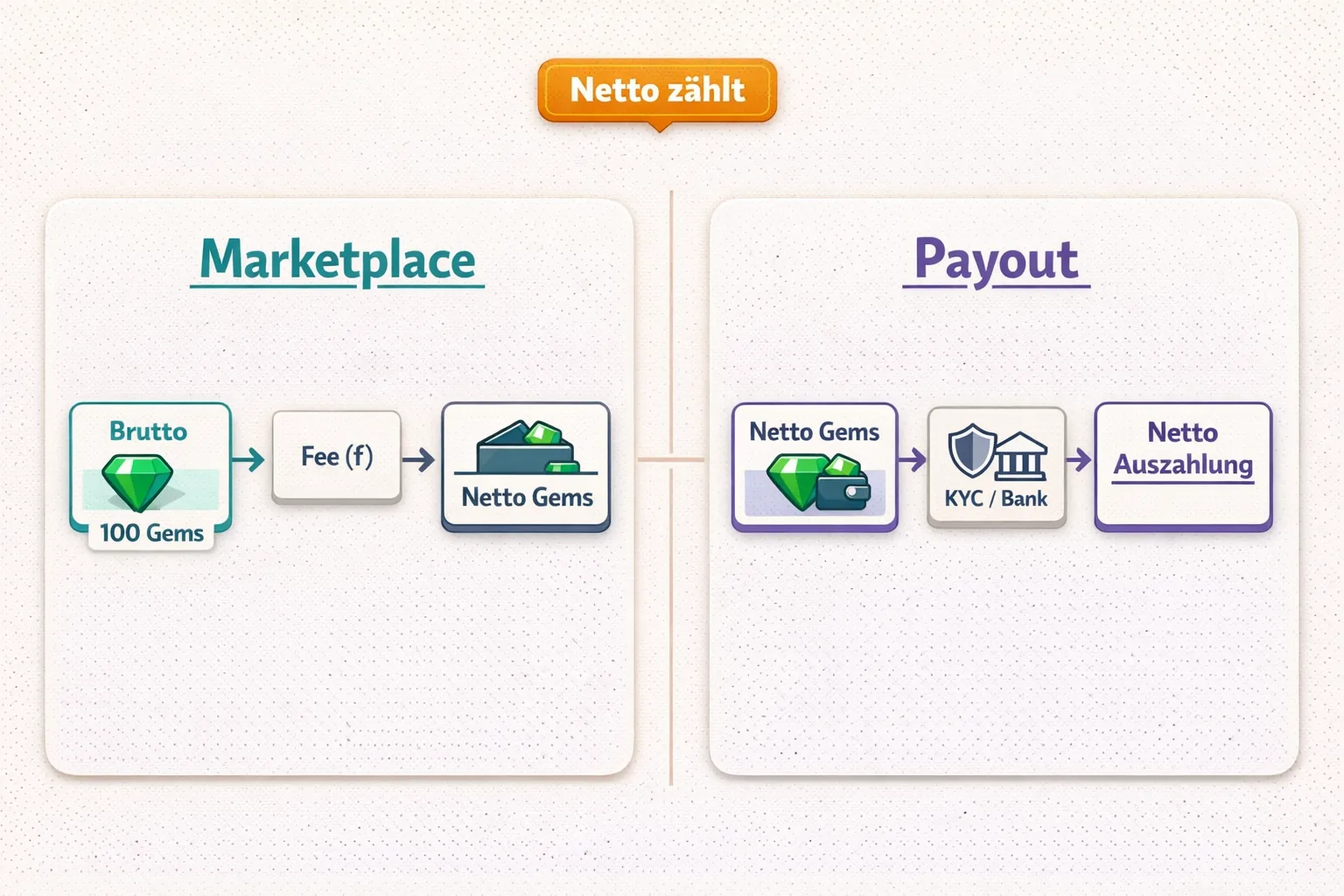
That is exactly why you should also read our overview of VeVe Fees & Costs. For many collectors, the issue is not the nominal Gem amount but the combination of the purchase method, fee structure, and potential difference between the money deposited and the net value available later.
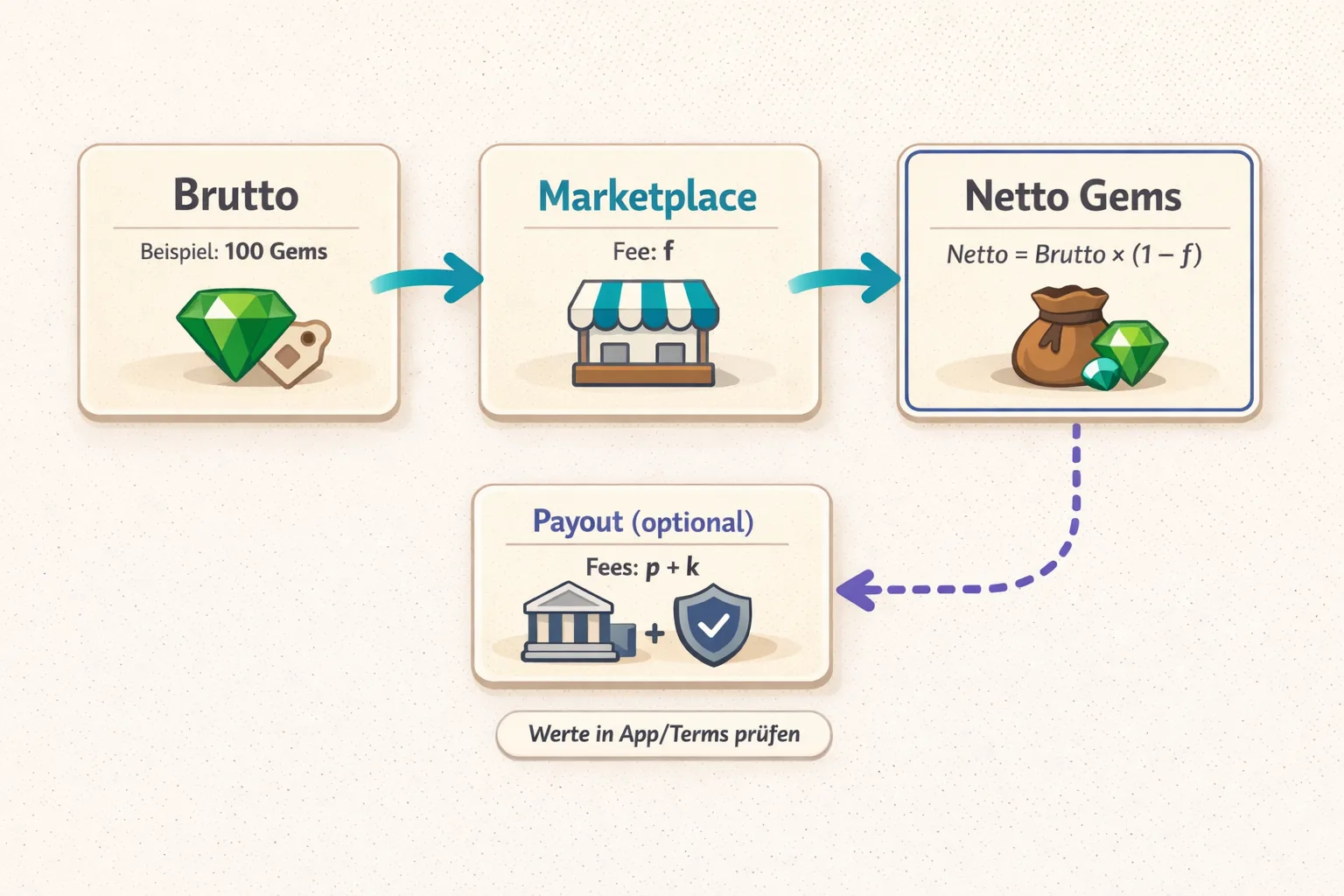
Why Platforms Charge Fees
From a user’s perspective, the question often seems simple: “What are they taking 15 or 30 percent for?” From the platform’s perspective, the answer is usually that the fee covers more than collecting payment. For In-App Purchases, Apple points to fraud prevention, refund processes, purchase history, and worldwide customer support for purchases made through the App Store system.
Google similarly describes its service fees as more than a payment-processing charge. They are part of a broader platform model involving different programs and support and ecosystem services. Google’s explicit statement that there is no single standard fee for everyone is an important distinction.
For collectors, the practical takeaway is that an app store does not charge a fee solely for processing a credit card. It claims a share for the full package, including distribution, billing rules, user trust, purchase dialogs, parts of the refund infrastructure, and the compliance framework surrounding digital purchases.
How Fees Change Product Design
This is where things get especially relevant for VeVe users. When a platform sells digital goods, it does not only consider the price of a Drop. It must also think about store rules, abandoned purchases, support costs, regional availability, and net margins. These factors influence whether you pay directly in dollars or euros, whether you buy Gems first, or whether part of the transaction flow is moved to a website.
That is why Gems often feel more complicated than they appear technically. They are not just account credit. They are also a tool for separating different processes: adding funds, buying, using the Market, billing, potential payout mechanics, and regulatory distinctions.
This also explains why the difference between buying Gems on the website vs. in the app matters to collectors. It is not only about convenience; different costs and rules may apply behind the scenes.
When a platform moves more purchases to the web, it may gain additional flexibility around fees and rules. At the same time, new friction can arise: an additional login, switching between channels, different refund processes, more personal responsibility for tax or receipt questions, and more room for user error.
DMA: Why Things Are Still Changing in the EU
This is precisely why the Digital Markets Act (DMA) is so relevant. It applies to large platforms known as gatekeepers and is intended to reduce unfair lock-in. The Council of the EU explicitly states that gatekeepers must not prevent developers from using third-party payment platforms for app sales. The DMA is also intended to create more choice and fairer conditions.
For app stores, this is more than theory. On April 23, 2025, the European Commission found that Apple had breached the DMA’s anti-steering obligation. According to the Commission, app developers should be allowed to inform users about alternative offers outside the App Store and direct them to those offers free of charge.
Apple has already introduced new models and addenda in the EU. In its EU-specific developer terms, Apple describes reduced commission rates of 10 % or 17 % on transactions involving digital goods and services for iOS and iPadOS apps, depending on the model. Depending on the selected model, reporting obligations, API requirements, a payment-processing fee, or additional fee components may also apply.
Put simply: The DMA does not make app store rules disappear. It does, however, shift negotiating power and force large platforms to take alternative options more seriously. For collectors, that could mean more choices over the long term. In the short term, it often means more variations, more terms, and a greater need for explanation.
Collector Checklist
- Before buying, check whether you are paying in the app or on the website.
- Do not look only at the Gem amount; consider the entire path from depositing funds to using them.
- For larger amounts, read the current terms, including our article VeVe Gems Terms Explained Simply.
- If KYC, banking, or payouts are involved, confirm the requirements early. Our VeVe KYC Guide is a useful starting point.
- Before a Drop, it is better to add Gems in advance than to improvise at the last second.
- Use official links only for wallet, OMI, Stackr, or migration topics.
- Keep organized records of receipts, invoices, and screenshots.
Key Terms Explained
- In-App Purchase: A purchase of digital goods or services made directly within an app using the store’s designated system.
- Digital goods: Content or features used digitally, such as currencies, upgrades, subscriptions, or app features.
- Steering: Directing users to an alternative offer or payment method outside the app store.
- Gatekeeper: A very large platform subject to specific competition rules under the DMA.
- Commission / Service Fee: A percentage charged by a store or platform on certain transactions under its business model.
- Gems: In-app credit or platform currency; functionally, they are not automatically the same as freely available cash.
- KYC: Identity verification that may be required for certain financial or payout processes.
Common Mistakes to Avoid
- “Gems are simply money at a 1:1 ratio.” No. An in-app balance is subject to its own terms, purchase paths, and sometimes its own restrictions.
- “The fee is always 30 %.” That broad statement is also incorrect. Apple and Google have programs, exceptions, and region-specific models.
- “The web is automatically cheaper and better.” The web can offer advantages, but it often comes with more friction, different support processes, and greater personal responsibility.
- “The DMA means no fees.” No. The DMA changes the options available to gatekeepers and the restrictions placed on them; it does not guarantee a zero-fee world.
- “I can read the terms later.” This is a common mistake with digital goods. Read them before buying, not after something goes wrong.
- “External links from DMs are probably fine.” When OMI, Stackr, wallets, or migration are involved, use official links only. For additional context, you can then read our guide to converting OMI to Gems through Stackr.
- “I’ll remember the details.” It is better to save screenshots, the date, amount, payment method, and relevant emails. This can save time in support cases.
If you want to review other common VeVe pitfalls, read VeVe Beginner Mistakes & Fixes. It takes a more practical look at the mistakes that cause the most frustration when getting started.
What This Means for VeVe Collectors
For VeVe collectors, the main lesson is not to memorize every platform rule. It is more important to understand the logic behind the product design. When a platform uses Gems, it is usually not trying to confuse collectors intentionally. Instead, it is trying to fit app store, payment, and platform rules into a manageable model.
The result still does not always feel straightforward. That is exactly why fees and terms should not be treated as an afterthought. Our guide to VeVe Gems, OMI & Payouts helps separate the terminology surrounding account balances, additional steps, and requirements.
A collector-first approach means: understand the structure first, then buy. If you focus only on the Drop timer, it is easy to overlook the factors that actually affect your costs.
FAQ
Is 30 % Always the Standard for Digital Goods?
No. Apple and Google describe models that include 30 % rates, but they also offer 15 % or other reduced rates depending on the program, revenue tier, subscription type, or region. Saying it is “always 30 %” is too broad.
Why Do App Stores Treat Digital Goods Differently From Physical Goods?
Because their rules typically target digital content, app features, and services within their own ecosystems. Google’s Payments Policy clearly distinguishes between digital goods in apps and physical goods or services.
Does the DMA Mean I Will Soon Be Able to Buy Everything More Cheaply Outside the App Store in the EU?
Not automatically. The DMA increases pressure on gatekeepers and strengthens alternative payment and distribution options. However, alternative models come with their own terms, reporting obligations, and sometimes continued fees.
Why Do Gems Often Seem More Expensive or Confusing Than Paying Directly in Euros?
Because several layers may sit between your money and the actual digital purchase: app store rules, the platform balance, Market mechanics, terms, and potentially later payout or conversion questions.
Is Buying Through the Website Generally Better for Collectors?
It depends on your goal. Website purchases may follow different cost structures or rules in some cases, but they are not automatically more convenient. Always check the platform’s current process, the available support path, and your own tolerance for errors.
What Should I Do Before an Important Drop?
Check your account, test your payment method in advance, read the terms, avoid adding Gems at the last second, and use official links only. For help with the basic setup, see our guides to fees, website vs. app purchases, and beginner mistakes.
New to VeVe? Before signing up, review our current guide to account creation and potential starting credit.
Sign Up for VeVe: Starting Credit Guide
Note: The external sign-up link is an affiliate link and may generate a commission at no additional cost to you.
Sources
- Membership Details – Apple Developer Program
- App Store Small Business Program – Apple Developer
- In-App Purchase – Apple Developer
- Payments – Play Console Help
- Understanding Google Play’s Service Fee – Play Console Help
- Changes to Google Play’s Service Fee in 2021 – Play Console Help
- Digital Markets Act – Consilium
- Commission finds Apple and Meta in breach of the Digital Markets Act – European Commission
- Communication and promotion of offers on the App Store in the EU – Apple Developer