VeVe looks simple at first: load Gems, join a Drop, and add a collectible or comic to your collection. In practice, beginners keep making the same mistakes—and they are rarely just “bad luck.” They almost always come down to an incomplete setup or a misunderstanding of how the system works.
This guide turns the most common pitfalls into a clear routine: Symptom → Cause → Fix → How to avoid it. No hype or promises of returns—just a collector-first approach you can use right away.
TL;DR: Secure your email and VeVe account first with a strong password and 2FA where available. Understand the difference between a Drop and the Market, always calculate your net proceeds after fees and payout costs, document everything important—including purchases and KYC—and do not plan MCP or set strategies until you have read the current rules in the app.
Quick start: Get set up safely before you tap “Buy”
If you remember only one thing, make it this: VeVe is much less stressful for collectors when security and documentation become routine. That is not paranoia—it saves time.
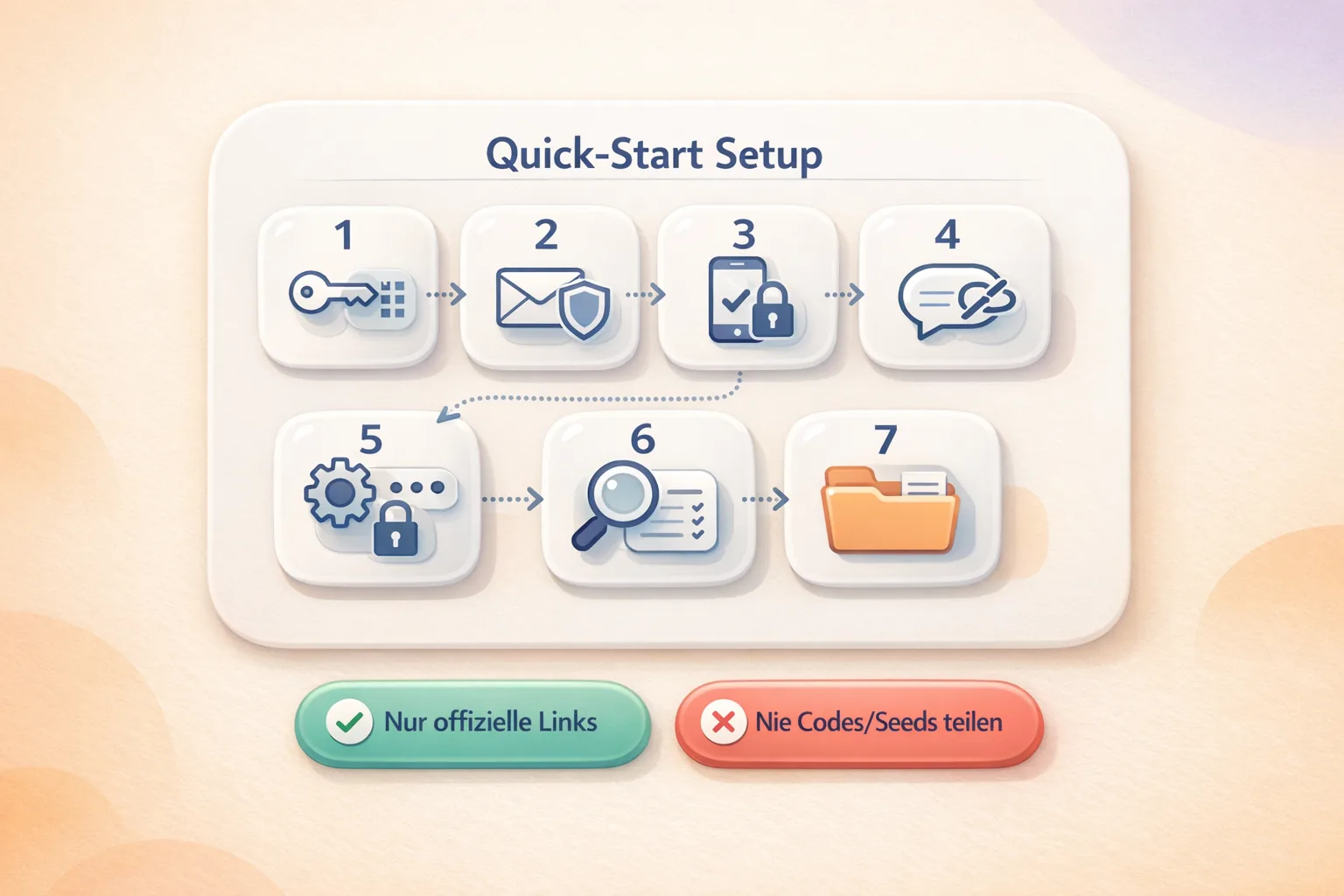
- Lock down the account basics: Use a unique password, use a password manager, and review your login methods.
- Secure your email: Your email is the key to your VeVe account. Protect it with a strong password and 2FA before you load any Gems.
- Enable 2FA where available: If VeVe or your login method offers 2FA, enable it and store your recovery codes securely offline.
- Set firm scam rules: Do not open links from DMs, do not use “support” chats outside official channels, and never share codes or passwords.
- Keep the app and device secure: Update your operating system, use a passcode or Face ID, and avoid rooted or jailbroken devices.
- Learn to read listings before buying: Understand the edition, rarity, mint number, and any set association before you buy.
- Keep basic records: Create a folder or note for purchase confirmations, important screenshots, your KYC status, and the date and time of any issues.
If you are new and want to build a solid foundation first, read our beginner guide alongside this article: VeVe Beginner Guide 2026: Your First Purchase and a Secure Account.
Key terms explained so you do not collect based on a misunderstanding
Many beginner mistakes are really terminology mistakes: You use the right word but mean something different. These are the terms that cause the most confusion.
- Drop: A primary sale in the VeVe app at a set time and in a specific format. Demand may be high, and success is not guaranteed.
- Market: The secondary market between users. This is where you buy and sell listings, and prices are dynamic.
- Set: A defined group of items that may count as complete for MCP or profile purposes, depending on the current rules. Always check the details in the app.
- MCP (Master Collector Program): A program with points, Levels, and Ranks whose mechanics may change. A good strategy starts with understanding the rules, not panic buying. Start here: MCP Basics 2026.
- Rank vs. Level: Your “Level” reflects your progress, while your “Rank” compares you with other collectors. Confusing the two often creates false expectations. Learn more: MCP Ranks and Levels Explained.
- KYC: Identity verification that may be required for certain features, such as payout or eligibility. Guide: VeVe KYC Guide 2026.
- Custody vs. Self-Custody: Custody means the platform manages access and safekeeping. Self-custody means you are responsible for your keys and recovery. Overview: Custody vs. Self-Custody.
The most common beginner mistakes—and how to fix them
These mistakes are not “stupid.” They are common because VeVe combines several layers: an app account, in-app currency, collectibles and comics, a secondary market, and—depending on how the platform develops—blockchain and custody topics. The important thing is this: You do not need perfection. You just need a routine.
Using a weak or reused password
Symptom: You receive login alerts or “unknown session” messages, or you realize too late that your account has been compromised.
Cause: You reused a password from another service or chose a weak password without using a password manager.
Fix: Change your password immediately, sign out everywhere if possible, change your email password as well, and confirm that your email account is secure.
How to avoid it: Use a password manager and create a unique, long password for every service. Account security protects your collection—it is not just a “techie issue.”
Skipping 2FA—and having no recovery plan
Symptom: Unauthorized access immediately becomes stressful: You have to contact support, wait for a response, and cannot take action in the meantime.
Cause: You skip 2FA because you will “do it later,” or you store recovery codes insecurely, such as in a cloud screenshot.
Fix: Enable 2FA wherever it is available in your login flow, whether through VeVe, a connected account, or your email. Store recovery codes offline.
How to avoid it: Set one simple rule: Enable 2FA before moving money or Gems.
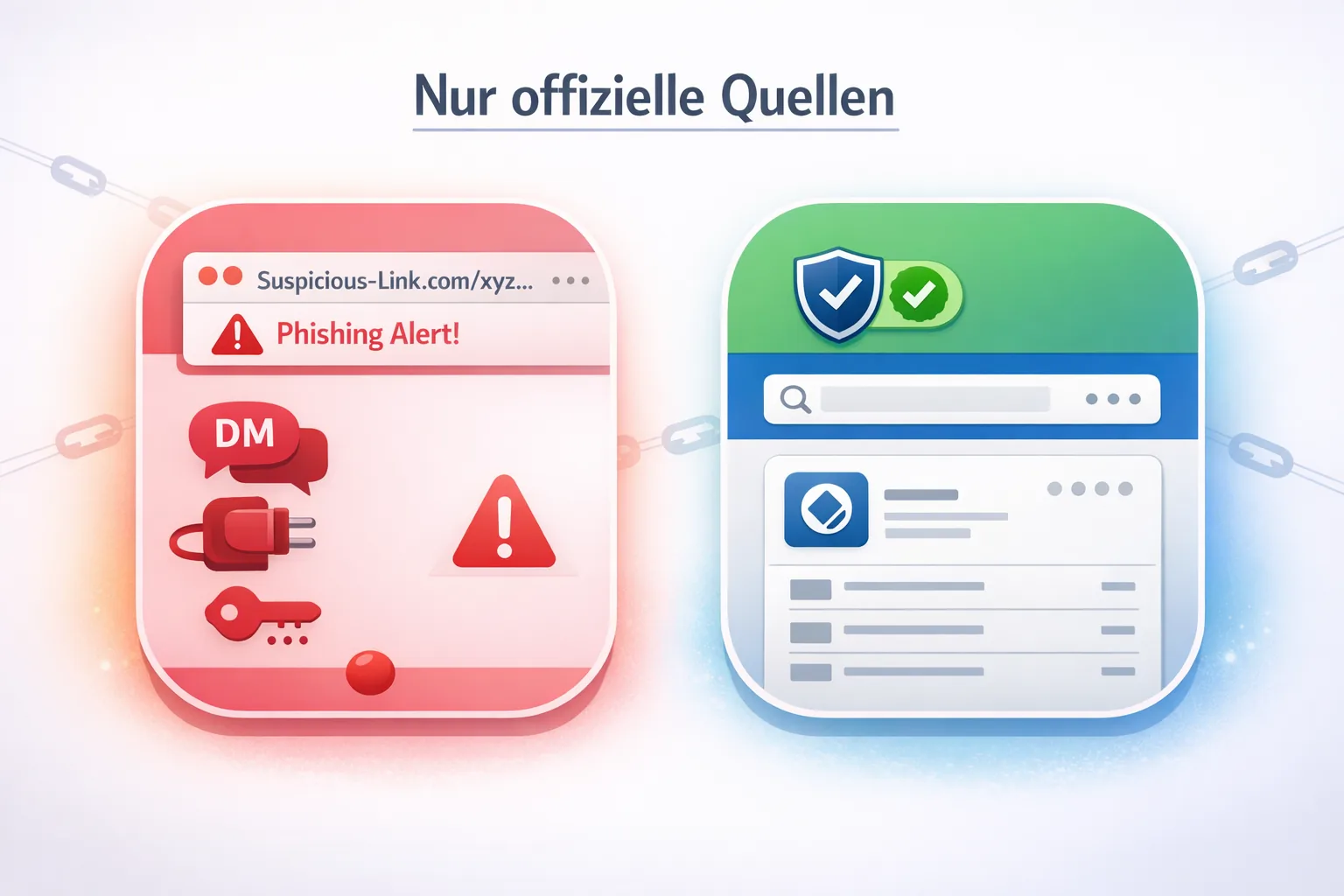
Falling for phishing through DMs, fake support, or “explorer” links
Symptom: Someone claiming to be “VeVe Support” messages you on Telegram, Discord, or X and asks you to “verify,” “connect your wallet,” or open a link.
Cause: Stress, urgency, and false authority—such as “you only have 10 minutes!”—are exactly what scammers use against you.
Fix: Stop immediately. Do not connect anything or enter any information. Check the official channels in the app and act only from there.
How to avoid it: Adopt one standard rule: “Support via DM does not exist for me.” If something is important, it will appear in the app or on official pages.
Misunderstanding “Gems = real money” by not reading payout terms
Symptom: You plan purchases and sales as if Gems were a cash account, then later discover that payout or transferability is subject to conditions or has changed.
Cause: You did not read the terms, relied on outdated social media information, or confused in-app currency with the ability to cash out.
Fix: Read the current terms and check them in the app. Use explanatory articles for general guidance, but do not treat them as the final authority.
How to avoid it: Understand the terms before moving larger amounts into Gems. Start with VeVe Gems Terms (Nov. 2025) Explained Simply and, for 2026 context, Gems, OMI, and Payout Guide 2026.
Overpaying on the Market because of flawed floor-price thinking
Symptom: You quickly buy at the floor, then realize you chose the wrong variant, an undesirable mint number, an illiquid item, or a poor spread.
Cause: You treat the floor price as a “fair price” instead of a snapshot. You may also overlook listing details such as the edition, rarity, mint number, or series.
Fix: Take 60 seconds before every purchase to check: Which variant is this? Which edition or series? How many listings are there? How quickly does it sell? Do this without getting lost in the numbers.
How to avoid it: Set clear limits, including a maximum price, compare multiple listings, and learn the fundamentals of the Market: VeVe Market Guide: Buying, Selling, Risks, and Liquidity.
New to VeVe? If you sign up through our link at no additional cost to you, the current starter-credit guide says you will receive $10 in starter credit.
Ignoring fees and net proceeds when selling
Symptom: You list too close to your target, expect a “profit,” and then discover that your net proceeds are lower because of the Market Fee and potentially additional payout steps.
Cause: You focus on the visible listing price instead of the net result. Many beginners estimate by feel instead of calculating systematically.
Fix: Work backward before every sale: “How much do I need to receive after fees?” Then set your listing price.
How to avoid it: Build a net-proceeds routine and review how the fees work: VeVe Fees and Costs.
Misunderstanding the MCP by confusing points, sets, and “rewards”
Symptom: You rush to buy items “for the MCP,” chase sets, and become frustrated when the result is not what you expected or when the rules or eligibility differ.
Cause: You treat the MCP like a guaranteed rewards system. Many explanations are also outdated or refer to rules from a different period.
Fix: First understand the MCP as a tracking and structure program: Which items qualify, how are MCP points calculated, and what is the difference between Rank and Level?
How to avoid it: Start with the basics, then build a strategy that fits your collector type: MCP Guide Overview and MCP Basics 2026.
Set FOMO: Prioritizing “completion” over collection quality
Symptom: You collect many items you do not actually want just to make a set show as “complete,” then later realize you have diluted your collection.
Cause: You treat set status as a seal of quality. But “complete” does not automatically mean “aligned with your goals.”
Fix: Define a core collection around your favorite IPs, style, and format, such as comics versus 3D collectibles. Sets then become optional rather than mandatory.
How to avoid it: Write down three questions: Why do I collect? What will I still enjoy a year from now? What is my maximum budget? You can then make calmer decisions.
Starting KYC too late—or submitting inconsistent information
Symptom: When you suddenly need KYC for certain features, you are under time pressure. You may also receive follow-up questions because names do not match or photos are blurry.
Cause: You treat KYC as a “problem for later” instead of a normal part of maintaining a properly set up account.
Fix: Complete KYC early and without rushing. Take clear photos of your documents and enter names exactly as they appear on your ID.
How to avoid it: Follow a step-by-step guide and allow time for processing: VeVe KYC Guide 2026.
Having no payout or exit plan
Symptom: You collect and trade, but if the rules change or you want to take money out of the system, you have no plan and must research under pressure.
Cause: When starting out, you think only about buying rather than the full lifecycle: Buy → Hold → Sell → Optional payout.
Fix: Decide whether you want to collect and rotate items entirely in-app or whether you may eventually want a payout. Then read the guides that apply to your intended path.
How to avoid it: Start here: Gems, OMI, and Payout Guide 2026. If you have specific questions about the period after the cutoff date, read VeVe Payout After Nov. 19, 2025: Is It Still Possible?.
Using external swaps, bridges, or “quick fixes” without a security framework
Symptom: You follow “instructions” from social media and click through tools, but afterward you cannot tell whether you visited a fake site or selected the wrong network option.
Cause: Complex topics such as wallets, bridges, and tokens are treated like a click-through funnel instead of a security process.
Fix: When dealing with OMI or Gems, use only official links, verify every step, and start with a small test if the system allows it at all.
How to avoid it: Read a clear overview without promises and stick to official sources: OMI to Gems via Stackr: Process and Fees and Stackr Explained: Secure Setup. Remember: DM links are always off-limits for security-sensitive steps.
Collector checklist before every purchase or sale
This list is intentionally short. It is not meant to slow you down—it is designed to catch common mistakes in 30–60 seconds.
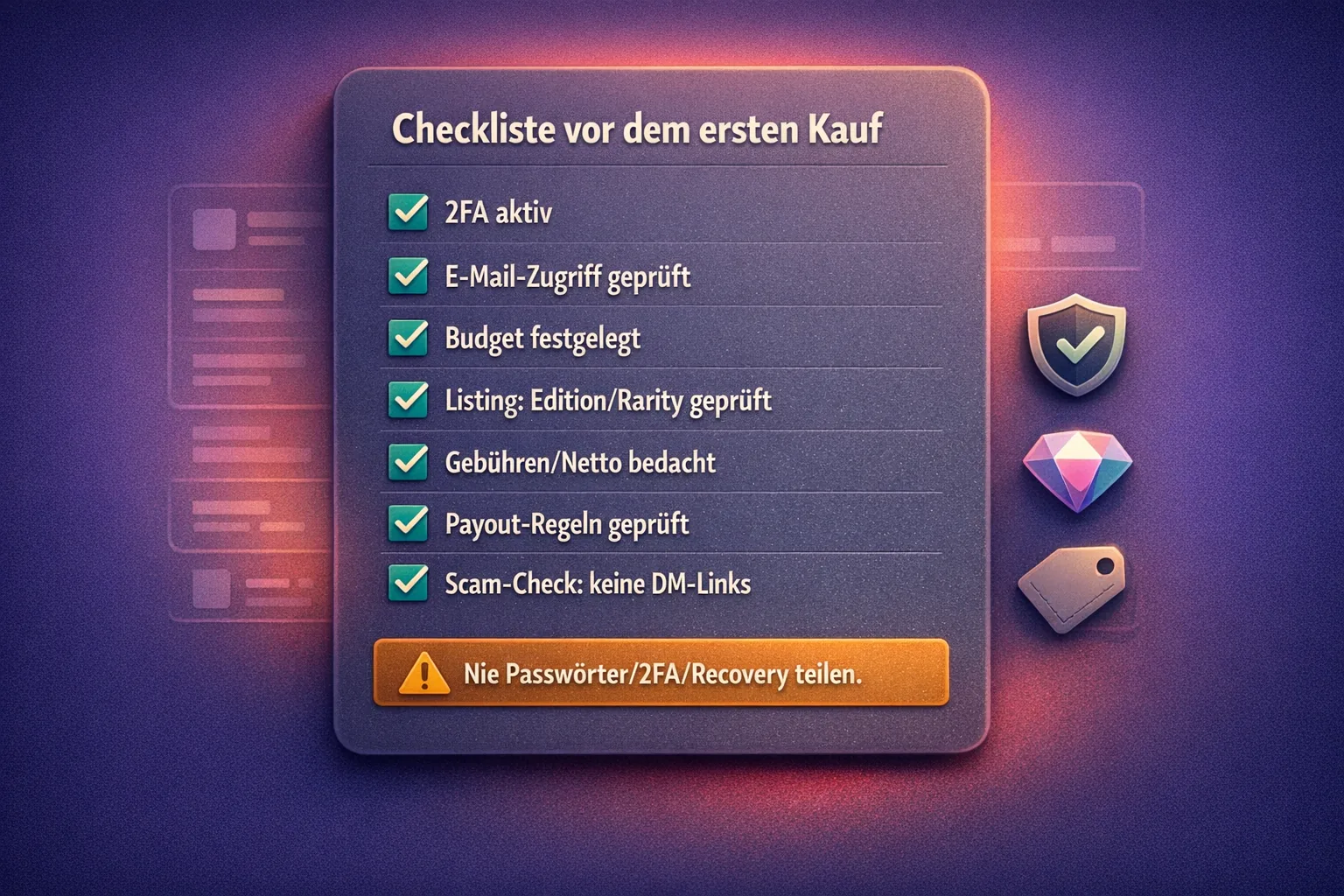
- Am I under time pressure right now? If so, stop first and decide later.
- Did I check the listing details? Confirm the edition, variant, rarity, mint number, and series. Do not buy because something “looks similar.”
- Did I calculate the net result? Do not forget fees or payout requirements, and check the current rules in the app.
- Does it fit my core collection? Or is this only hype or set FOMO?
- Scam check: Did the idea come from a DM or “support” message? If so, the answer is no.
- Documentation: Save receipts and screenshots for any important activity.
Avoid common mistakes with small rules that make a big difference
If you want to simplify your collecting routine, these basic rules can help. They intentionally reinforce many of the lessons above.
- Account security is part of your collection. It is not optional and not something to handle “later.”
- Treat every in-app rule as subject to change. Check terms and eligibility before making important decisions.
- Do not buy because you feel you “have to.” Drops and Waitlists are opportunities, not obligations.
- Approach the MCP as a strategy, not a sprint. Understand first, then optimize.
- The Market is a market, not a price tag. Floor prices and trends are snapshots.
- Use official links or do not proceed. This is especially important for wallet, migration, and swap topics.
For a broader overview of the topics we have covered recently, the VeVe Insider blog is the best place to start.
FAQ
Should beginners use Drops or the Market?
For many beginners, the Market is easier to control because you can view listings and compare them. Drops have their appeal, but they also involve more time pressure and do not guarantee success. That is fine if you treat them as an event.
How can I tell whether payout, KYC, or MCP information is still current?
The most reliable information is available in the app and through official announcements. When reading guides, always check the update date and verify critical details such as eligibility and terms in the app.
Is it worth completing sets “at any cost”?
Sets may make sense if they fit your core collection and you understand how they work within the MCP. Completing them “at any cost” often leads to set FOMO and a collection you later regret.
What is the most important security rule for links?
Do not click links from DMs, and never enter codes or passwords just because someone claims to be “support.” If something is legitimate, you can verify it through official channels without being pressured for time.
Where can collectors learn the basics of buying and selling?
Our Market guide is a good starting point for the secondary market: Buying, Selling, Risks, and Liquidity. For additional information about costs and fees, see Fees and Costs.
New to VeVe? If you sign up through our affiliate link at no additional cost to you, the current starter-credit guide says you will receive $10 in starter credit.
Sign Up for VeVe with Starter Credit
Disclosure: Affiliate link. We may receive a commission at no additional cost to you.