Many collectors run into the same issue: OMI is a token, Gems are an in-app currency, and there is a process between them that can look “simple” depending on the setup but may fail in practice because of details such as networks, fees, verification, and timing.
This guide explains the StackR flow so you understand exactly what happens and where—and how to tell whether your expectations are realistic. No made-up fee estimates and no “it’s always worth it” talk.
TL;DR
- OMI ≠ Gems: OMI is a crypto token, while Gems are typically tied to VeVe and follow their own rules.
- StackR is the “translator” in the flow: You move OMI from wherever you hold it into a StackR process that may ultimately enable Gems—or a Gems-like balance within the VeVe ecosystem—depending on the current rules and integrations.
- Fees come in layers: network fees (gas), possible exchange withdrawal fees, service/swap fees, potential spreads, and, where relevant, VeVe-side fees.
- “Burn” means: Tokens are removed from circulation—if that mechanism is active—for example, by being sent to an unusable address. Whether and how this happens in your specific flow depends on the current implementation.
- Main risks: the wrong network, an incorrect address/tag, phishing through fake links, timing issues involving fees or block times, and unrealistic expectations such as “Gems can always be freely cashed out.”
What Does “OMI → Gems via StackR” Actually Mean?
OMI is a token from the ECOMI/VeVe ecosystem. You typically hold OMI on an exchange or in a wallet. Gems, by contrast, are VeVe’s in-app currency and are therefore subject to VeVe’s rules, terms, and processes.
StackR is often described by the community as a “bridge”: a service or flow that can help you make OMI practically usable within the VeVe/Gems ecosystem without having to piece together every technical step yourself.
If you want a clear overview of OMI fundamentals before considering any conversion, read our OMI/ECOMI Token Guide.
The Flow at a Glance: What Happens Where?
The most important mindset shift is that “OMI → Gems” is rarely one simple click. It is more like a chain of separate stages, and each one may have its own rules and fees.
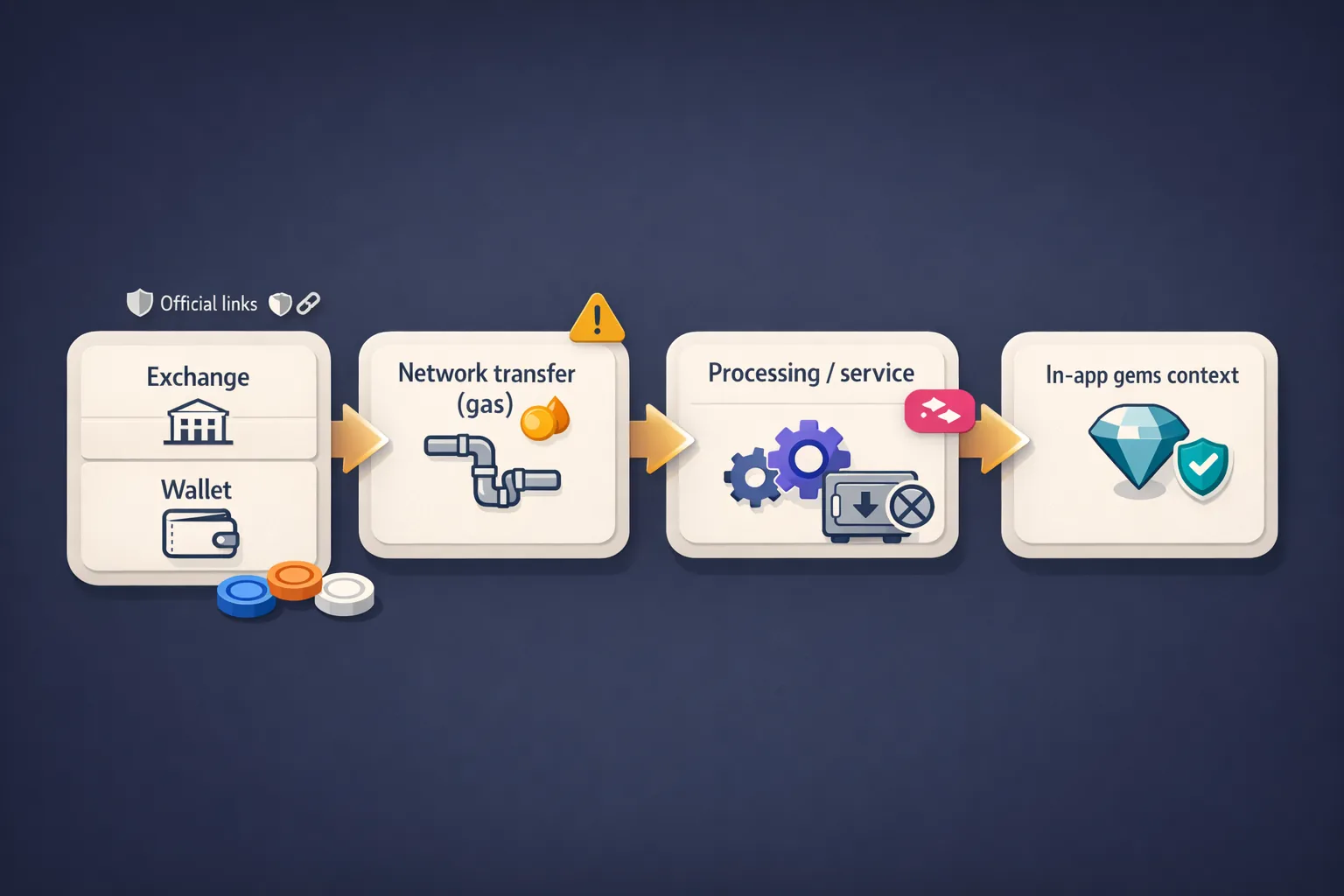
Stage 1: Where Is Your OMI Now?
Exchange or wallet? This matters because exchanges often have their own withdrawal fees, minimum amounts, and network options. Wallets give you more control—but also more responsibility for selecting the network, checking the address, and maintaining security.
Stage 2: Transfer Into the StackR Process
Depending on the StackR setup, you may need to send OMI to a specific address, use a deposit feature, or complete a swap/bridging step. This is where network fees (gas) commonly apply and where most wrong-network mistakes happen.
Stage 3: Conversion/Settlement (Swap, Service, and Potential Burn Mechanism)
This is the “translation” stage: OMI is technically processed—for example, swapped or converted—and service fees, spreads, or mechanisms such as burning may apply if implemented. The key point: none of this is automatically free, and not every integration has to work the same way.
Stage 4: The Result Within the VeVe Ecosystem
The end result is either a Gems balance or a step that brings the result into the VeVe ecosystem. This is where VeVe’s own rules apply, including what Gems can be used for, whether they can be transferred or cashed out, and which requirements must be met.
These two explainers provide useful context on the rules surrounding Gems:
Quick Start: Step by Step for Collectors
The following steps are intentionally generic because details such as supported networks, limits, and interface labels can change. The benefit remains the same: you will know which checks to make before every click.
- Step 1: Define your goal. Do you want to use Gems to buy and collect, or are you expecting to cash out? That expectation will determine whether you are disappointed later. If you are unsure, review the Gems and payout information first.
- Step 2: Use an official source—not DMs. Only use official VeVe communications or officially confirmed StackR access points. Avoid links sent through Telegram or Discord DMs and “support” accounts that pressure you to act.
- Step 3: Check your OMI network version. Check which network your OMI is on in your wallet or exchange and which network the destination process currently supports. This is where the most expensive mistakes happen, including tokens being “lost” because the wrong network was used.
- Step 4: Send a small test instead of going all in. If possible, send a small test amount first. This lets you verify the address, network, crediting process, and timing before moving larger amounts.
- Step 5: Check the actual fees. See whether network fees (gas) are currently high, whether your exchange charges an additional withdrawal fee, and whether service or swap fees may apply in the StackR process.
- Step 6: Make the transfer using “copy/paste + visual verification.” Always copy the address, then compare the first and last characters. If the system requires a memo, tag, or reference, do not leave it blank.
- Step 7: Track and document the status. Save screenshots or notes with the date and time, transaction hash if available, amount, and network. That is not paranoia—it is collector discipline in case you need support later.
If you are looking for a specific StackR walkthrough as a companion guide, read How to Swap OMI for Gems (2026 StackR Guide) and combine it with the security checks above.
New to VeVe? According to the current starting-credit guide, you will receive $10 in starting credit when you sign up through our link, at no extra cost to you.
Which Fees May Apply—and Why Do They Often Feel Higher?
Without claiming specific percentages—which vary by provider, network, and date—you can divide potential fees into five broad categories. This helps collectors look beyond “one fee” and focus on the net result.
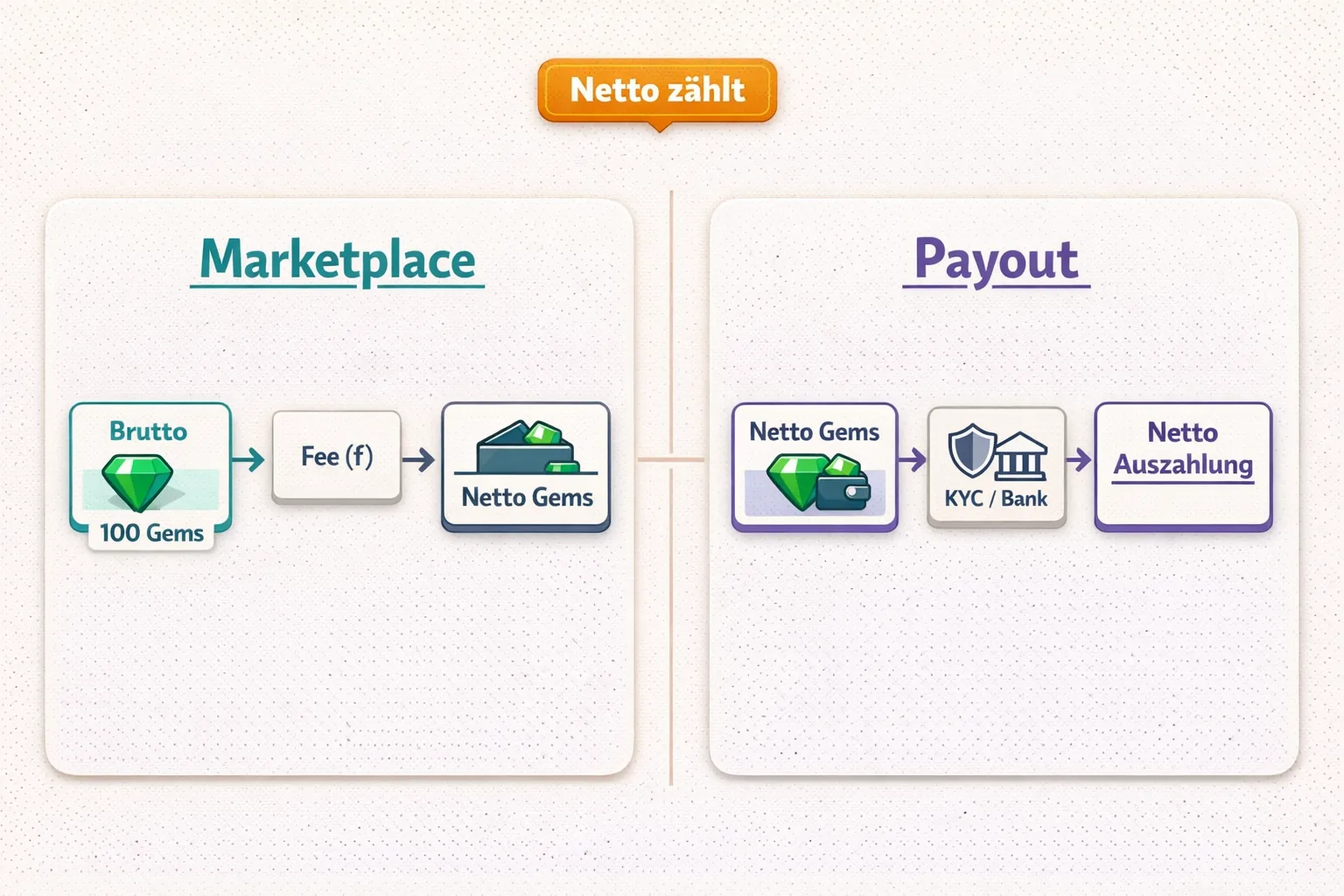
Network Fees (Gas)
When you move tokens, you pay a fee to the network, depending on which network you use. This fee fluctuates and can rise sharply during busy periods. That is not a “StackR problem”; it is a normal feature of blockchains.
Exchange Fees (When Withdrawing From an Exchange)
Exchanges may charge fixed or variable withdrawal fees, and they may have minimum amounts or network requirements. This can sometimes make a small test transfer impractical, but testing is still often the safest approach.
Service/Processing Fees
A service that provides conversion or settlement may charge fees for the service, risk, liquidity, or processing. Whether and how these fees are displayed depends on the interface and integration.
Spread/Slippage (The “Invisible” Part)
Even if you do not see a separate fee line, the exchange rate may include a difference known as the spread. Market volatility or low liquidity may also cause slippage. This often feels like “hidden fees,” but it is usually a result of market mechanics.
VeVe-Side Fees (Depending on Context)
Once you are using Gems, VeVe’s rules apply. Fees may be relevant when trading in the Market or using payout processes, where available. For a helpful overview, see VeVe Fees & Costs.
What Does “Burn” Mean Here—and What Does It Not Mean?
“Burn” is one of those words that can quickly sound like “price appreciation,” which is exactly why it deserves a straightforward definition.
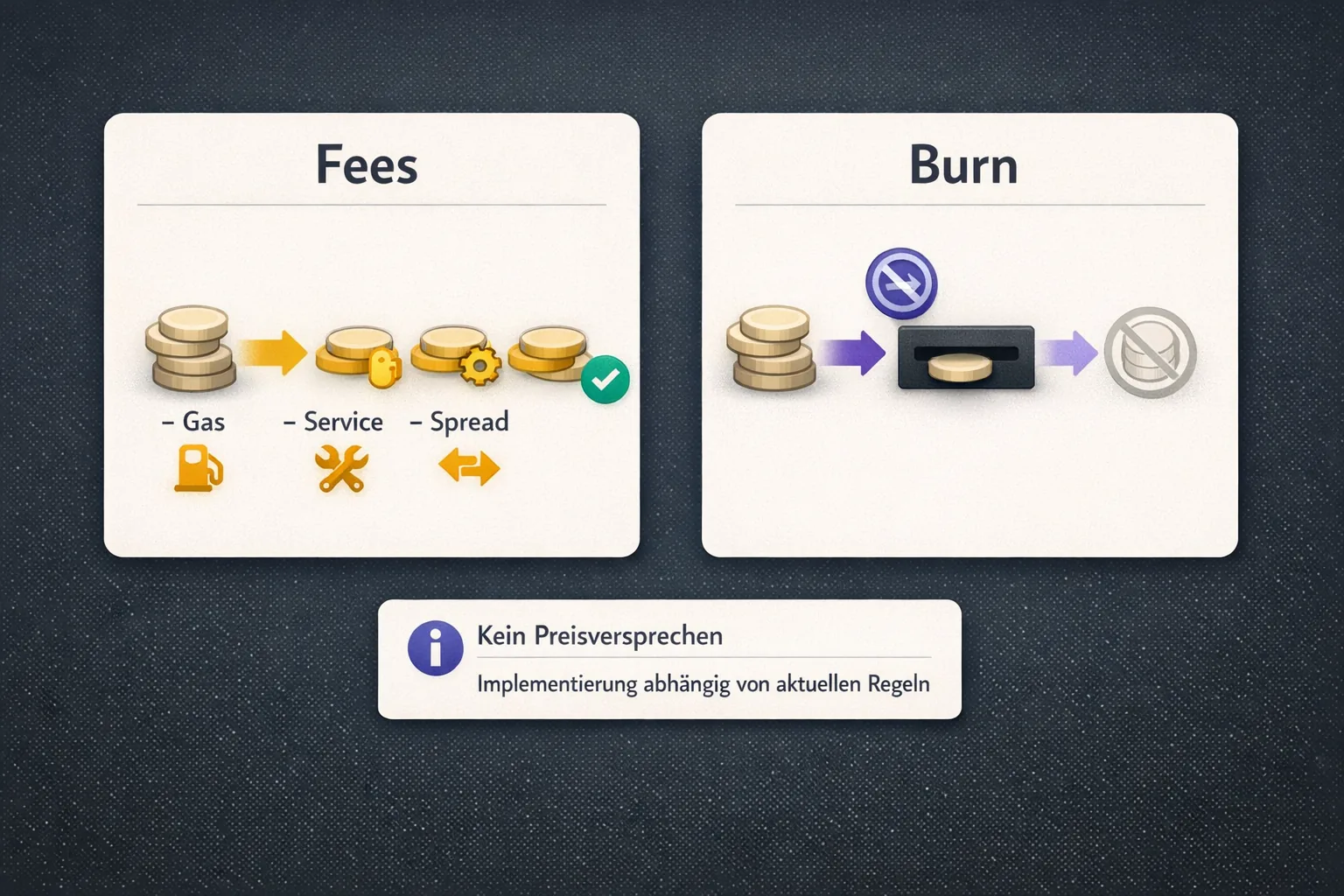
Burning in General
A token burn means tokens are removed from circulation in a way that makes them effectively unusable—typically by sending them to an address whose private key no one controls, or through other protocol mechanisms.
Burning in the “OMI → Gems” Ecosystem (A Possible Interpretation)
When burning is discussed in connection with OMI, VeVe, or StackR, it may mean—depending on the current implementation—that some tokens are removed from circulation as part of conversions or transactions. Whether this happens in your specific flow, in what amount, and at which stage depends on the current rules and should only be evaluated using official information.
What Burning Does Not Automatically Mean
- No price guarantee: Burning does not automatically mean the price “has to go up.”
- Not a replacement for fees: Even if burning occurs, network and service fees may still apply.
- No guarantee of better utility: Whether Gems or OMI utility grows depends on product decisions and rules—not a buzzword.
Collector Checklist: What to Confirm Before You Start
- Official access point: No links from DMs, fake “support” accounts, or wallet connection requests sent through chats.
- Network match: Check the OMI network/token version at your source and make sure it matches the destination process.
- Test amount planned: If possible, test with a small amount first and account for the related fees.
- Fee buffer: Keep enough funds available for network fees, or the transfer may get stuck.
- Timing: If gas is expensive or the network is congested, it may be better to wait than to rush the transfer.
- Documentation: Save the amount, network, date and time, confirmation page, and transaction hash if available.
- Expectation check: Gems do not automatically mean “payout.” Review the applicable rules and terms.
Avoid Common Mistakes That Can Really Hurt
- Choosing the wrong network. This is the classic mistake. The tokens may not arrive or may only be recoverable with extra effort or support—sometimes not at all.
- Using the wrong token version. Depending on the environment, there may be “native” and “wrapped/bridged” versions. Do not assume that “OMI = OMI” in every context.
- Failing to verify the address carefully. Copy/paste is useful, but always compare the first and last characters. Malware can replace clipboard contents.
- Forgetting the memo/tag/reference. If a system requires one, leaving it blank is not a minor mistake—it may prevent the funds from being credited.
- Expecting the process to be too fast. Block times, confirmations, queues, and manual reviews can all take time. Do not plan around “a Drop in five minutes.”
- Underestimating fees. Fixed exchange fees or gas can account for a large percentage of smaller transfers.
- Phishing or fake support. No one needs your seed phrase. No one needs you to connect your wallet “for verification” because “everything will expire otherwise.”
- Treating Gems like “free cash.” Gems are primarily an in-app currency. What you can do with them depends on VeVe’s rules and your account status.
If you are seeing lots of “You need to do this right now…” posts related to VeVe or Collect Chain, also read the Collect Chain Migration FAQ (“Do I Need to Do Anything?”). It helps separate pressure-driven reactions from actual requirements.
Key Terms Explained
- OMI: A crypto token from the ECOMI/VeVe ecosystem that can be held in wallets or on exchanges and transferred on-chain.
- Gems: VeVe’s in-app currency. Its use, transferability, and potential payout options are defined by VeVe’s rules and terms.
- Gas / network fee: A fee charged when sending or swapping on a blockchain. It fluctuates depending on network activity.
- Swap: Exchanging one token for another, usually through liquidity pools or service providers.
- Spread: The difference between the “buy” and “sell” price or exchange rate, which can function like an indirect fee.
- Slippage: The difference between the expected and actual execution price, often caused by volatility or low liquidity.
- Burn: A mechanism that removes tokens from circulation, such as sending them to an inaccessible address. It does not automatically guarantee a price increase.
FAQ
Are Gems “Like Dollars” and Always Available for Payout?
Gems are primarily an in-app currency. Whether and how payouts are available depends on VeVe’s rules, your region, KYC, and the current process. If you are unsure, start with the Gems/OMI/Payout Guide and the Gems Terms.
Which Fees Are Guaranteed?
Nothing can be guaranteed without knowing your specific setup, but there is typically at least one network fee whenever you move something on-chain. Additional fees may depend on the exchange, service/swap, and—depending on your VeVe activity—the Market or payout process.
Why Is the “Wrong Network” Such a Serious Issue?
Because the same “address” may mean something completely different on another network, or the recipient may only monitor one specific network. Your transfer can therefore be technically valid but still miss the intended destination.
What If My Transaction Is “Pending”?
A pending transaction can be normal because of congestion, a fee that is too low, or a queue. Most importantly, do not panic and use questionable “accelerator” links. Document the status and transaction hashes, and only use official support channels and status pages.
Isn’t a Test Amount a “Waste of Money” If Fees Apply?
A test amount often comes with fees—yes. But it can protect you from the much more expensive mistake of sending a large amount through the wrong network or to the wrong process address. For many collectors, that is the best trade-off: a small cost in exchange for reducing a major risk.
Where Can I Find a Clear StackR Setup Guide Covering Security and the Basics?
As a companion to this flow guide, read StackR Explained: Set Up VeVe/OMI Safely.
Conclusion: When Does the StackR Route Make Sense for Collectors?
Collectors benefit most when they view the flow as a practical tool, not a “shortcut to profit.” If your goal is to collect within the VeVe ecosystem, a properly understood OMI→Gems flow may be useful, provided you account for fees realistically and take security rules seriously.
If you expect Gems to be freely available for payout automatically, or if you want to make transfers under time pressure, the risk of frustration—or mistakes—is much higher. In that case, review the rules and terms first, then take your time and start with a test amount.
New to VeVe? According to the current starting-credit guide, you will receive $10 in starting credit when you sign up through our affiliate link, at no extra cost to you.
Sign Up for VeVe With Starting Credit
Disclosure: Affiliate link. We may receive a commission at no extra cost to you.