Since 2025, VeVe has increasingly used Challenge formats where activity, set completion, or AR missions contribute to points, leaderboards, and rewards. That can be exciting for collectors, but it also leaves room for mistakes: If you overlook event windows, eligibility, or anti-manipulation rules, you may end up putting in effort without earning points.
This guide breaks down the main Challenge types, explains common rules, and shows you how to prepare properly without setting unrealistic expectations for rewards or returns. Updated: May 26, 2026.

TL;DR: VeVe Challenges are limited-time events with their own rules. Daily Activity tracks activity in the app, Set Challenges count completed sets, and AR Quest focused on daily AR missions. Always check the Challenge window, KYC, account status, point cap, leaderboard rules, and official announcements. Rewards may include MCP points or airdrops, but they are not a promise of value or profit.
Why VeVe Challenges matter to collectors
Challenges are more than just small in-app tasks. They can be directly connected to the Master Collector Program and influence how active collectors approach points, ranks, or event rewards.
It is important to distinguish between collecting normally and participating within a specific Challenge window. A set that makes sense for your long-term collection may not automatically count in every Challenge. Conversely, a Challenge may appear to offer a lot of points but only be relevant if you actually meet its eligibility requirements.
If you first want to understand the fundamentals of MCP, start with the MCP Basics guide to Daily Points and sets. For an explanation of what ranks and levels mean, see our article on MCP Ranks and Levels.
The three main Challenge types
1. Daily Activity Challenge
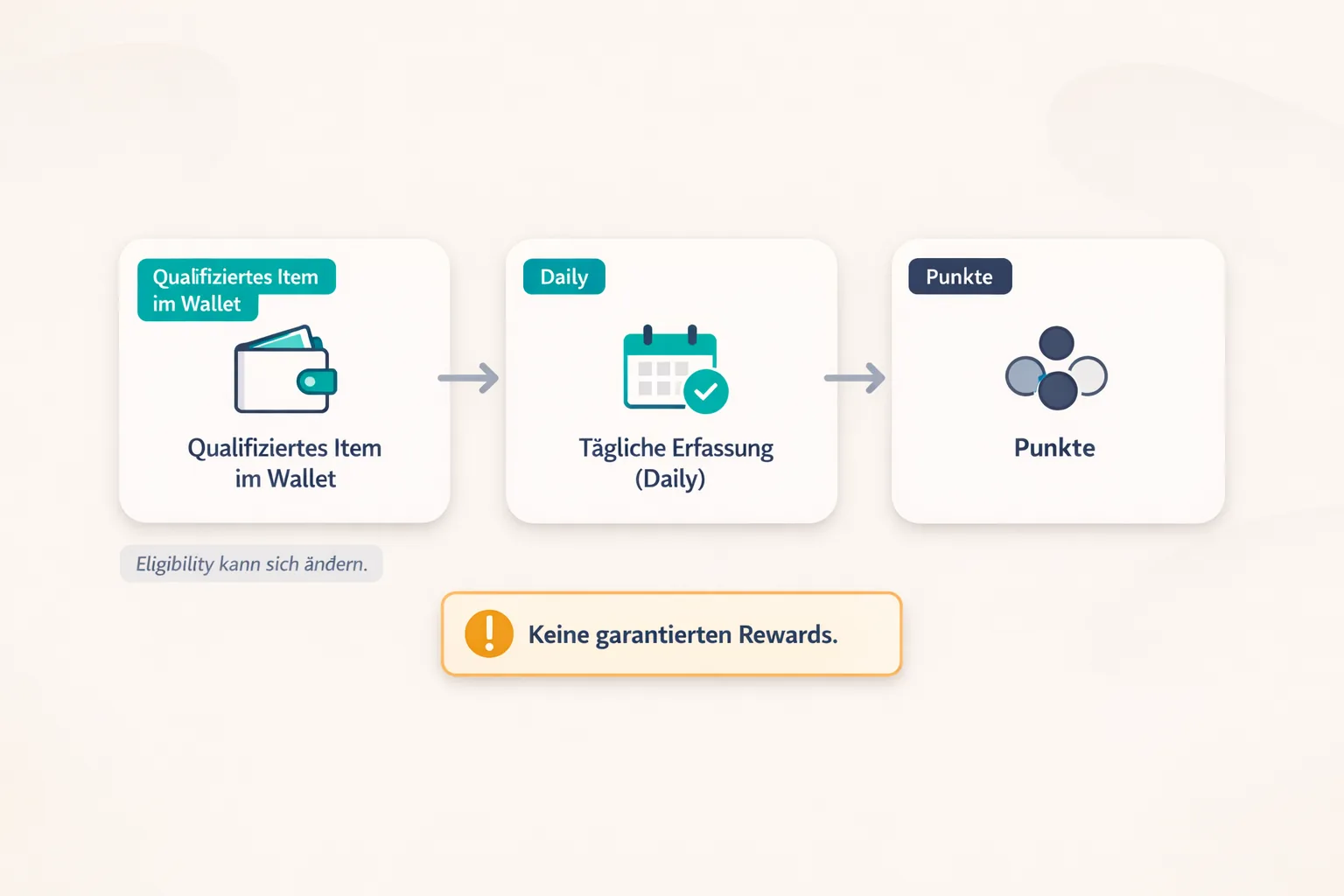
The VeVe Daily Activity Challenge was a leaderboard-based event in which daily in-app activities generated Activity Points. According to VeVe, users could earn up to 30 Activity Points per day and climb the leaderboard through actions such as liking, commenting, sharing, visiting Showrooms, or creating listings.
The key was repeated activity during the Challenge period rather than one major action. The Top 250 format was particularly relevant because the highest-ranking participants could receive rewards such as MCP points or collectible airdrops.
2. Set Challenges
Set Challenges focus on completed sets. In 2025, VeVe described two different versions: a New Unique Set Challenge, where first-time set completions during the event window counted, and an Ultimate Set Holder Challenge, where existing completed sets, including duplicates, were taken into account.
This is where many misunderstandings arise. A set completed before the event may be irrelevant in one Challenge but count in another. Duplicates can also be treated very differently depending on the specific Challenge rules.
If you want a better overview of the sets in your collection, see our guide to the VeVe Collection View for sets, comics, and stats. It can help you review owned and missing items more systematically.
3. AR Quest
The VeVe AR Quest was a 14-day event featuring daily augmented reality missions. VeVe described daily tasks worth up to 8 points per day, level progression, community milestones, and a max-level reward of 5,000 MCP Points plus entry into a collectible giveaway.
The difference from the Daily Activity Challenge is its focus: AR Quest was centered on completing daily mission objectives in AR rather than general in-app activity. That made timing, app permissions, and device setup especially important.
Points, eligibility, and event windows: the rules to check first

Before spending Gems or changing your collection, read the Challenge rules in this order: What counts, who is eligible, when the window begins and ends, how ties are resolved, and which actions can lead to disqualification?
Daily Caps and point limits
A Daily Cap limits the maximum number of points you can earn each day. According to VeVe, the Daily Activity Challenge allowed up to 30 Activity Points per day, while AR Quest offered up to 8 points per day. Once you reach the cap, further activity may still contribute to the community, but it will not automatically earn additional Challenge points.
Knowing the cap can help reduce stress. Rather than rushing through more actions late in the evening, it makes more sense to know the cap, check your in-app status, and save screenshots of relevant progress.
KYC and an account in good standing
For Set Challenges, VeVe listed KYC verification and an account in good standing as key requirements. If your account is restricted, your KYC remains incomplete, or you have unresolved support cases, you should review those issues before a Challenge.
For KYC errors, documents, and common reasons for rejection, see our separate VeVe KYC guide. If your account appears to be restricted, our article on Restricted Access and disabled accounts may help.
Do not confuse UTC, PST, and PT
Challenge windows may be communicated in UTC, PST, or PT. VeVe referenced UTC windows for the Set Challenges, while other events were announced using PT. It may sound like a minor detail, but it determines whether an action falls within the valid window.
In practice, save the start and end times in your local calendar, note the original time zone as well, and avoid last-minute purchases if you have not verified the conversion.
Tie-breakers and leaderboard rules
For Set Challenges, VeVe listed Join Date as the tie-breaker. That means an equal point total does not automatically result in an equal ranking. Leaderboards may also update with a delay or display standings that are not yet final.
Do not rely on a single screenshot taken during the event. It is safer to keep a simple record that includes the time, in-app status, relevant set view, leaderboard position, and any messages.
Fairness: Wash Trading, manipulation, and risky shortcuts
VeVe explicitly states that Market Manipulation or Wash Trading can lead to disqualification from Set Challenges. The main takeaway for collectors is simple: Do not use artificial transactions, coordinated sham purchases, or risky workarounds just to generate points.
Even if an action appears technically possible, that does not automatically make it legitimate. If you are unsure whether certain behavior is allowed, it is better to avoid it or wait for official clarification. A fair ranking is worth more than a short-term point boost that puts your account at risk.
The same caution applies to Drop mechanics. If a Challenge overlaps with Drops, the Waitlist, or Auto-Pay, also read our guide to VeVe Drop strategies covering the Waitlist, Auto-Pay, Rebound, and MCP.
Do/Don’t checklist for Challenge participants
Do: Smart and legitimate steps
- Read the complete Challenge rules before buying or changing your sets.
- Check your KYC, account status, app version, and login ahead of time.
- Record the start and end times in your local time as well as the original time zone.
- Document your in-app progress, leaderboard, and relevant set views.
- Use only official VeVe channels, in-app notices, and support options.
- Set your budget in advance and do not treat rewards as a guaranteed return.
Don’t: What to avoid
- Do not buy solely for an anticipated reward if you would not otherwise want to hold the item.
- Do not make sham purchases, coordinate back-and-forth transactions, or engage in Wash Trading patterns.
- Do not participate through fake forms, DMs, or unofficial Challenge pages.
- Do not connect wallets, enter seed phrases, or share 2FA codes to claim supposed rewards.
- Do not guess the time-zone conversion shortly before the event window closes.
- Do not make external off-platform deals that supposedly provide points or sets faster.
Keep rewards in perspective

Challenges may include MCP points, airdrops, Draw entries, or other in-app rewards. That makes them interesting to active collectors, but rewards should never be treated as guaranteed value in return for spending.
MCP points are part of a gamified collector system. They may be relevant to ranks, levels, prioritization, or other parts of the program, but they do not replace personal budget planning. If you want to spend points or use them strategically, also read our guide to MCP Priority Bidding and common mistakes when using points.
A better perspective is to treat Challenges as a bonus for activities that already fit your collecting style. If you planned to complete a set anyway, an event can add extra context. If you buy only for a leaderboard, the risk of poor decisions increases.
New to VeVe? Our VeVe signup and starting credit guide explains how to get started without the hype. When you sign up, you can receive $10 in free starting credit. Even so, evaluate every collectible based on your interests, budget, and the official rules—not anticipated rewards.
Security: How to spot Challenge scams

The more attention an event receives, the more likely fake forms, fraudulent support DMs, and supposed reward claims are to appear. The rule is simple: A legitimate VeVe Challenge does not require your seed phrase, private wallet access, or 2FA codes.

Access Challenge information through the app, official VeVe websites, or bookmarks you have already saved. Do not rush to open supposed reward links found in comments, Telegram groups, or direct messages.
If you want to learn more about custody, wallet risks, and phishing, our guide to Custody vs. Self-Custody for collectors is a good place to start. New users may also find the VeVe beginner’s guide to secure account setup helpful.
Quick start: How to prepare for the next Challenge
- 1. Identify the Challenge type: Is it based on daily activity, sets, AR missions, or something new?
- 2. Save the official rules: Record the date, time zone, point system, eligibility, and rewards.
- 3. Check your account: Review KYC, login access, app version, notifications, and possible restrictions.
- 4. Review your collection: Consider sets, missing items, and potential purchases separately from FOMO.
- 5. Prepare your documentation: Organize screenshots of your status, progress, and leaderboard.
- 6. Apply a security filter: No DMs, external forms, or wallet permissions.
- 7. Wait after the event: Finalization, potential reviews, and reward distribution may take time.
Common mistakes and better alternatives
Mistake: Treating the Top 250 as guaranteed profit
Top 250 mechanics may unlock rewards, but they do not guarantee a financial benefit. It is better to view the ranking as an event objective rather than a reason to buy items you do not actually want to collect.
Mistake: Completing a set outside the event window
For Set Challenges, when and what counts often determines eligibility. Check whether only new set completions count, whether existing sets are included, and whether duplicates are taken into account.
Mistake: Treating leaderboard screenshots as final confirmation
Leaderboards can change, ties may be settled by a tie-breaker, and suspicious activity can be reviewed afterward. A better approach is to document your status without assuming that rewards are final.
Mistake: Opening a scam link under time pressure
Challenge events create a sense of urgency, and scammers exploit exactly that. Open links only through official channels and ask yourself with every form: Why would VeVe request sensitive login information outside the app?
VeVe Challenges FAQ
Do all in-app actions automatically count toward every Challenge?
No. Each Challenge has its own rules. Daily Activity counted specific in-app activities, Set Challenges focused on sets, and AR Quest used daily AR missions.
What does Top 250 mean?
Top 250 refers to the highest-ranking participants on a leaderboard under the rules of the relevant Challenge. Depending on the event, this ranking may qualify participants for rewards, but it is always subject to the official terms.
Why is KYC important?
For Set Challenges, VeVe listed KYC verification and an account in good standing as eligibility requirements. If those requirements are not met, an apparently successful entry may become invalid.
What is Wash Trading in the context of a Challenge?
It refers to artificial or manipulative transactions intended to create the appearance of activity or generate points. VeVe states that manipulation or Wash Trading can lead to disqualification.
Should I buy solely because of a Challenge?
Only if the collectible or set fits your collecting goals and budget independently of the event. Rewards are an event mechanic, not reliable value in return or a financial strategy.
Conclusion: Challenges are useful when you take a measured approach
VeVe Challenges can be fun, engage the community, and bring MCP points or other rewards into focus. But the best approach remains collector-first: Read the rules, stick to your budget, respect fair play, and prioritize security over speed.
Collectors who carefully check Daily Caps, set rules, KYC, time zones, and scam risks will face considerably less stress. That is the point of a good Challenge setup: not collecting more frantically, but participating more intentionally.
If you are new to VeVe and want to try it, you can sign up through our affiliate link: Sign up for VeVe with $10 in starting credit. When you sign up, you receive $10 in free starting credit. Disclosure: VeVeInsider may receive a commission; there is no additional cost to you, and you receive $10 in free starting credit.
Sources