At first glance, VeVe may look like “an app for buying digital collectibles.” In practice, it is more like a small ecosystem built around your account, an in-app currency called Gems, Drops, the Market, and—depending on the topic—a steady stream of new terms such as MCP, Collect Chain, and Self-Custody.
This guide is collector-first: You’ll get clear steps, a checklist to use before your first purchase, and the most important pitfalls to avoid—without hype or false promises.
TL;DR
- Set up your email, 2FA, and device security properly before adding money.
- Before your first purchase, understand Gems, fees, and payout rules—including what is realistic in 2026.
- In the Market, you need to understand edition, rarity, mint number, floor price, and spread—otherwise, you’re buying blind.
- Scams almost always arrive through DMs, fake links, and messages claiming “you must migrate or claim now.”
1) What Is VeVe—and What Are You Actually Buying?
VeVe is a platform where you can collect and trade digital collectibles in 3D and digital comics. The most important thing for beginners to understand is that you are not buying “a JPEG.” You are buying a digital collectible with platform-based features such as display options, collection management, potential AR viewing, and trading through the Market.
If you are completely new, start with this introduction: What Is VeVe?
Custody vs. Self-Custody: A Short but Essential Explanation
Much of the app feels like a standard account: login, password, and 2FA. At the same time, topics such as Collect Chain and Self-Custody continue to come up in discussions in 2026. For a clearer overview, read: Collect Chain Phase 2: Self-Custody—Expectations, Risks, and Opportunities.
2) Quick Start: From Zero to Your First Purchase Without the Stress
Think of this as a step-by-step checklist. If you reach step 3 and still feel unsure about anything, stop and secure your account before continuing.
If you are reviewing new VeVe features with security and scam protection in mind, you may also find VeVe Stickerverse useful.
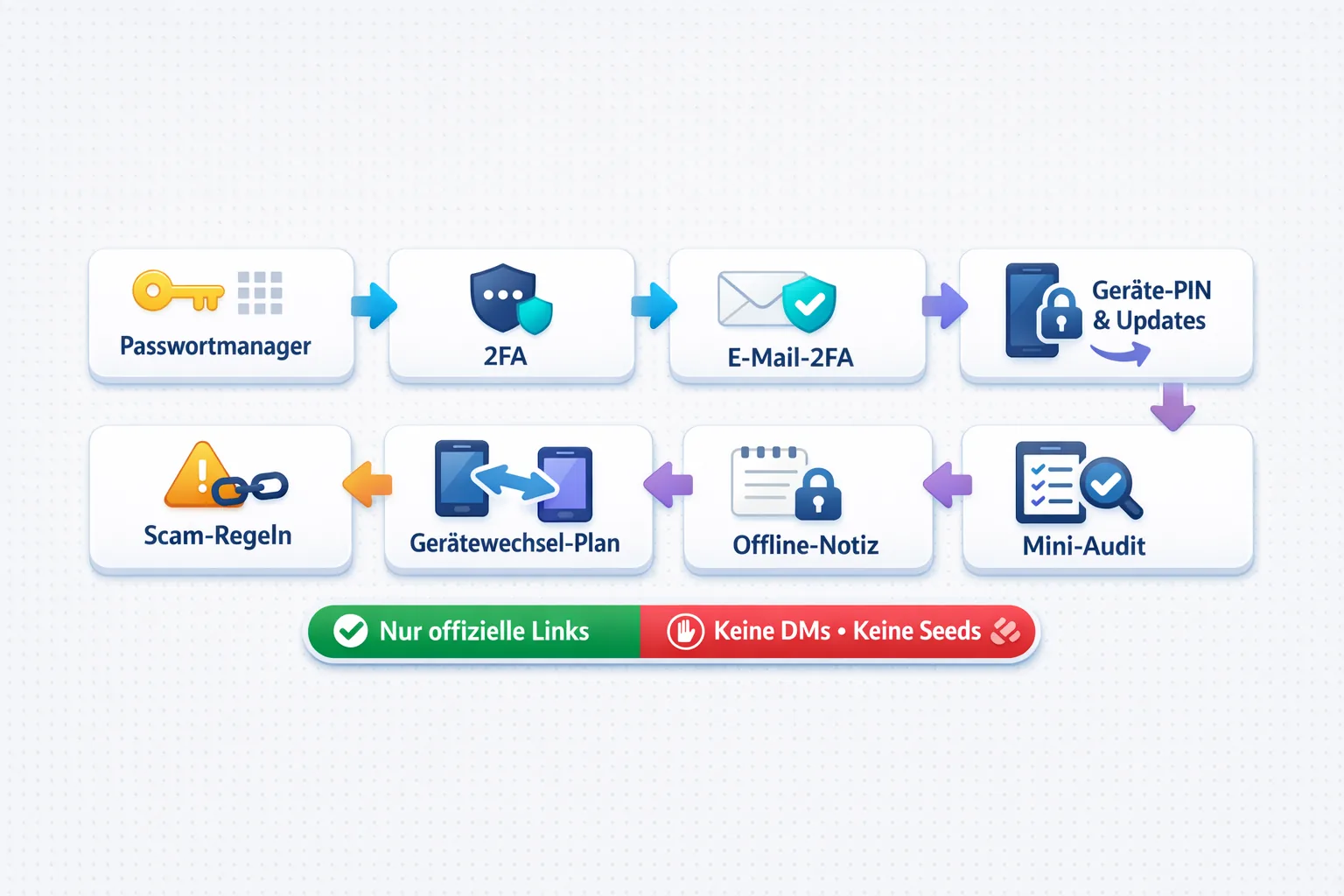
Step 1: Install the App and Verify the Official Access Point
Only install VeVe through the official app stores. Avoid downloads from links sent through DMs or “support” chats. It may sound obvious, but this is one of the most common entry points for scams.
Step 2: Create Your Account and Treat Your Email as the Key
Use an email address you expect to control long term. In practice, your email is often your lifeline if something goes wrong with your login, password, or verification.
Step 3: Use a Password Manager and a Strong, Unique Password
A strong password is not an optional extra; it is essential. Most importantly, make it unique, never reuse it, and save it in a password manager—not in notes or chats.
Step 4: Enable 2FA and Store Your Recovery Information Safely
Enable 2FA as soon as it is available. Store recovery codes offline, not as a screenshot in the cloud. Never share your codes—even with someone claiming to be “support” in a DM.
Step 5: Secure Your Device With a PIN, Updates, and App Protection
Many people do not lose their account—they lose their device or open the wrong link. Keep your operating system current, use a passcode or biometrics, and install updates promptly.
Step 6: Understand Gems Before Buying Them
Gems are the in-app currency used for purchases. Before adding Gems, decide whether you only want to collect through the Store and Drops or also trade in the Market. That decision affects how much flexibility you may need.
To learn how purchasing through the website may differ from the app depending on your region, platform, and current terms, read: Buying VeVe Gems: Website vs. App (2026)
Step 7: Learn the Market Basics Before Buying Your First Listing
In the Market, you make the choices: which item, edition, rarity, mint number, and price. Take two minutes to check everything—it can save you a lot of frustration later.
A practical rule: Read first, then buy. This is especially important with similar-looking listings that have similar names but different rarities or editions.
Step 8: Make Your First Purchase a Test Purchase
Start with an amount you are comfortable with. The goal is not to find “the perfect deal,” but to learn the process: purchasing, viewing the collectible in your wallet or profile, checking any available listing history, and understanding how you could sell it later.
New to VeVe? According to the current welcome-credit guide, you can receive $10 in welcome credit when you sign up through our link, at no additional cost to you.
3) Checklist Before Your First Purchase
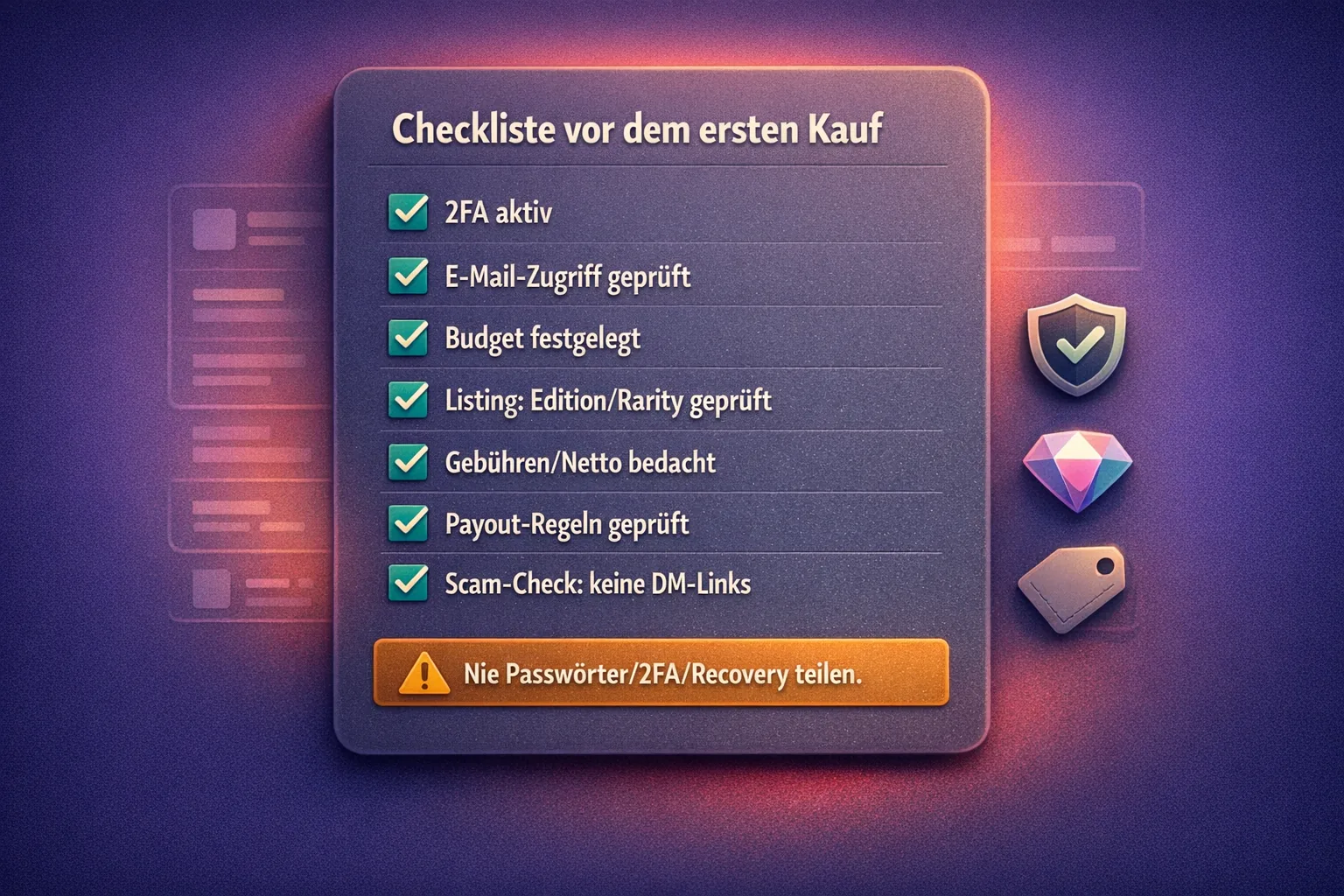
Review these points before tapping “Buy.” This is not paranoia—it is collector discipline.
- Account security: Your password manager is active, 2FA is enabled, and your recovery information is stored offline.
- Email access: You have tested your access and enabled additional security if appropriate.
- Clear budget: You know the maximum number of Gems you are willing to spend—not simply “whatever is left.”
- Listing reviewed: The edition, rarity, mint number, and other details match what you want.
- Fees considered: When you sell, the net amount is what matters. See the fee guide below.
- Payout reality checked: You understand whether payouts are relevant to you in 2026 and under what conditions.
- Scam check: No purchase, claim, or migration step was triggered by a DM or an external “support link.”
4) Gems, Fees, and Payouts: What to Realistically Expect in 2026
Many beginners make the same mistake: “If I sell something, I can simply withdraw the money again.” In reality, fees, rules, eligibility, and processes depend on the current terms.
Fees: Gross Proceeds Are Not Net Proceeds
If you trade, always calculate your net proceeds. Relevant costs for the Market and potentially other processes vary according to the current rules, so use these guides as references rather than relying on partial information:
Payouts: Check the Rules Before Making Plans
If payouts matter to you, read the latest coverage and pay close attention to the specific effective dates and rules. For many collectors in 2026, the focus is not on payouts but on collecting and reinvesting within the app.
- VeVe Gems, OMI & Payouts: 2026 Guide
- VeVe Payouts After November 19, 2025: Are They Still Available?
- VeVe Payouts in 2026: The “Gems Can No Longer Be Withdrawn” Scenario & Stackr Alternative
KYC: If You Want to Do More Later, Verification Will Usually Matter
Even if you only want to collect at first, it is worth understanding the KYC process before you are under time pressure. Here is the step-by-step guide:
5) Market Basics: How to Read Listings Like a Collector
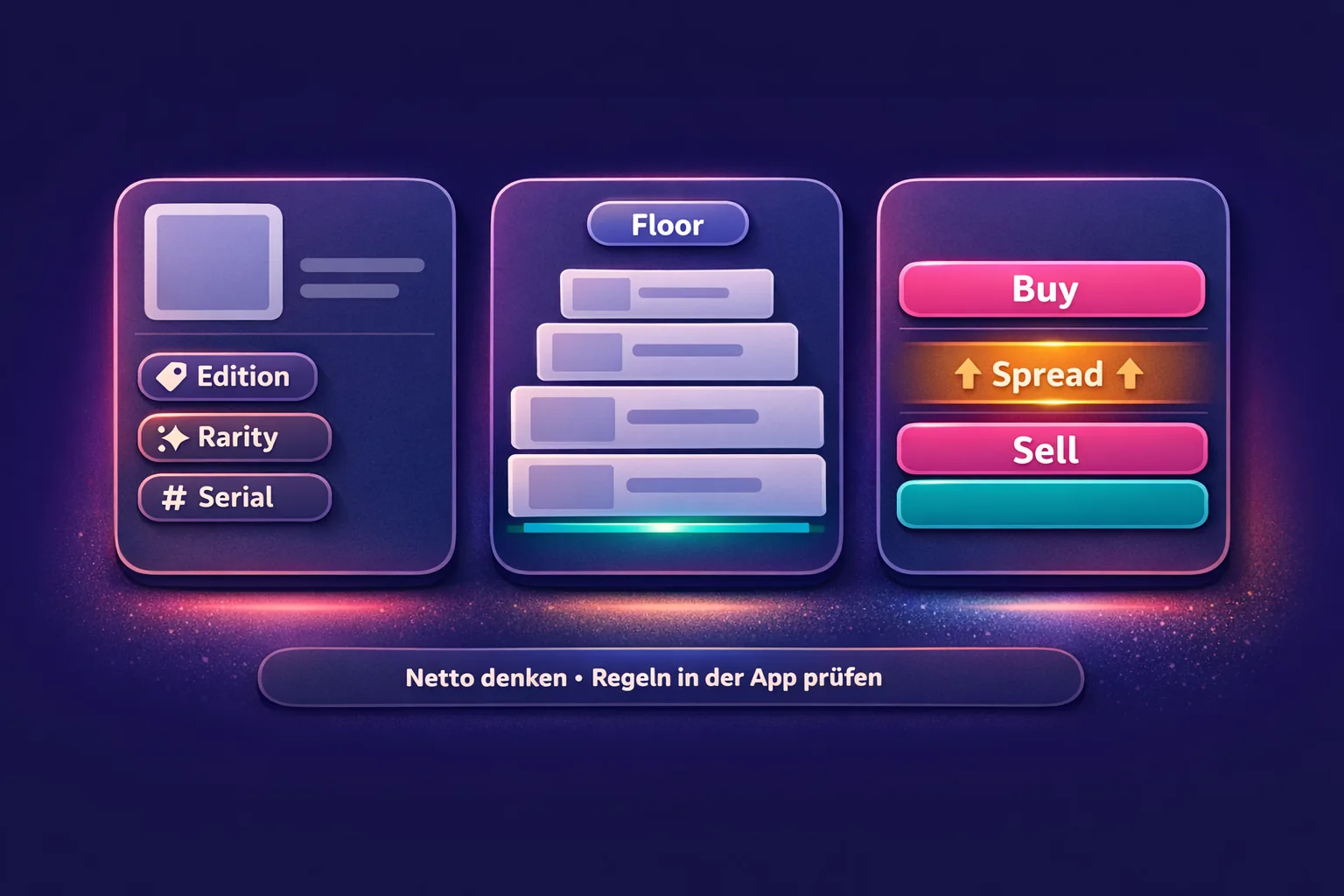
The Market is the “aha” moment for many collectors. “I collect” can quickly turn into “I compare.” You do not need to be a trader, but you should know how to read the interface.
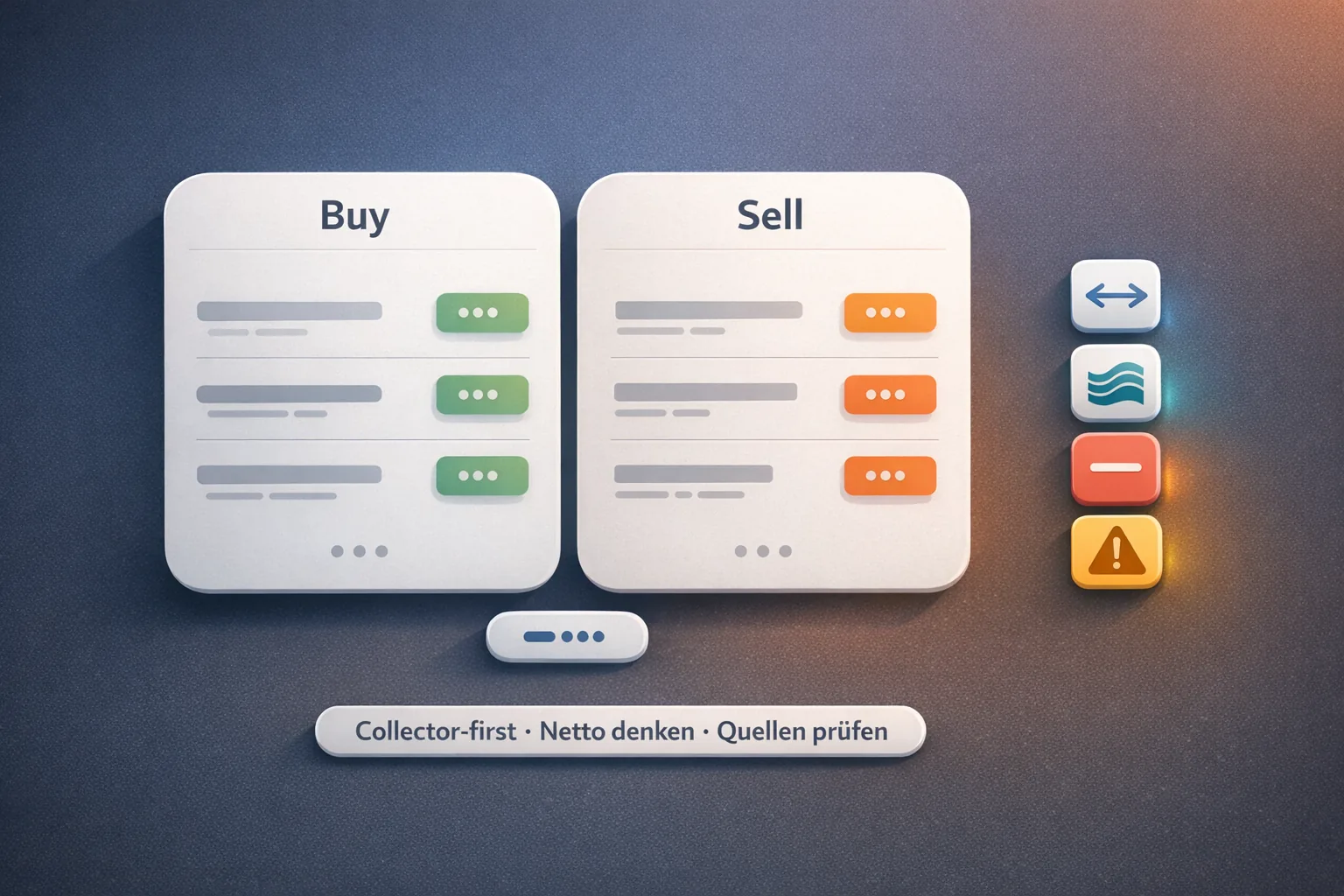
Floor Price, Spread, and Liquidity in Plain English
The floor price is roughly the lowest price for an item, set, or edition in the Market. But the floor price alone does not tell you how easy something will actually be to buy or sell.
The spread, in simple terms, is the gap between the price at which you can buy and the price at which you could realistically sell quickly. The wider that gap, the more you may pay for impatience.
Liquidity describes how quickly a purchase or sale can happen without requiring a major price change. For beginners, a collectible with clear demand and straightforward listings may be a better first experiment than something too exotic.
Edition, Rarity, and Mint Number: Three Details Beginners Often Miss
- Edition: Not every item that looks similar belongs to the same edition.
- Rarity: Common, Uncommon, Rare, Ultra Rare, and Secret Rare—or similar tiers—are not merely rarity labels. They are often separate variants.
- Mint number: Some collectors specifically seek certain mint numbers, but beginners should not pay a “mint premium” simply because a chat is hyping it.
6) Master Collector Program (MCP): Is It Worth It for Beginners?
The MCP appeals to many collectors because it can bring structure to collecting, activity, and goals. At the same time, chasing MCP points immediately without knowing your own collecting goals is a common beginner mistake.
My collector-first advice: Use MCP as a framework for organization and routine, not as a “promise of rewards.”
Start with this guide: Master Collector Program (MCP) Explained
7) AR and Display: The Fun Factor Collectors Often Underestimate
Many people stay with VeVe because they do not just want to buy and sell—they want to display their collections in a room, in the Vault, or in a virtual setting, depending on the features currently available.
To understand how the “metaverse” topic relates to VeVe without relying on feature promises, read: VeVeVerse & the Metaverse: A Guide
8) Common Beginner Mistakes and How to Avoid Them
These mistakes are not “stupid”—they are simply common. Taking this section seriously will already put you ahead of many beginners.
- Responding to “support” in DMs: Official teams will not ask for your password, 2FA codes, or a “wallet connection” through DMs.
- Buying large amounts of Gems too soon: Make a few test purchases and learn the interface before committing more of your budget.
- Assuming the floor price is a fair price: A low floor can be “thin,” with few actual sales. Understand the listings and sales history first.
- Confusing rarity and edition: This is one of the easiest ways to make the wrong purchase, especially with similarly named items.
- Ignoring fees: Anyone planning around gross proceeds may be surprised when selling. Use the fee guide as a reference.
- Treating payouts as guaranteed: Rules and eligibility can change. Plan conservatively and check the dated rules.
- Giving in to Drop FOMO: “Everyone is talking about it” is not a collecting goal. If you want to participate in Drops, rely on a routine rather than adrenaline.
Bonus: Build a Drop Routine Instead of Relying on Chaos
If you want to participate in Drops more seriously—including the Waitlist, Autopay, Rebound, and similar features—use this strategy overview without treating it as a promise of success:
9) Key Terms Explained
- Gems: The in-app currency used for purchases within VeVe.
- Drop: The primary sale or release of an item. It may have a limited edition count or use a Waitlist mechanic.
- Waitlist: A participation mechanic that does not guarantee an allocation. You need a proper setup and a calm approach.
- Market: The secondary market between users, including listings, comparisons, fees, and net-proceeds calculations.
- MCP: Master Collector Program—a framework for structuring collecting and activity. Rules may change.
- Collect Chain / Migration: Technical transition processes where you should only act on official in-app information, not rumors.
- Self-Custody: Greater personal responsibility for access, keys, and recovery. It brings both opportunities and risks and is not automatically “better.”
10) Security Emergency Plan: What to Do if You Suspect a Problem
If something feels wrong—unusual login emails, suspicious DMs, or sudden claims that “you must act now”—stop first, then secure your accounts. The most expensive clicks often happen under stress.
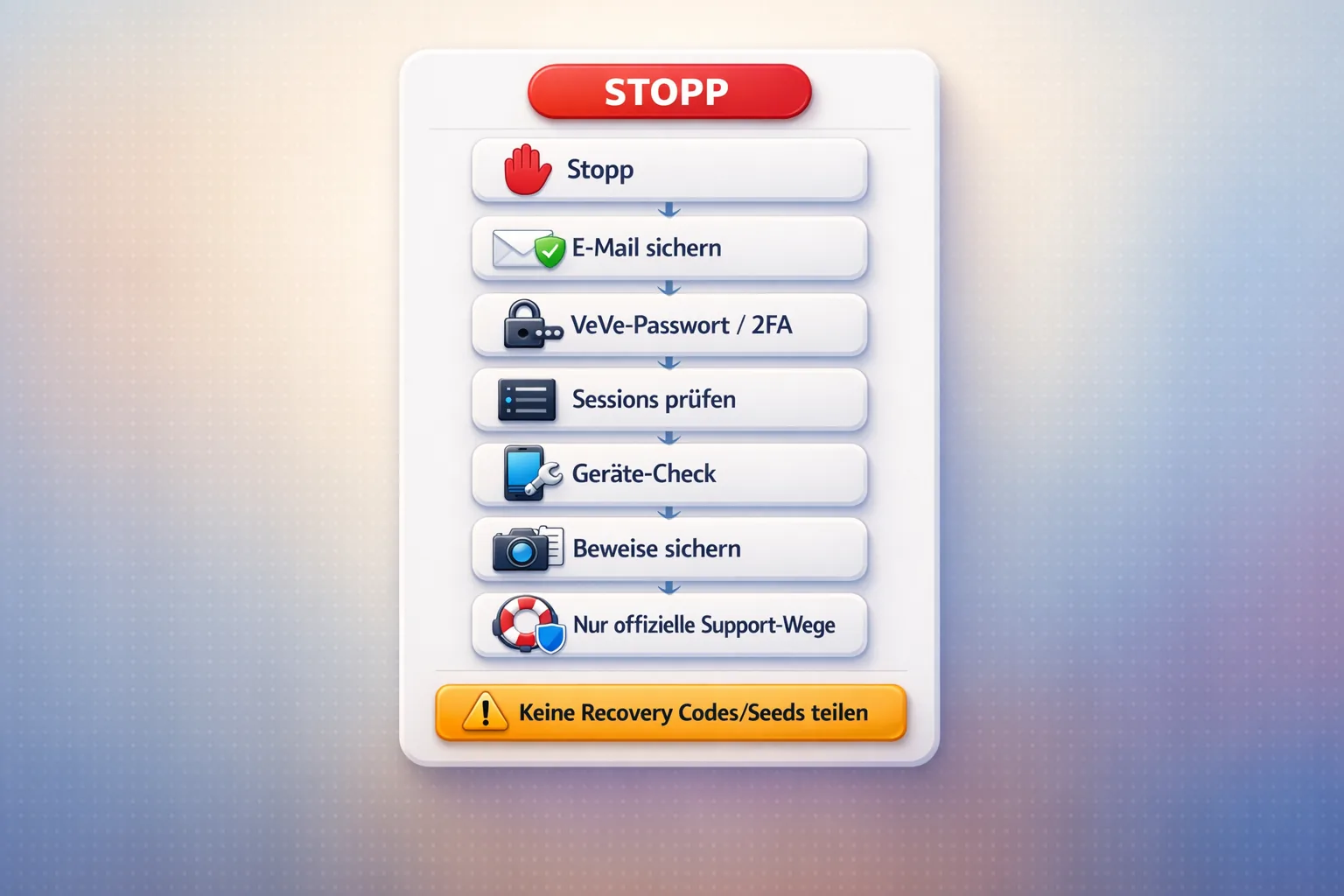
How to Evaluate Collect Chain and “Migration” Rumors
False instructions regularly appear around migration and chain-related topics, including “claim now,” “connect your wallet,” and “the deadline is approaching.” Stick to a calm, structured review process:
- Collect Chain Migration FAQ: Do I Need to Do Anything?
- Collect Chain Migration Phase 1: Checklist & Troubleshooting
- Collect Block Explorer Guide: Verification After Migration
FAQ
Is VeVe Legitimate, or Is It Risky?
As with any platform, there are opportunities—including the collecting experience, licensed IP, and the community—as well as risks such as rule changes, scams, fees, and feature availability. For a balanced overview, read: Is VeVe Legitimate? Experiences and Review
Which Is Better: Drops or the Market?
Drops are primary sales where you buy at release, while the Market is secondary, meaning you buy from other users. The Market is often easier for beginners to learn because you can compare listings at your own pace, while Drops involve more timing and pressure.
Do I Need to Do Anything About Collect Chain in 2026?
Only take action if you receive an official instruction in the app or through official channels. Treat everything else as unconfirmed until you have properly verified it. Start here: Collect Chain Migration FAQ
Can I Cash Out Gems?
That depends on the current rules, your region and eligibility, and the applicable processes. Most importantly, do not treat a payout as guaranteed without reviewing the latest dated information. Start here: Gems, OMI & Payouts Guide 2026
Do I Need KYC Right Away?
Not necessarily if you are starting small and only collecting. If you want to use certain features later, depending on what is currently available, KYC will often be relevant. Here is the guide: VeVe KYC Guide 2026
How Can I Avoid Scam Links Related to Stackr, OMI, or External Services?
The basic rule is simple: Do not use links from DMs, engage with “support” chats, or follow requests to “connect your wallet” outside official channels. If you want to learn more, use only reputable, familiar starting points and stick to official sources. For guidance on setup and security: Stackr Explained: Secure VeVe/OMI Setup
More Guides on Fees, Payouts, MCP, and AR
Once you have made your first purchase and want to learn more, follow this order. It is intentionally practical: understand costs and rules first, then move on to strategies.
- Fees: VeVe Fees & Costs
- Payout: VeVe Gems, OMI & Payouts Guide 2026
- MCP: Master Collector Program (MCP)
- AR/metaverse overview: VeVeVerse & Metaverse Guide
- Explore more: VeVeInsider Blog
New to VeVe? According to the current welcome-credit guide, you can receive $10 in welcome credit when you sign up through our affiliate link, at no additional cost to you.
Sign Up for VeVe With Welcome Credit
Disclosure: Affiliate link. We may receive a commission at no additional cost to you.