Few VeVe topics cause collectors as much real anxiety as crafting and burn mechanics. The reason is simple: One wrong tap, one misunderstood requirement, or one missed deadline can permanently cost you collectibles or MCP points.
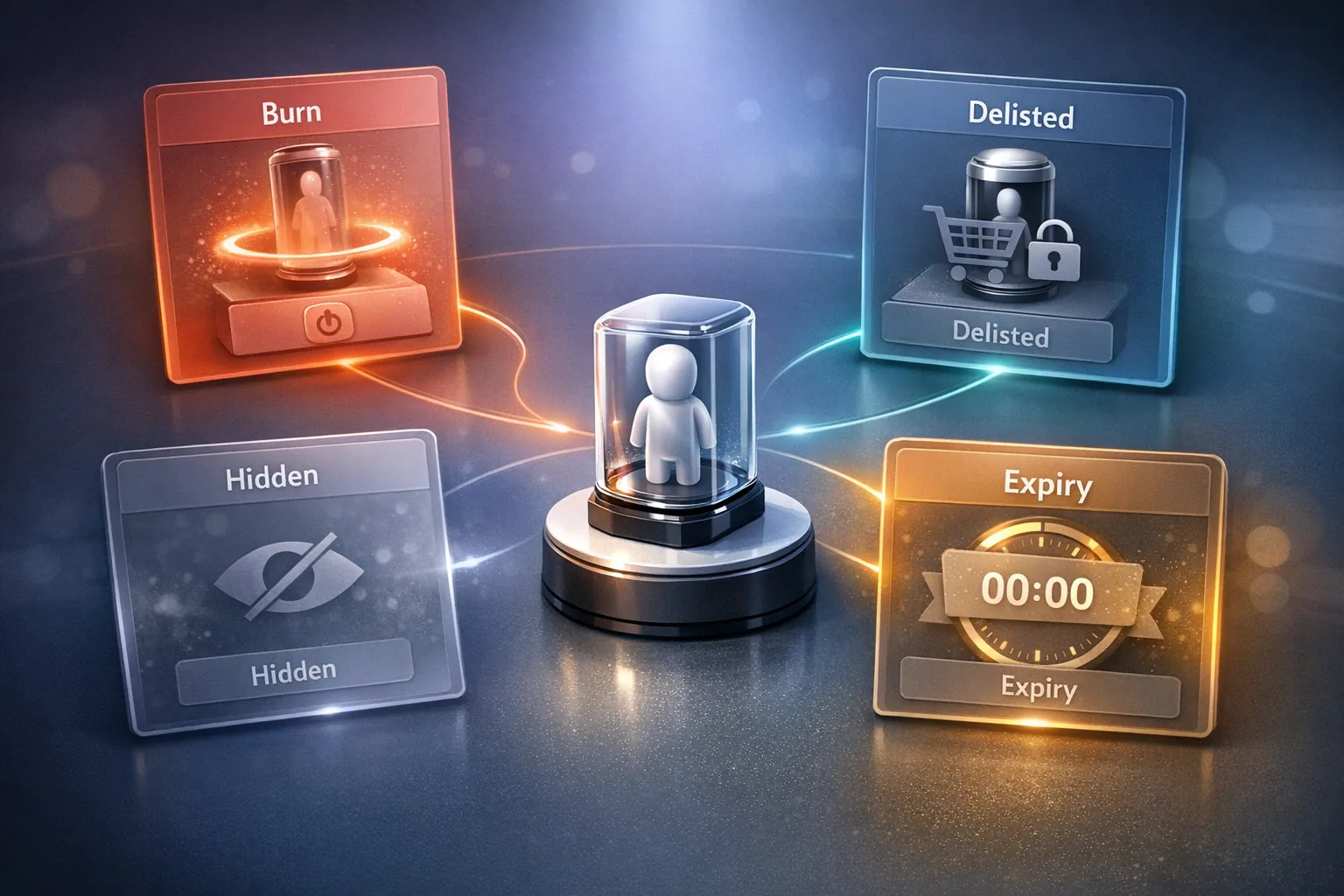
There is also a common misconception: Many people treat burned, delisted, not visible, and expired as if they mean the same thing. That is exactly what makes this dangerous. This guide clearly separates those terms, gives you a practical pre-craft routine, and explains why reduced supply is never an automatic promise of higher prices.
TL;DR: On VeVe, burning generally means an item has been removed from circulation and cannot simply be recovered. Crafting is only the umbrella term; depending on the event, the items you use may be retained, burned, or consumed along with MCP points. Before every craft, always check the event window, eligibility, Store-versus-secondary-market rules, burn details, expiry or burn date, and save screenshots as evidence.
Key terms explained
- Burn: An item is permanently removed from the editions in circulation. This is not the same as being “hidden,” “delisted,” or “temporarily not visible.”
- Craft: You meet defined requirements to receive a new item. What happens to the collectibles used in the process depends on the event.
- Evolvables: A VeVe format in which you typically start with a Common and work your way up to higher rarities through repeated burning or crafting.
- MCP requirement: Some crafts also require MCP points. Importantly, MCP points may also be consumed in the process.
- Expiry or burn date: The event ends at a set time. After that, crafting may close, eligibility may expire, or remaining unused editions may be burned according to the event rules.
- Store / Primary: Purchasing directly from VeVe during the original offering. This matters because some events only allow Store-purchased items.
- Secondary / Market: Purchasing from other users. Some crafts accept Market purchases, while others explicitly do not.
- Craft only: An item or variant available only through crafting rather than a standard Store drop.
If burning still feels unclear in the VeVe context, see VeVe Comics: 30-Day Sale Burn Explained. It clearly demonstrates why “no longer available to buy” and “burned” do not automatically mean the same thing.
Why mistakes can get expensive so quickly
VeVe crafting looks simple at first: Hold an item, press a button, and receive a new collectible. In practice, however, mistakes often come from the fine print. Not every event burns the item used. Not every event accepts Market purchases. And not every event has the same MCP or KYC requirements.
Evolvables can quickly create a cost-calculation trap. If you focus only on the target item, it is easy to overlook the multiple intermediate stages, additional Gems, MCP costs, and risk of an irreversible mistake along the way.
A collector-first approach means checking the mechanics before letting emotion take over. If you are participating only because “there will be less supply afterward,” you may already be starting from the wrong premise.
Quick start: Check every craft before you tap
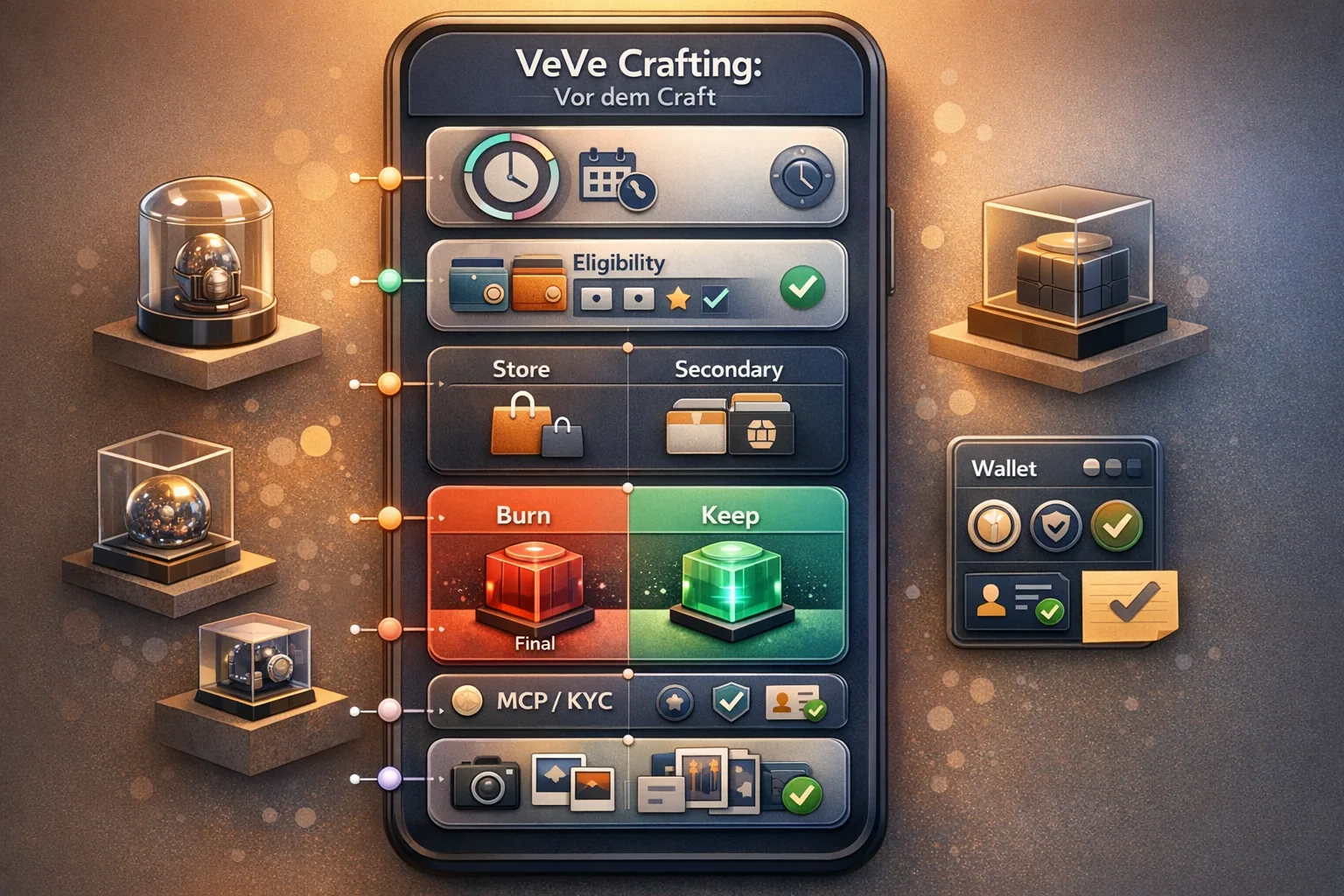
- Step 1: Always open the official event page or in-app announcement. Do not rely on screenshots from DMs, brief community summaries, or old threads. Crafting rules are specific to each event.
- Step 2: Check the exact event window. Note the start time, end time, and your local time zone. Many mistakes happen not because of a bad strategy, but because someone misses a deadline by minutes or hours.
- Step 3: Read the eligibility rules word for word. Do you need a specific item, a complete set configuration, a defined rarity, or additional MCP Basics 2026 requirements? If KYC or account status could be relevant, check the VeVe KYC Guide 2026 beforehand—not during the event window.
- Step 4: Confirm Store versus secondary market eligibility. One especially common mistake is buying an item from the Market, only to discover afterward that the event accepts Store-purchased items only. Conversely, some events explicitly allow Market items. Never guess.
- Step 5: Check exactly what gets burned. Is only MCP burned? Only the collectible? Multiple collectibles? Or do you retain the item used? This distinction determines whether your collection shrinks after the craft.
- Step 6: Calculate the full cost in advance. Add up the base items you have already purchased, any missing rarities, possible crafting fees in Gems, and the value of the assets being burned. If you need help with the calculation, also read VeVe Fees & Costs.
- Step 7: Document everything before and after the craft. Take screenshots of the event rules, your wallet inventory, mint numbers, and the crafting result. If you need to verify anything later, the Collect Block Explorer Guide may also help.

For a practical example of how detailed the requirements can be, see our article on ECOMI Gold & Silver Coin Crafting. Even if the event is outside your collecting focus, it clearly shows why you should never skim the requirements.
New to VeVe? According to our current welcome credit guide, if you sign up through our link at no additional cost to you, you will receive a $10 welcome credit.
Cost breakdown: What you really need to factor in
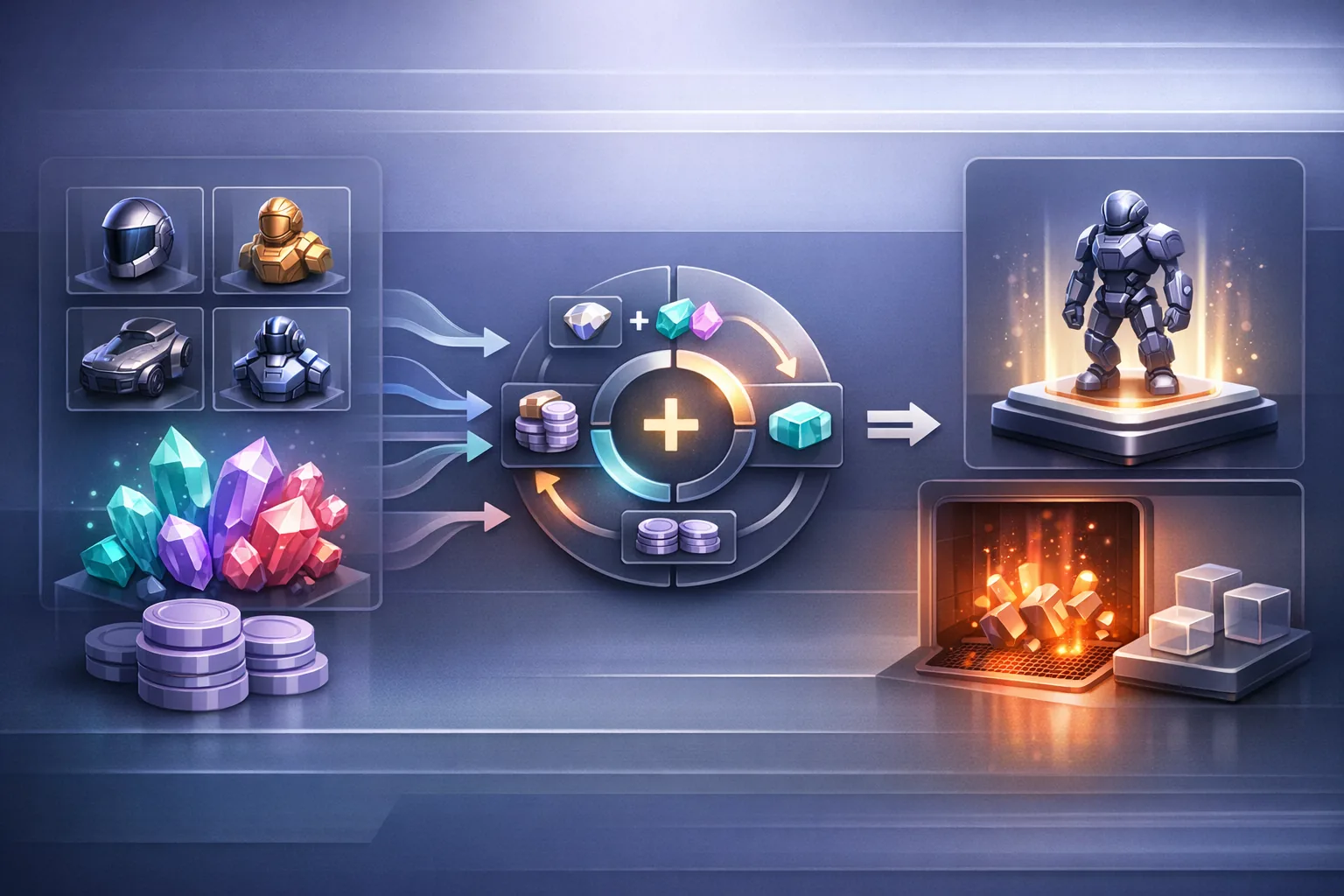
The biggest mistake in crafting is focusing too narrowly on the final Gem price. A craft almost never costs only the amount shown on the last button. What really matters is your total cost.
First, that includes the acquisition cost of every required item. Second, there may be direct crafting costs in Gems. Third, there is the MCP cost if points are burned. Fourth, there is the opportunity cost: Anything you burn can no longer be held, sold, or used in another event.
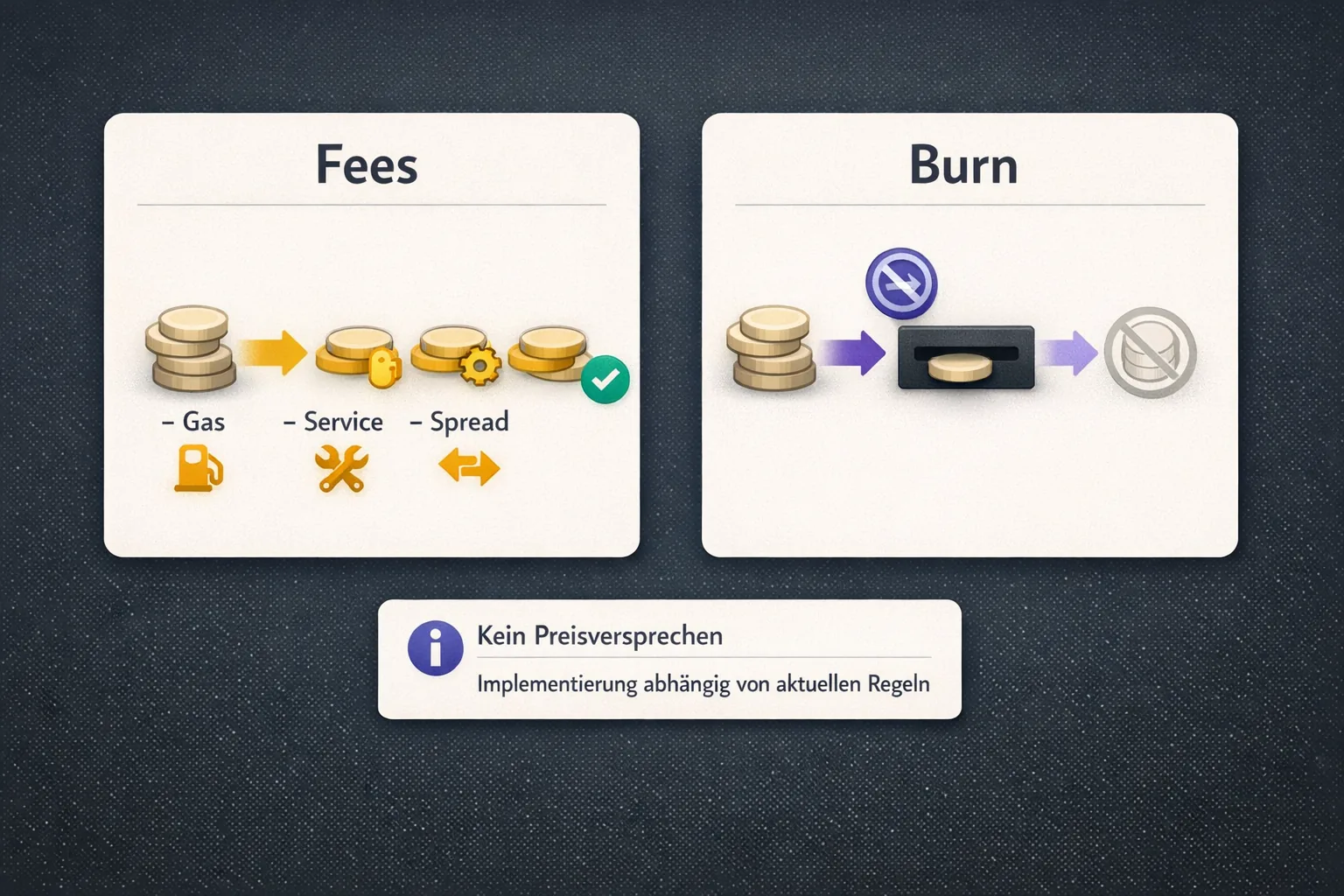
The Market afterward also matters. Fewer available editions may increase scarcity, but scarcity is not a promise of higher prices. Lower supply does not automatically help if demand, liquidity, or collector interest is weak. For a grounded look at those factors, see the VeVe Market Guide.
Ideally, you should craft with a clear collecting goal: because you want the next evolution stage, are completing the set, find a craft-only variant appealing, or consciously want to participate in an event. Do not craft because you automatically expect burn mechanics to generate Market gains.
Common mistakes to avoid
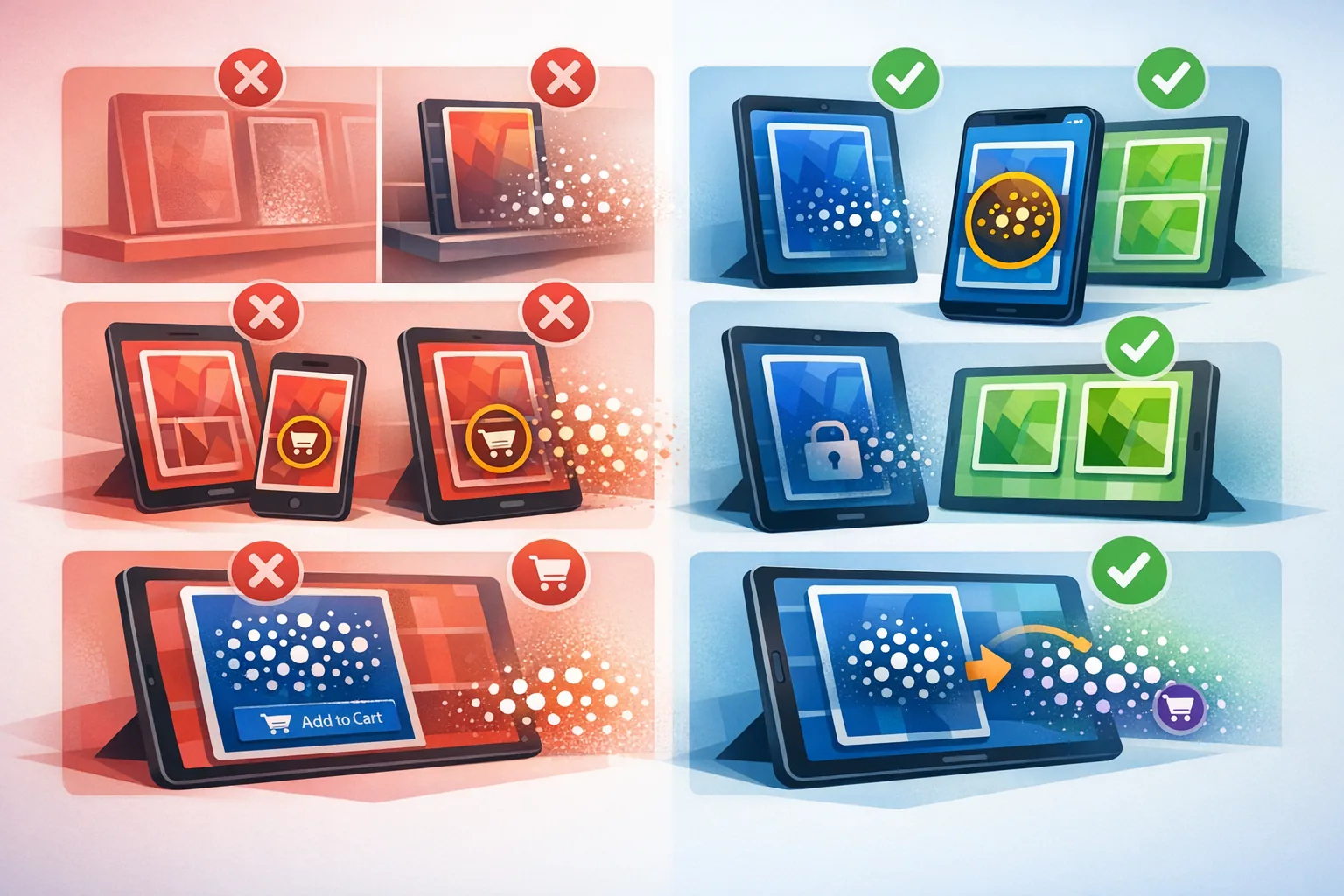
- Confusing burning with delisting: An item that is no longer visible or available in the Store has not automatically been burned.
- Reading only the headlines: The critical catch is often in the eligibility section or crafting details.
- Buying blindly from the Market: First confirm whether secondary-market purchases qualify at all.
- Dismissing MCP as “just points”: Burned MCP points are gone just like a burned collectible.
- Forgetting the expiry: A solid plan is useless if the event window has already closed.
- Failing to save screenshots: Without evidence, verifying what happened later becomes unnecessarily difficult.
- Equating scarcity with Market value: Lower supply may matter, but it guarantees nothing.
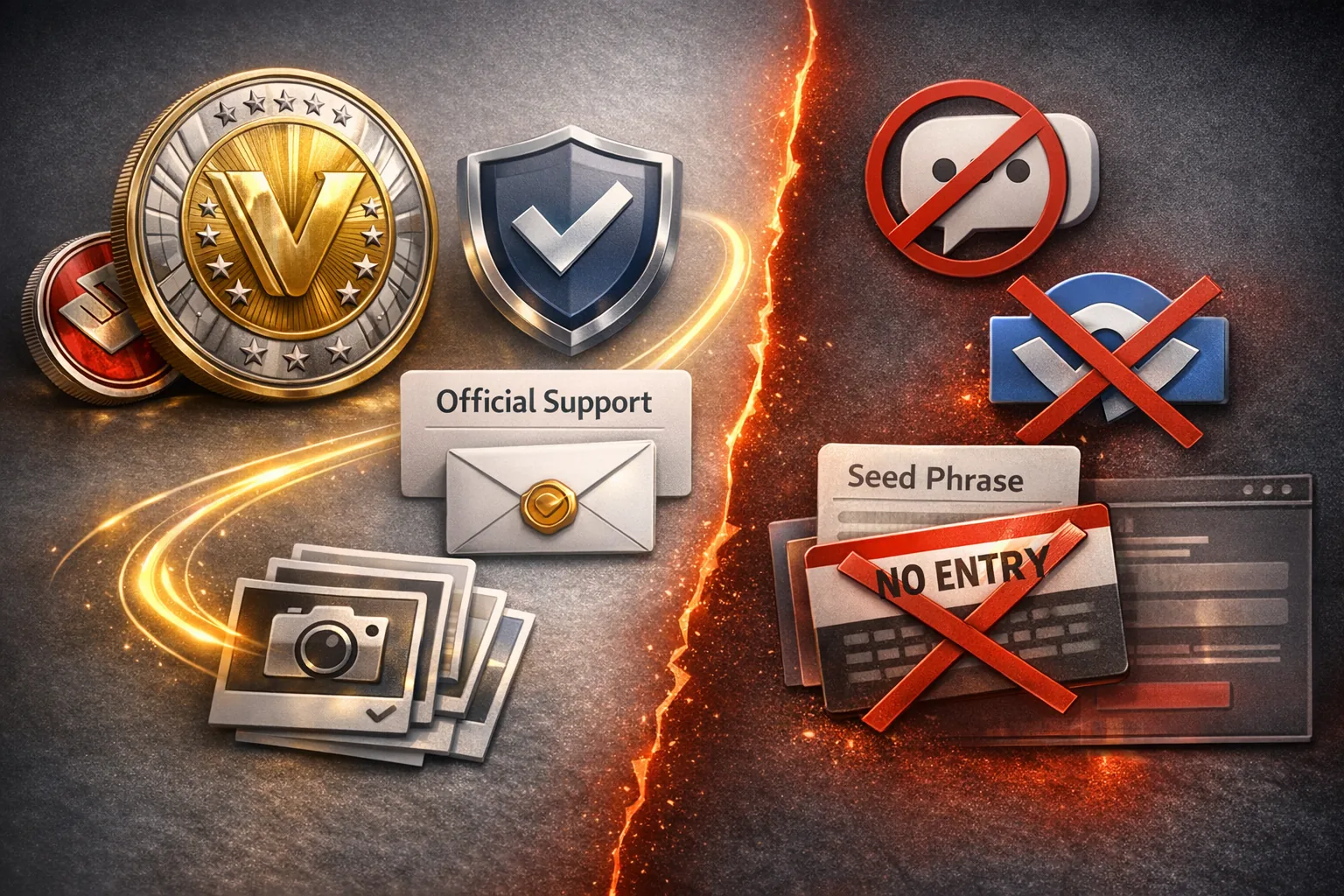
- Mixing official support with community information: Official VeVe pages and in-app details are authoritative—not DMs or secondhand screenshots.
Collector checklist before final confirmation
- Opened and fully read the event page or in-app rules
- Recorded the start and end times in your local time zone
- Confirmed that every requirement is actually in your wallet
- Clearly verified the Store-versus-Market rule
- Understood what gets burned and what you retain
- Calculated the total cost across items, Gems, and MCP
- Saved screenshots of the rules, your inventory, and the result
Safety and verification: What burning really means
At a general NFT level, burning is not the same as deletion. An asset’s history does not simply disappear. The key point is that the asset is removed from freely usable circulation and cannot be recovered in the normal sense.
For VeVe collectors, that means you should treat any event stating that a collectible or MCP will be burned as final. Do not assume it will “show up again later,” is “only hidden,” or can easily be reversed by support.
That is why a simple rule applies whenever security matters: Use only official event pages, official in-app channels, and official support channels. Do not connect wallets through DMs, use external forms from community links, or try improvised workarounds during a live event.
FAQ
Is burning on VeVe the same as being delisted?
No. Delisted only means that something is no longer offered normally or has disappeared from a visible sales area. Burning means it has been removed from the editions in circulation.
Can I recover a burned VeVe collectible?
You should not count on it. If an event includes burning, treat the decision as irreversible. That is exactly why checking everything in advance and saving screenshots is so important.
Are Market purchases always eligible for crafting?
No. Some events allow both Store and Market purchases, while others explicitly require Store-purchased items only. This rule is event-specific and must be checked every time.
When evaluating crafting drops, Jungle Predator on VeVe and Ducobi Tiger on VeVe also provide useful practical comparisons.
Can a craft take place without burning the collectible?
Yes. VeVe has previously held events where only MCP was burned or the collectible used in the craft was retained. The umbrella term “crafting” does not tell you exactly what will be consumed.
Why is an expiry or burn date so important?
Because crafting may close after the event window ends, and unused editions may be burned depending on the event rules. If you miss the deadline, you may permanently lose the opportunity.
Is lower supply after a burn automatically bullish?
No. Lower supply may matter to collectors, but prices still depend on demand, liquidity, brand strength, and the broader Market cycle. Burning is a mechanic, not a promise of returns.
New to VeVe? According to our current welcome credit guide, if you sign up through our affiliate link at no additional cost to you, you will receive a $10 welcome credit.
Sign up for VeVe with a welcome credit
Note: Affiliate link (we may receive a commission at no additional cost to you.)
Sources