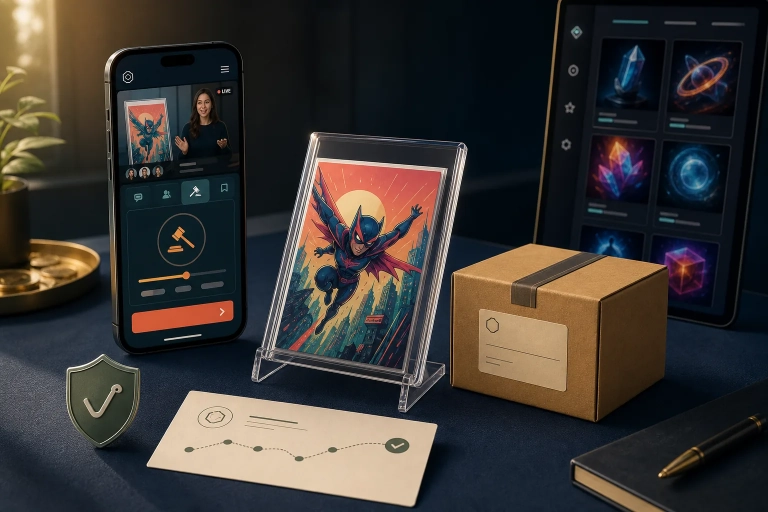
One question keeps coming up in the VeVe community: Can you trade VeVe NFTs everywhere now? The short answer is: No, not automatically. Blockchain infrastructure, collectible ownership, platform rules, wallet features, and external marketplaces are separate layers.
This is where many misunderstandings begin. An explorer link, a chain update, or a post about future self-custody does not automatically mean that every VeVe collectible can immediately be sold on any NFT marketplace. This article examines the myth from a collector’s perspective: clearly, cautiously, and without making promises that remain unconfirmed today.
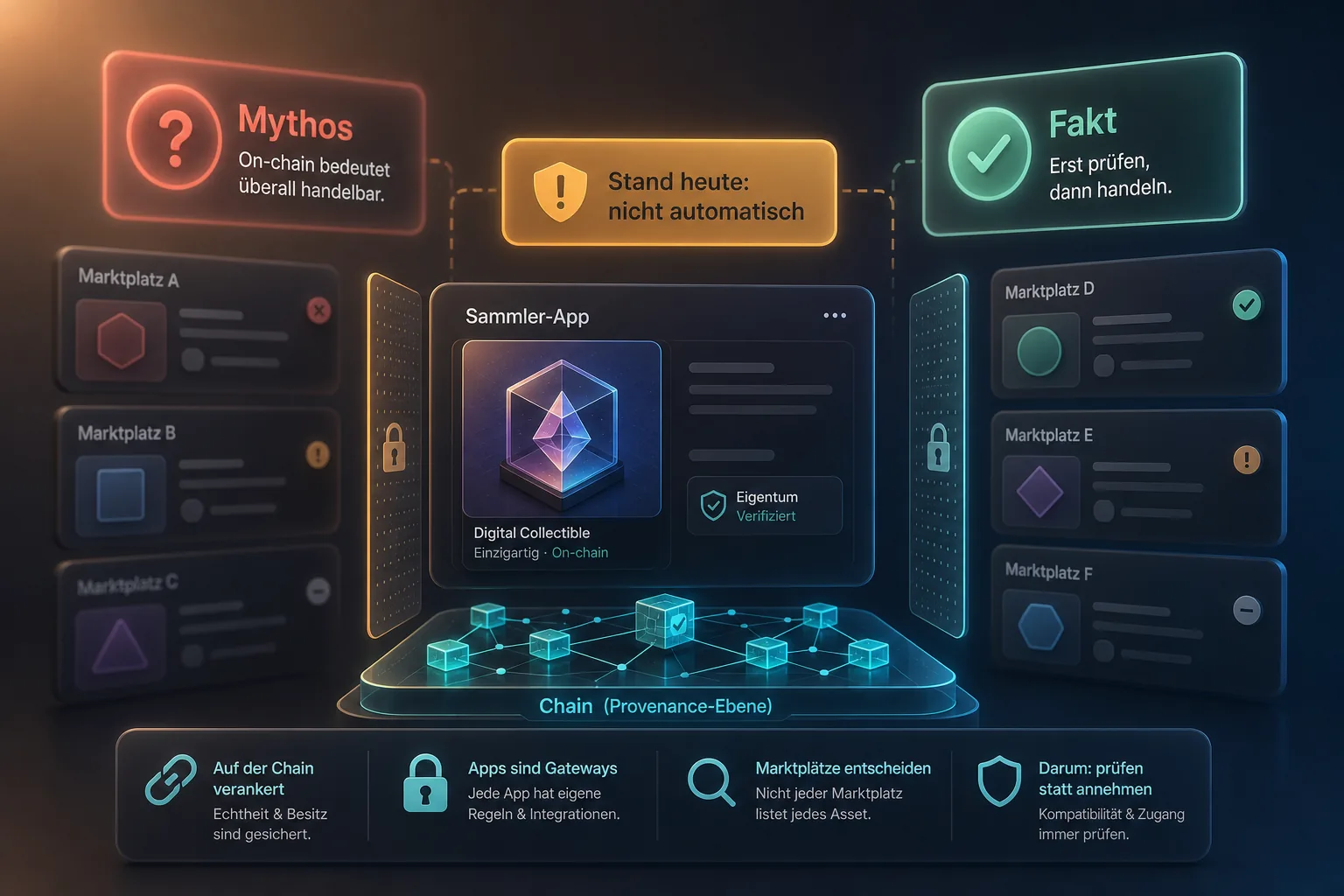
TL;DR: As of today, you should not treat VeVe collectibles as freely transferable NFTs that can be traded on every open marketplace. What still matters are VeVe’s official features, each platform’s rules, any eligibility requirements, and confirmed wallet or transfer features. What becomes possible in the future may be exciting—but it only becomes relevant in practice once it is officially available, documented, and usable in your account.
The Core Myth: “On-Chain” Does Not Automatically Mean “Tradable Everywhere”
Many misunderstandings start with an oversimplified assumption: If a collectible is technically represented on a chain, it must be freely tradable like any other NFT on OpenSea, Blur, or a wallet marketplace. That may sound logical, but it is too simplistic.
A digital collectible can be technically verifiable without every possible trading route being enabled. Platform rules, licensing terms, wallet features, supported marketplaces, smart contract logic, and potential allowlists all stand between technical existence and practical tradability.
That is exactly why this distinction matters: provenance and transparency are not the same as open access to external markets. If you want a deeper technical overview, see VeVeInsider’s article on CollectChain, Layer 2, Celestia, and EVM.

Where Things Stand Today: What You Should Keep Separate
For collectors, the most important question is not, “Is this an NFT?” It is, “What can I currently do with this specific item in my specific account?” That question is more practical and helps prevent false expectations.
As of today, you should distinguish between at least four layers on VeVe:
- App layer: What does VeVe display in your account, Collection, and Market?
- Chain or explorer layer: What history, token data, or transaction data can be verified?
- Custody layer: Does the platform manage access, or are confirmed self-custody features available?
- Trading layer: Where are buying, selling, or trading officially supported?
These layers may be connected, but they are not identical. An explorer can help you better understand history or migration. It does not replace the official rules within the app or the actual availability of external trading features.
Custody vs. Self-Custody: Why the Difference Matters
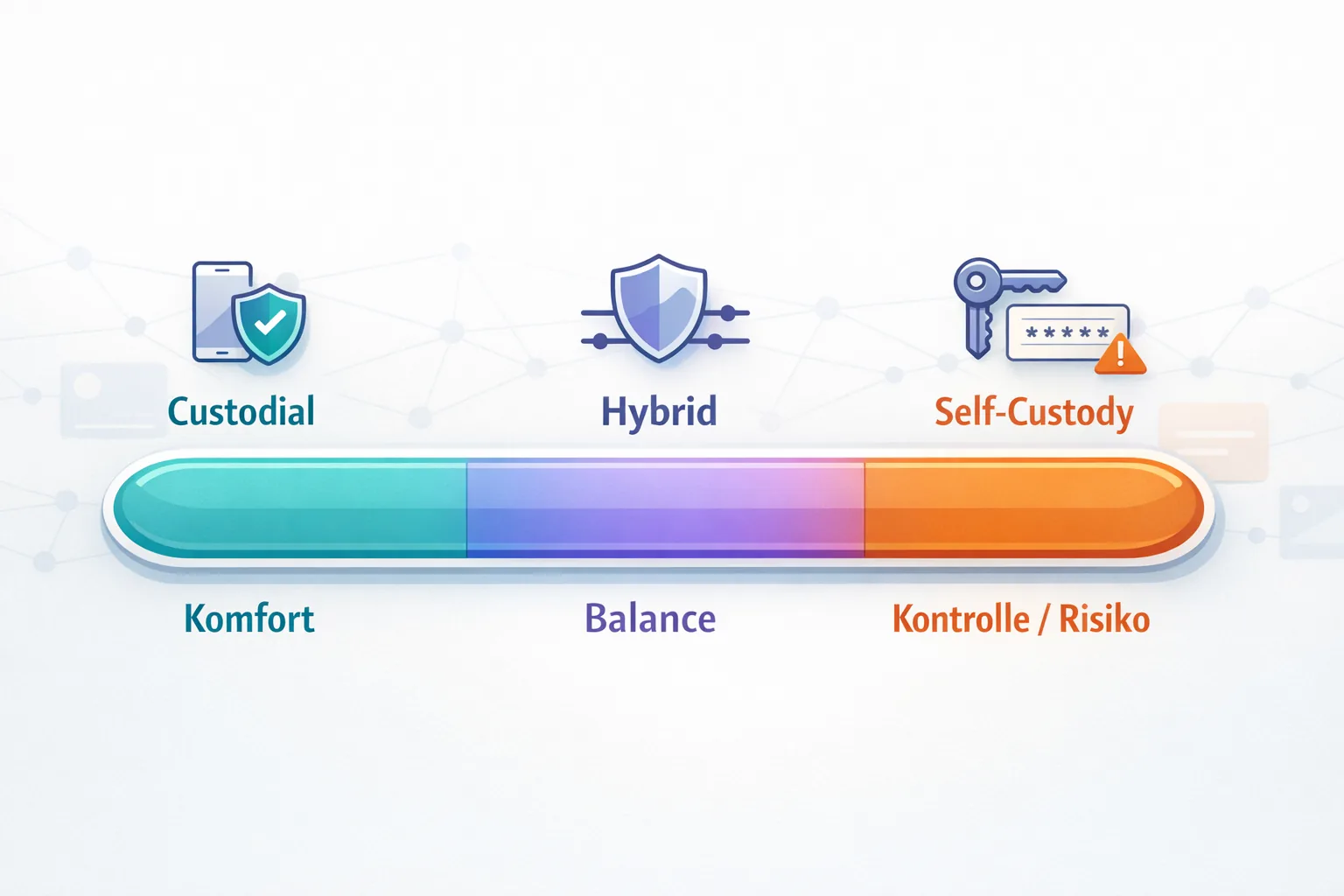
With traditional platform custody, a platform manages key access and security functions for you. This is convenient because account login, support, the app interface, and the Market are usually in one place. At the same time, you are more closely bound by the platform’s rules.
Self-custody, by contrast, means that greater control may come with significantly greater responsibility. Recovery details, wallet signatures, device loss, phishing, and connections to the wrong network all become much more important. Anyone who overlooks this distinction can easily interpret roadmap language too optimistically.
For a solid foundation, see Custody vs. Self-Custody From a Collector’s Perspective. It is not about hype, but about which security responsibilities actually fall to you under each model.
Common Community Misunderstandings, Checked
Community posts are often fast, emotional, and fragmented. That is normal—but with technical topics, half a sentence can be enough to create false expectations. Here are the most common misconceptions.
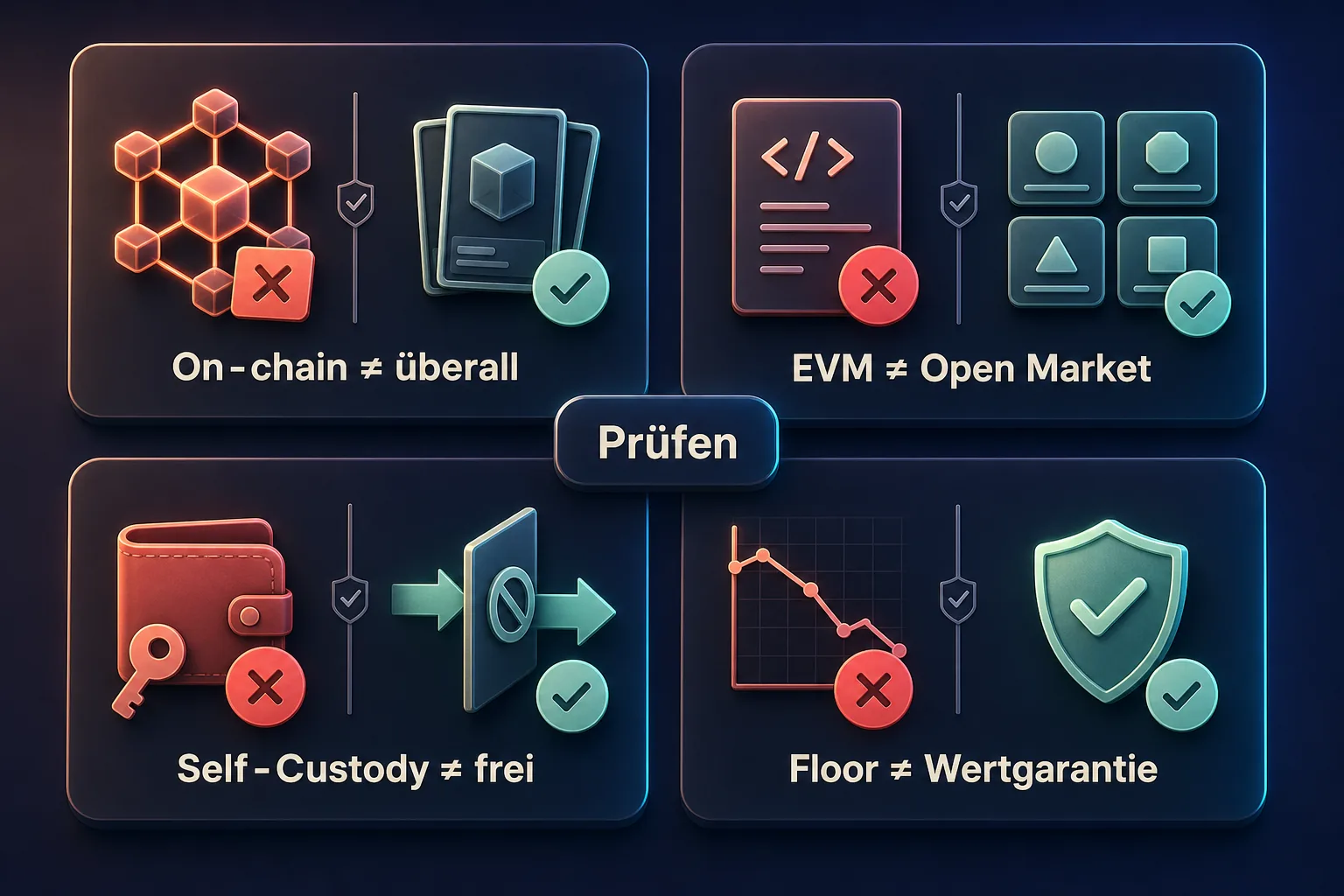
Myth 1: “If It Is on a Chain, I Can Sell It Anywhere”
Fact: Representation on a chain is only one part of the infrastructure. Whether an item can be traded externally also depends on approved transfer routes, marketplace support, licensing logic, and official platform features.
Myth 2: “EVM-Compatible Automatically Means OpenSea-Compatible”
Fact: EVM compatibility can make technical integration easier. However, it is not a promise that a particular VeVe collectible can immediately be listed, transferred, or purchased on a specific external marketplace.
Myth 3: “Self-Custody Is Coming, So All Transfers Will Be Unrestricted”
Fact: Even if future wallet features become more robust, the details still matter: Which assets? Which regions? Which rules? Which features are live, and which have only been announced? A good starting point is this cautious overview of Collect Chain Phase 2, Self-Custody, Expectations, Risks, and Opportunities.
Myth 4: “An External Floor Is Automatically the Item’s True Value”
Fact: Different marketplaces or tools may reflect different data, trading routes, currencies, and liquidity. A displayed floor price is not a guaranteed sale price. If you are comparing two pricing environments, read the guide to VeVe Market vs. StackR and Two Floor Prices.
Why Platform Rules Matter More Than a Screenshot
A screenshot from a wallet, explorer, or tool may be interesting. However, it does not automatically tell you what you are officially allowed to do or what is reliably supported on a technical level. Rules for licensed digital collectibles may be more restrictive than those for generic on-chain NFTs.
These may include restrictions on transfers, listings, use of brands, participation in promotions, Market eligibility, or rewards. Anyone who immediately treats a screenshot as a promise of tradability is skipping the most important step: checking the official terms of the specific feature.
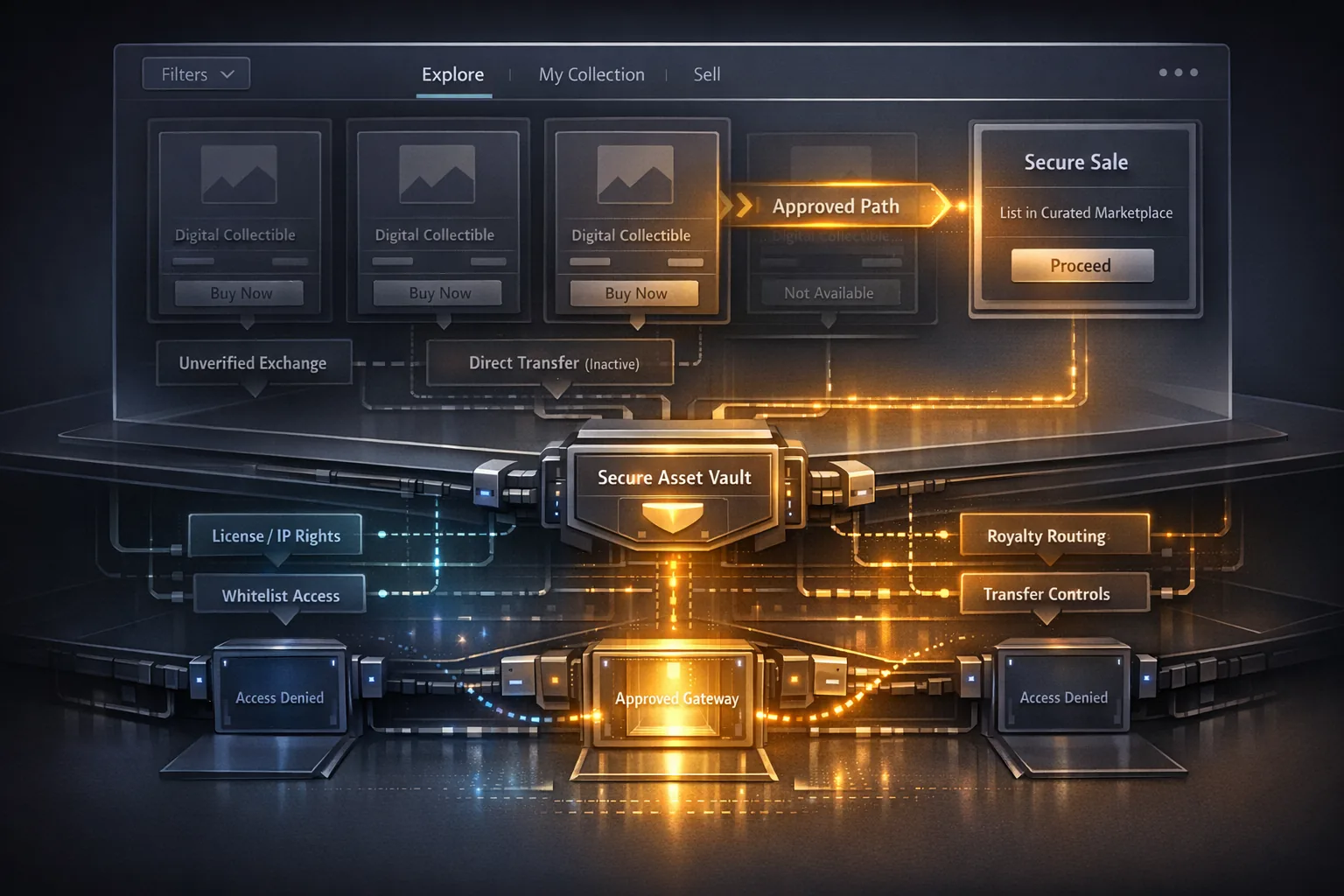
The same applies to events, crafting, airdrops, and rewards. An item may be in your Collection but still not count toward a particular activity if the rules specify different requirements. Learn more in the guide to Store Only vs. Marketplace Eligible.
Quick Start: How to Check a “Tradable Everywhere” Claim
If you read on Discord, X, Telegram, or Reddit that VeVe NFTs are “now tradable everywhere,” do not immediately start buying or transferring. Check the claim carefully in this order.
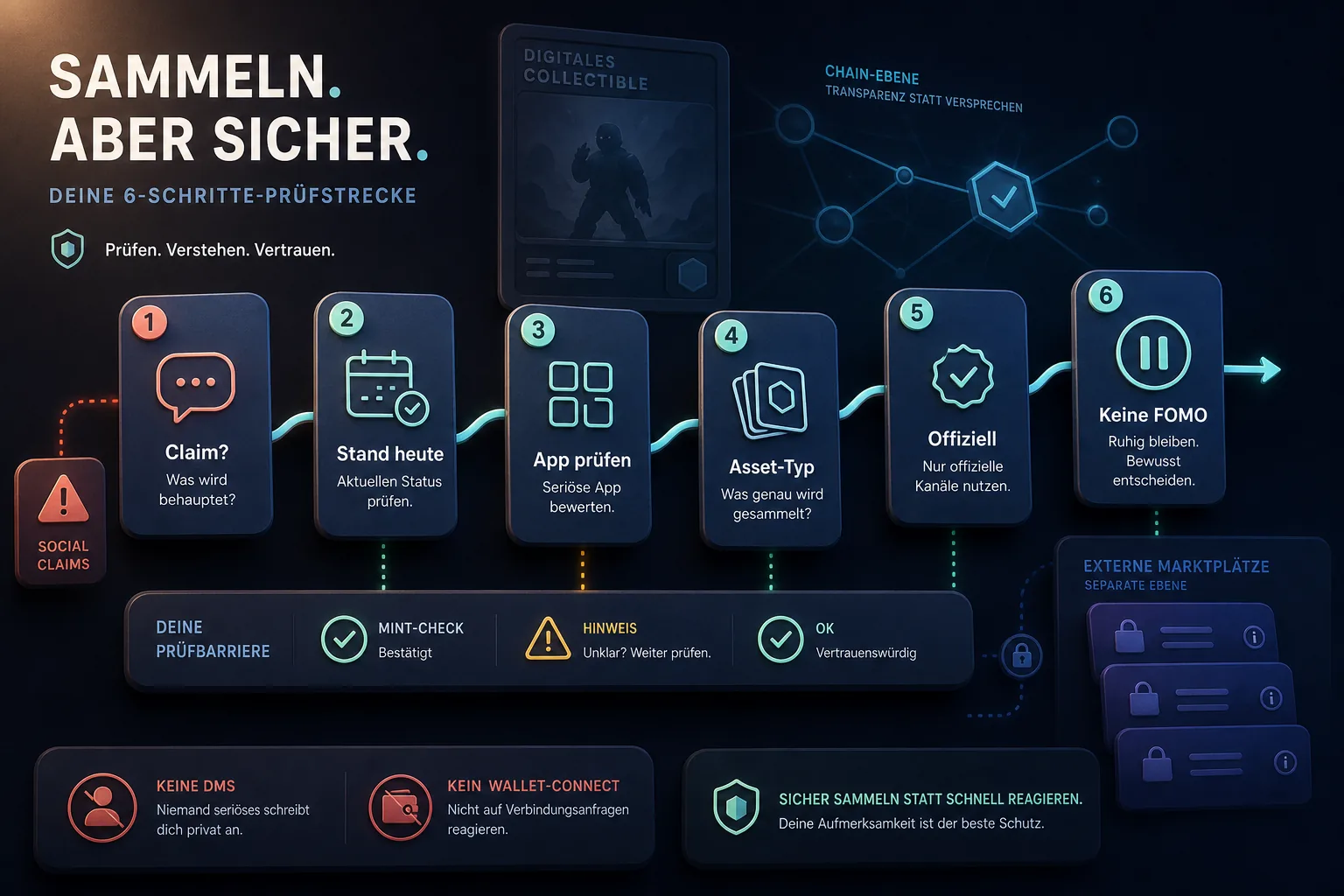
- 1. Isolate the claim: Does it refer to all VeVe collectibles, only certain items, OMI, StackR, the Market, or a future roadmap?
- 2. Check the current status: Is the feature live, announced, being tested, or merely inferred?
- 3. Look for an in-app feature: Is there actually an official transfer, wallet, or trading route in your account?
- 4. Consider the asset type: Collectibles, comics, artworks, rewards, and event items may follow different rules.
- 5. Prioritize official channels: For wallets, migrations, swaps, or bridges, never use links sent by DM, fake forms, or third-party wallet connections.
- 6. Take small steps instead of giving in to FOMO: When an official feature goes live, understand and document it first. For higher-risk actions, start with the smallest possible test amount.
For chain and explorer topics, the Collect Block Explorer Guide is also useful. It helps you distinguish more clearly between app data, explorer views, and transaction history.
What Could Change in the Future—and How to Read It Cautiously
Wallet, chain, and external ecosystem features may become more important in the future. However, that does not mean you should act today as though every planned capability were confirmed, live, and available for every item.
Roadmaps often unfold in stages. Some points are confirmed, some are announced, and others may be technically plausible but not yet enabled as actual user features. That is why wording such as “not yet confirmed” is not boring—it helps protect against poor decisions.
For a measured overview of Collect Chain’s current status, also read Collect Chain: Confirmed vs. Speculation. Keep in mind that an older status article is no substitute for checking the latest information, but it can show you how to separate confirmed statements from expectations.
If you are just getting started, review the basics before reacting to promises of external trading. The VeVe Sign-Up and Starting Credit Guide explains how to begin. When signing up, you may receive $10 in free starting credit—but use it thoughtfully and without expecting a return.
Collector Checklist: What to Confirm Before Buying, Selling, or Considering a Transfer
This checklist is intentionally practical. It can help prevent you from reacting poorly to a viral post.
- Account: Is your login secure, your email protected, and 2FA enabled where available?
- Item: Do you understand whether it is a collectible, comic, artwork, reward item, or event-related asset?
- Purchase route: Was it acquired through the Store or Market, and does that matter for future activities?
- Market: Is selling officially supported within the VeVe app or through a specifically supported route?
- Wallet: Is there really a confirmed wallet feature in your account—or only community speculation?
- Rights: Do you know how you are allowed to use the digital collectible and which IP rights you do not own?
- Records: Have you properly documented purchase receipts, screenshots, item details, and relevant transaction information?
The rights issue is often overlooked. Owning an NFT or digital collectible does not automatically mean you can freely use the character, brand, or artwork commercially. For more context, see What Are You Buying on VeVe? Ownership, Licensing, and IP Rights.
Security Trap: Fake Wallets, Fake Migrations, and Supposed Activations
Whenever terms such as migration, wallet, bridge, swap, or claim start circulating, scam risk increases. Scammers exploit these transition periods because many collectors are uncertain and looking for quick answers.
Common warning signs include DMs with supposed support links, forms asking for your seed phrase, wallet connection prompts, “private activation” offered for a fee, or group posts creating time pressure. Legitimate steps take place through official channels and cannot be accelerated through secret links.
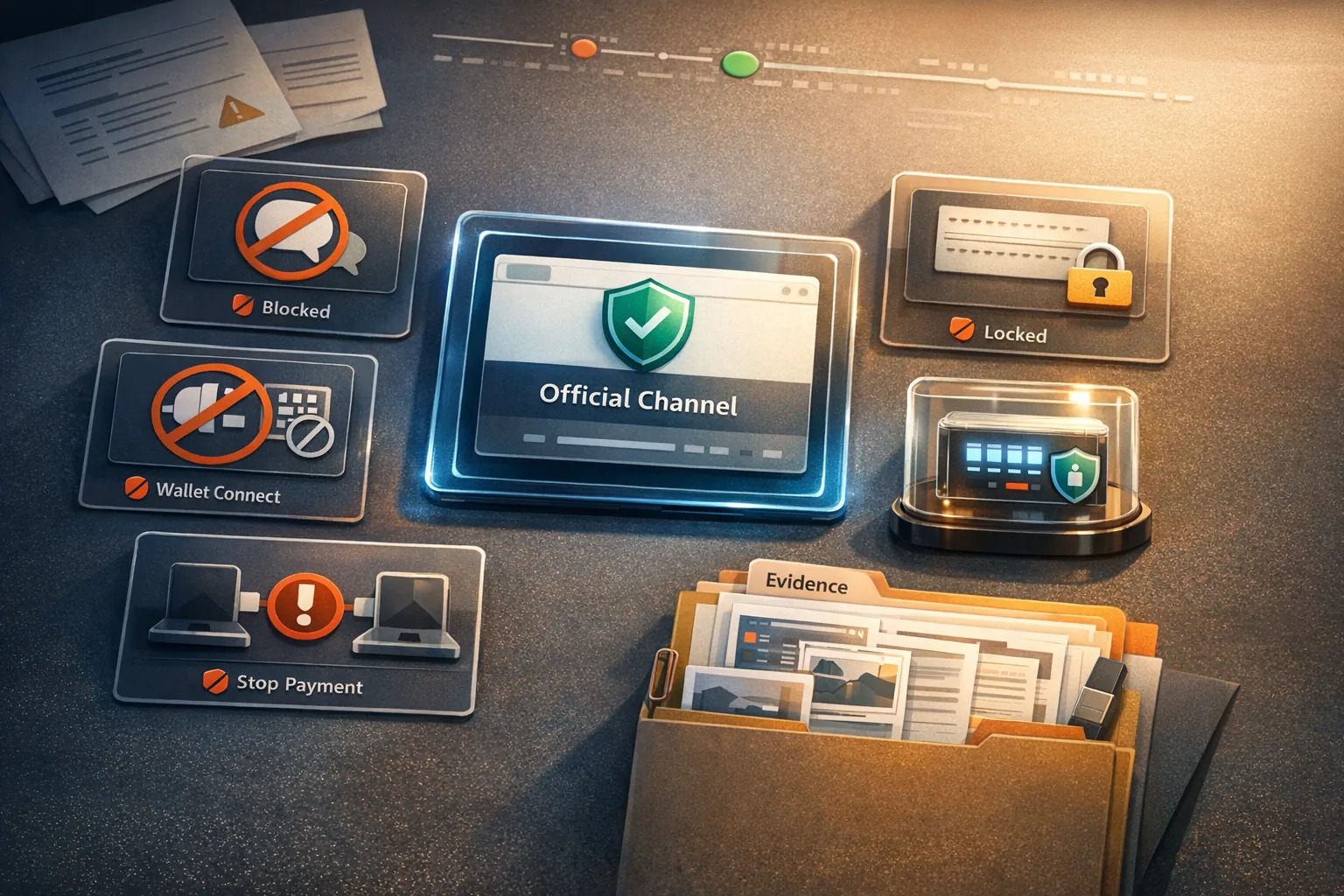
If you are unsure about migration or chain verification, use structured guides rather than social media comments. The article Collect Chain Migration FAQ: Do I Need to Do Anything? is a good place to start.
Key Terms Explained
Custody
Custody means that a platform manages core storage and access elements for users. This is convenient for collectors, but it closely ties functionality to the app, account, and platform rules.
Self-Custody
Self-custody means more direct control over wallet access and signatures. At the same time, your personal responsibility increases: If you lose recovery details or fall for phishing, you may have less access to traditional platform support.
Provenance
Provenance describes the verifiable origin or history of a digital asset. It can build trust, but it is not the same as unrestricted tradability.
Marketplace Eligibility
Eligibility describes whether a specific item qualifies for a particular activity. This can matter for crafting, airdrops, rewards, or events and depends on the specific rules.
FAQ: Can You Trade VeVe NFTs Everywhere Now?
Can I Simply Sell My VeVe NFTs on Any NFT Marketplace Today?
No, you should not assume that. What matters is which official trading and transfer routes are actually available for your specific asset and account.
Does Collect Chain Mean External Markets Are Automatically Open?
No. Collect Chain may involve technical transparency, history, and infrastructure. Access to external markets is a separate issue and must be officially supported.
Is Self-Custody Already a Promise of Unrestricted Transfers?
No. Self-custody may provide more control in the future, but details such as scope, availability, supported assets, and rules must be officially confirmed and live.
Are StackR and VeVe the Same?
No. StackR may be relevant within the VeVe and OMI ecosystem, but it is not simply the same interface as the VeVe Market. Read the introduction What Is StackR and What Is It Designed For?.
What Should I Do if I Cannot Verify a Claim?
Do not act under time pressure. Wait for official in-app notices, document the claim, check established information sources, and avoid wallet connections, seed phrases, private links, or off-platform payments.
Conclusion: Collecting Stays More Enjoyable When Expectations Stay Grounded
The myth that “VeVe NFTs are now tradable everywhere” sounds appealing because it promises simple freedom. For collectors, however, accuracy is more valuable than a catchy slogan. As of today, check specific features, specific items, and specific rules—not just headlines.
If more wallet or external market features officially go live in the future, they may create new possibilities. Until then, the best strategy is simple: Do not buy into false promises, open unsafe links, or overinterpret roadmap statements. Manage your collection like a collector—not a rumor trader.
Affiliate disclosure: If you would like to try VeVe, you can sign up through this link: Sign Up for VeVe With $10 in Starting Credit. VeVeInsider may receive a commission; there is no additional cost to you, and you receive $10 in free starting credit.