If you hold OMI—or are considering using OMI with VeVe—what you need most is clarity. Not what may have been promised at some point, but what you can actually use as a collector today, without workarounds or wishful thinking.
This article is a neutral recap intended as a reference for discussions. It is current as of March 2, 2026 (updates can change anything, so always check the latest rules directly in VeVe/StackR).
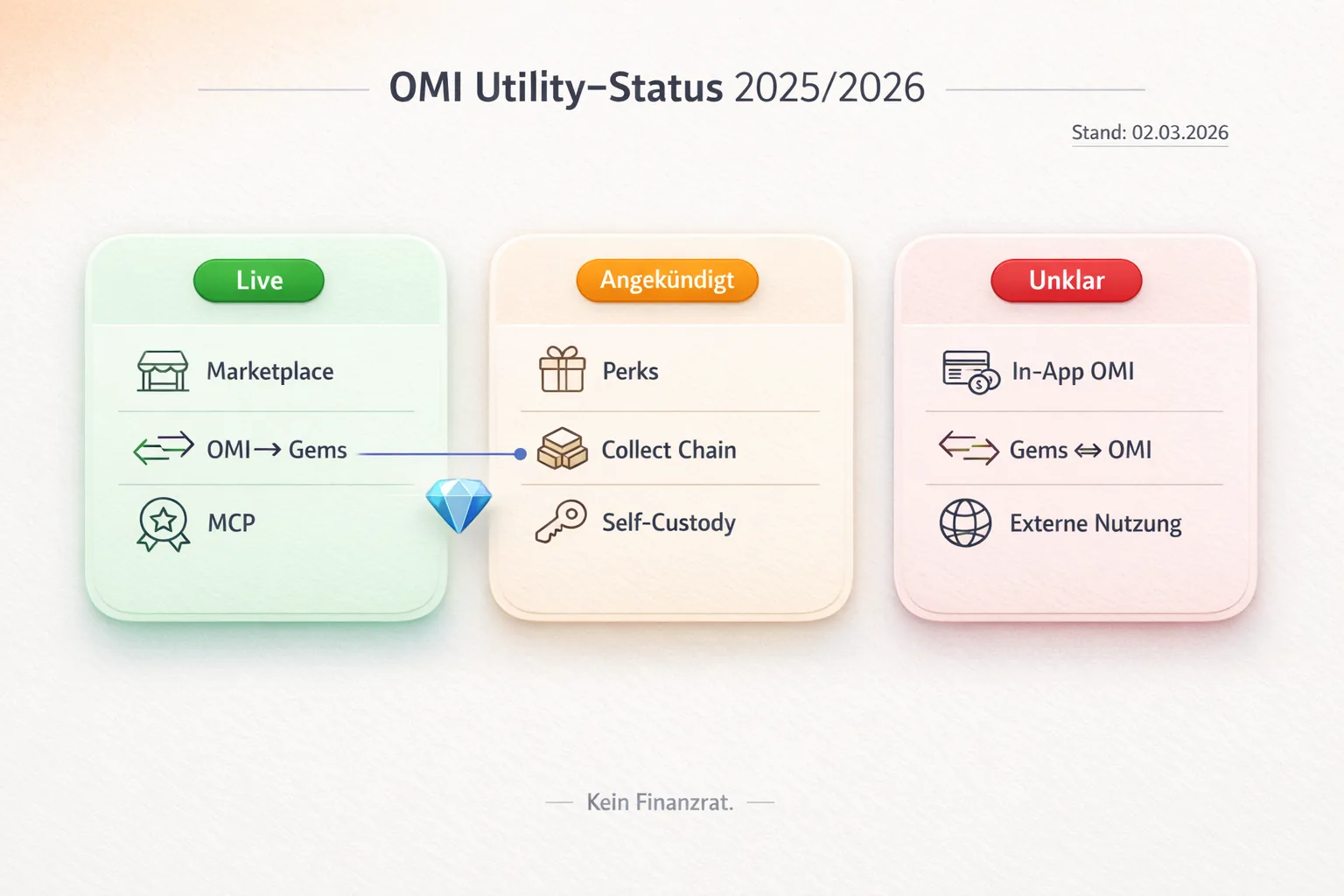
TL;DR (for collectors): The most important OMI utility delivered in 2025/2026 is the practical payment flow through StackR: (a) trading collectibles/comics on StackR with OMI and (b) converting OMI into Gems since November 19, 2025 to make purchases in VeVe. OMI also serves as an MCP/loyalty component through Reward Tiers, with points boosts depending on activity and eligibility. The main areas still pending are how deeply OMI will ultimately be integrated into VeVe itself, what future custody/Collect Chain phases will look like in practice, and which long-term details will depend on licenses and policies.
Why OMI utility matters to collectors
For collectors, utility only matters if it improves your day-to-day experience in one of three areas: access (how you get into Drops or obtain items), UX (how many steps and how much friction are involved), and cost/risk (fees, potential errors, and exposure to scams).
For a long time, OMI was a “token alongside the app.” In 2025/2026, that shifted in two very specific directions: OMI as a trading currency outside the app through StackR, and OMI as a bridge into the app through OMI → Gems.
Status overview: Live vs. announced vs. unclear
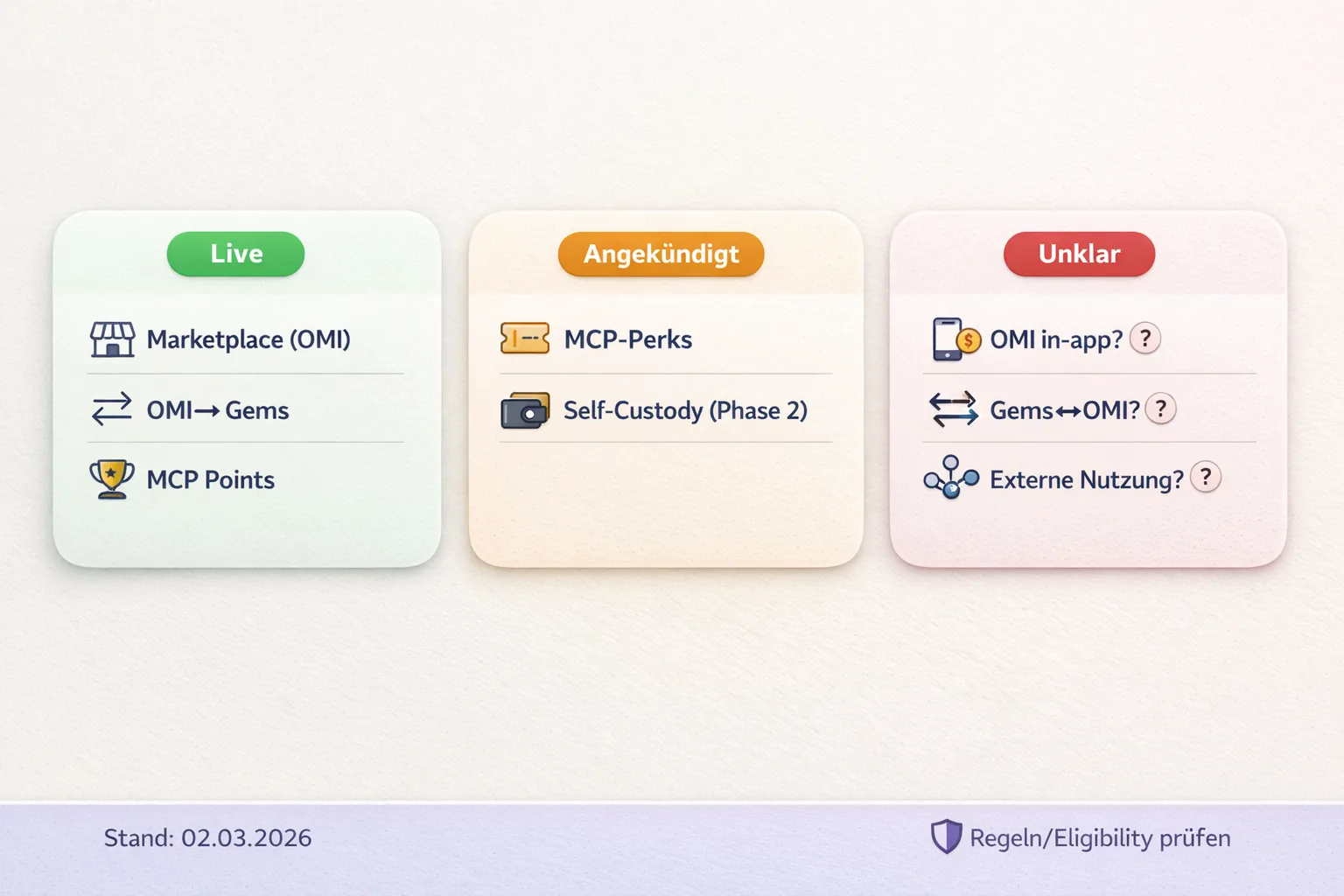
Important: “Live” means available for users. “Announced” means it has been publicly outlined, but is not necessarily available in its final form. “Unclear” means there are either no reliable details or the feature depends heavily on licenses, policies, or technology.
Live: What collectors can actually use
- StackR Marketplace: Trade VeVe assets with OMI. VeVe announced the StackR launch for April 28, 2025, including buying and selling with OMI and account linking.
- OMI → Gems through StackR: The conversion has been live since November 19, 2025 (00:00 PST), allowing collectors to obtain Gems for purchases in VeVe. The core logic is: $1 USD worth of OMI → 1 Gem (the quote/rate is displayed during the flow).
- OMI Reward Tiers in the MCP: OMI held in the designated wallet/L2 context can provide additional MCP points. Relevant details include daily calculations, activity rules such as inactivity, and no retroactive calculations.
Live—with collector caveats you should know
A feature can be live and still come with potential pitfalls. For the OMI→Gems flow, the main considerations are transparency and cost mechanics: You want to know what you receive (Gems) and what happens in the background (burn/Operations Fee), without turning that into price speculation.
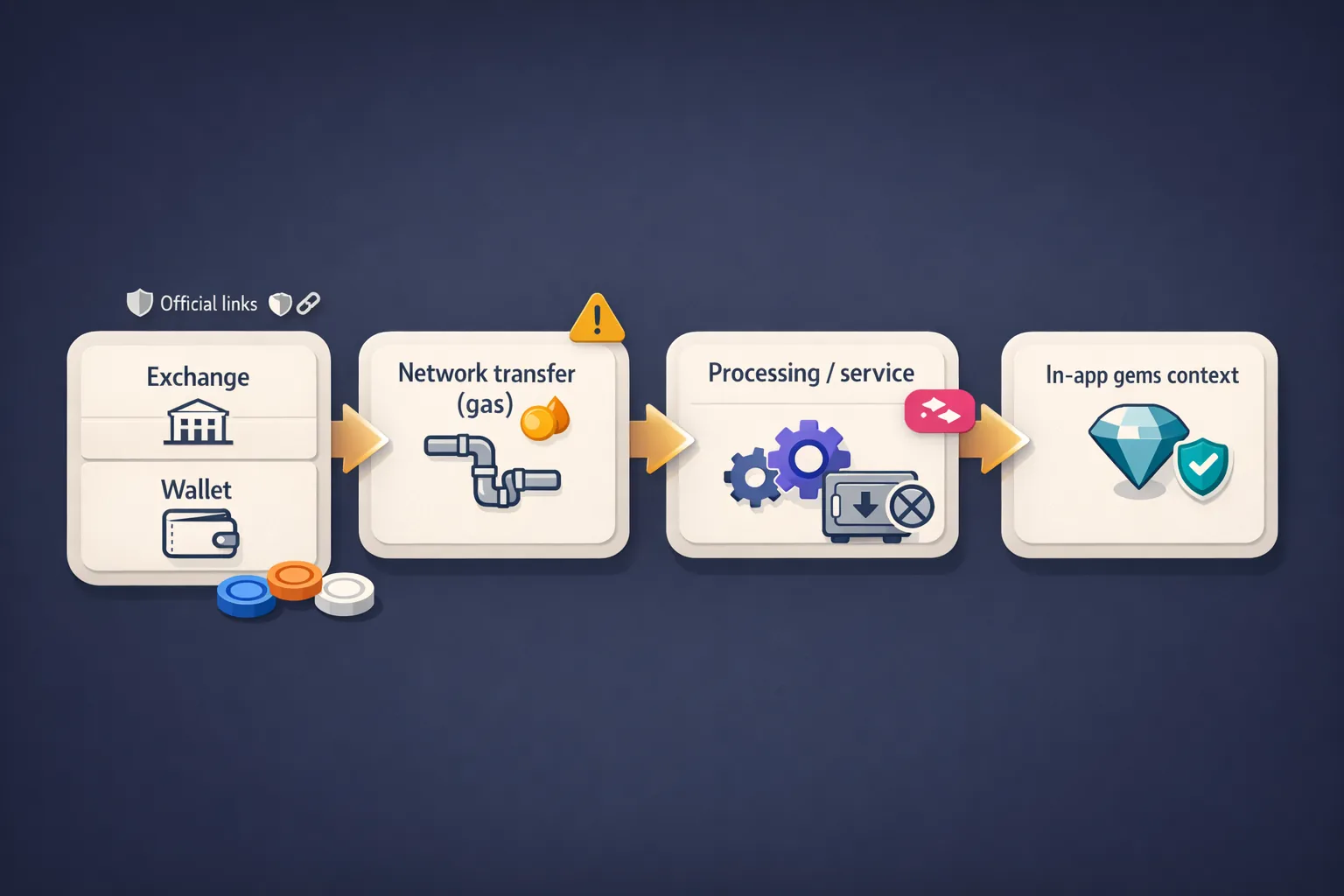
From a collector’s perspective, three points are especially important:
- Gems are a one-way street in the OMI→Gems context: The conversion is designed to bring purchasing power into VeVe, not to exchange Gems “back” into OMI.
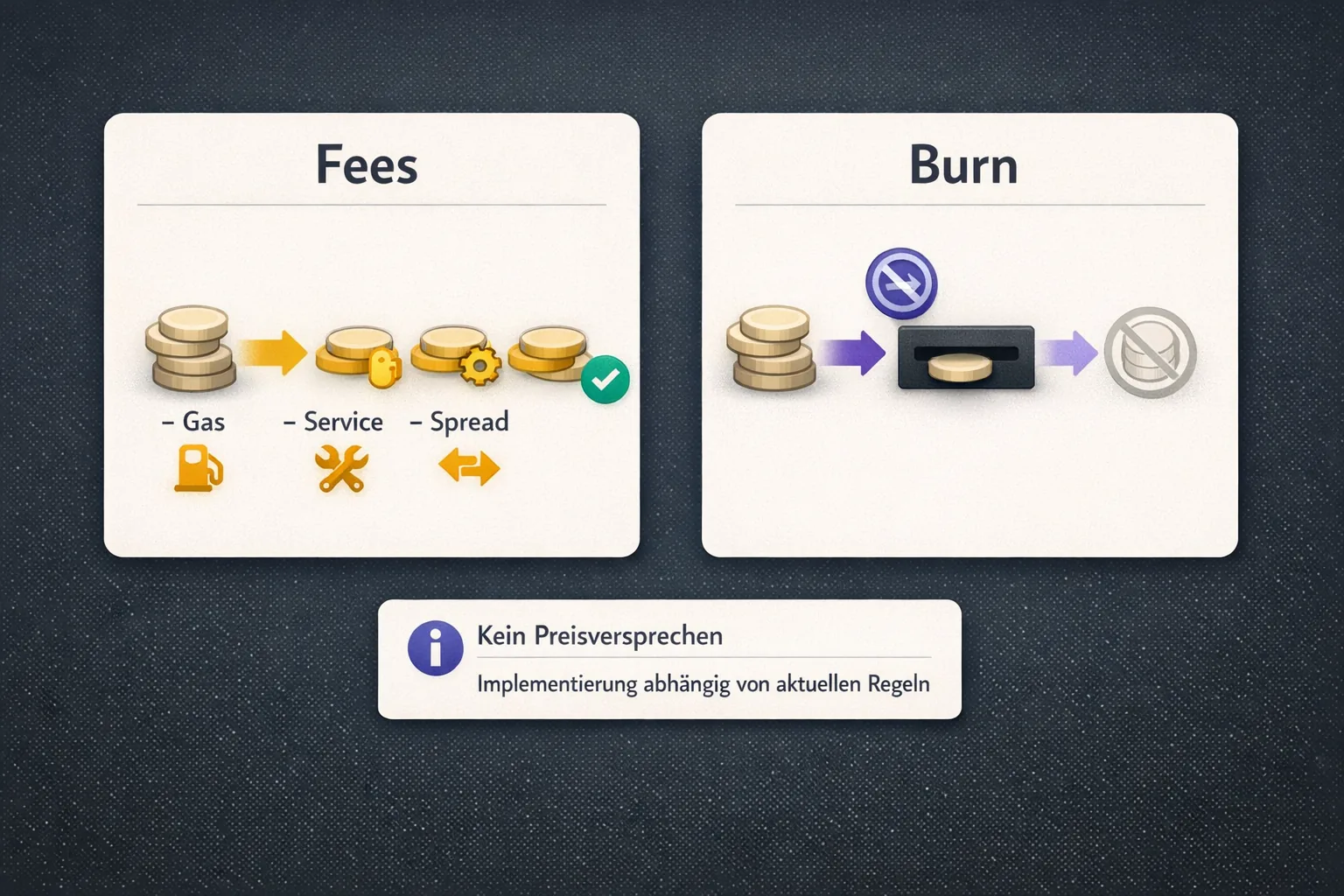
- Burning and fees happen in the background: According to the official communication about the OMI→Gems mechanics, a portion of the OMI used is burned and another portion is used as an Operations Fee. The delivered number of Gems remains unaffected.
- Beta/safeguard characteristics: Rollout restrictions or limits may be used to maintain stability. That is not necessarily a bug; it is often deliberate risk management.
Announced/in development: Planned, but not final
- Further MCP expansion: MCP points are expected to become more “spendable” over time for access, benefits, and perks. Which rewards are available, when they arrive, and how consistently they are offered may remain dynamic depending on the season and current rules.
- Collect Chain/self-custody phases: The migration and transition have been discussed in phases, with Phase 1 focused more on “migration and verifiability” and Phase 2 moving further toward self-custody. The specific freedoms introduced will likely depend on licensing and policy considerations.
- More ecosystem flexibility between VeVe and external tools: Account linking, explorers, and ownership history are building blocks, but they do not automatically mean “everything can be freely used everywhere.”
If you want to understand what the Collect Chain changes could mean from a collector’s perspective, these two articles may help:
- Collect Chain Migration FAQ: Do I Need to Do Anything?
- Collect Chain Phase 2: Self-Custody—Expectations, Risks, and Opportunities
Unclear or dependent: Where collectors should remain cautious
- “Paying with OMI directly in VeVe” without the Gems layer: The clearly communicated route currently runs through OMI→Gems. Whether direct in-app OMI payments will be introduced—or would make sense—has not been firmly established.
- “Gems ↔ OMI” as a two-way exchange: OMI→Gems has been communicated, but a way back is not the core mechanism in the official OMI→Gems description. For collectors, that means not planning around an “undo button.”
- How much self-custody will be allowed in practice: Even if the technology supports it, licenses and rules may determine whether and where assets can be moved.
- Long-term fee structures: Marketplace, service, and network fees may change. What always matters is understanding the final quote and net value before you click.
Quick start: How to check and use OMI utility today without getting burned
Most problems do not arise because the utility is “bad,” but because collectors begin without a clear process. These steps are intentionally collector-first: less hype, more practical guidance.
- Define your goal: Do you want to buy in VeVe, where the Gems mechanics are central, or trade outside VeVe, where StackR and OMI are central?
- Check where your OMI is held: Is your OMI on an exchange, in a wallet, or already in the relevant L2/web wallet environment? Not every storage location counts equally toward MCP/Reward Tiers.
- Use official routes only: For swaps, bridges, and wallets, avoid links from DMs, fake “support” accounts, and wallet connections on suspicious domains.
- Complete account linking properly: If you use StackR, link your VeVe account only through the official settings or buttons. Do not try to recreate the process manually.
- Read the quote before every OMI→Gems purchase—not just the number of Gems. How much OMI is required, which mechanics are displayed (burn/fee), and what will ultimately arrive in VeVe?
- Start small: First test a small amount to confirm that everything arrives correctly, including the Gems, account, and history. Only then should you scale up.
- Document the transaction afterward: Save a screenshot or notes with the date, amount, and quote—not to create drama, but to make accurate comparisons if questions arise.
For a collector-friendly security foundation covering setup, common scam patterns, and sensible safeguards, also read:
New to VeVe? If you sign up through our link at no additional cost to you, the current starter credit guide says you will receive $10 in starter credit.
What does OMI utility really cost? Mechanics only—no price hype
For collectors, costs are not about the token’s price; they are about friction: network fees, service fees, spreads, and tokenomics mechanisms such as burning. The distinction matters: fees are deductions, while burning is a supply mechanism. They have different implications.
If you want a clearer understanding of VeVe costs in general—including Marketplace Fees, potential payout mechanics, and calculations—these two references may help:
Collector checklist: Keep OMI utility working in your favor
- Check the current rules: MCP and Reward Tier rules can change, especially eligibility and what counts in each location.
- Prioritize account security: Use 2FA and strong, unique passwords, and avoid logging in on someone else’s device.
- Use official links only: Do not use bridge, swap, or explorer links from social media comments or DMs.
- Test first, then scale: Small test amounts can prevent costly mistakes.
- Keep records: Note the date, quote, amount, and result. Did the Gems arrive, and did they reach the correct account?
- Accept how Gems work: Gems are an in-app currency. Plan purchases so you do not depend on converting them back.
- Be realistic about the future of custody: Self-custody may arrive, but every freedom is not automatically guaranteed due to licensing and policy considerations.
Key terms explained
- OMI: The utility token in the ECOMI/VeVe ecosystem, used for external applications such as StackR and certain utility flows.
- Gems: VeVe’s in-app currency, used for Drops and Market purchases. Rules and transferability depend on the applicable terms.
- OMI → Gems: A conversion flow through StackR in which you use OMI and receive Gems in VeVe, with the quote displayed before completion.
- Burn: A mechanism that permanently removes tokens from circulation. It is not a “discount”; it is part of the tokenomics.
- MCP (Master Collector Program): VeVe’s loyalty program featuring points, rank/level, and benefits depending on the current phase.
- OMI Reward Tiers: An MCP component through which OMI held in the relevant wallet context may provide additional MCP points, subject to eligibility and other rules.
- Collect Chain/migration: The infrastructure transition and migration involving VeVe assets. It is relevant to ownership history, explorer verification, and potentially self-custody.
For a strategic look at the MCP without unrealistic expectations about rewards:
Common mistakes to avoid
- Mistake: Holding OMI anywhere and expecting it to count automatically toward MCP or rewards. Better approach: Check exactly which wallet/L2 position counts toward eligibility.
- Mistake: Assuming “OMI→Gems is a trade, so I can swap back.” Better approach: Treat OMI→Gems as a purchasing-power flow and do not plan around a return path unless one is explicitly provided.
- Mistake: Using links from DMs such as “bridge here” or “fix it here.” Better approach: Use official routes only and contact support exclusively through official channels.
- Mistake: Using a large amount on your first attempt. Better approach: Make a test purchase before establishing a routine.
- Mistake: Confusing burning with “profit.” Better approach: Burning is a mechanism, not a guaranteed return.
- Mistake: Ignoring gas, service fees, and spreads. Better approach: Think in net terms: What actually arrives, and what does it cost to get there?
- Mistake: Checking your KYC/account status too late when you may want flexibility later. Better approach: Determine in advance which verification requirements apply to your country and setup.
Depending on your situation, these guides may also help:
- VeVe KYC Guide (2026)
- Collect Chain Migration Phase 1: Checklist & Troubleshooting
- Collect Block Explorer Guide
FAQ
Is OMI→Gems integrated into VeVe, or is it an external workaround?
In practice, the flow runs through StackR for account linking, the quote, and the purchase. The Gems are then added to your VeVe account. To collectors, it may feel like an integration; technically, it is a deliberately designed bridge flow.
Do I receive fewer Gems because of the burn/fee?
The communicated mechanics are that the burn and Operations Fee occur in the background, while the number of Gems remains the amount you purchased, with the quote visible beforehand. Even so, always review the final screen before completing a purchase.
Can I spend OMI directly in the VeVe app without using Gems?
The clearly communicated and available route is OMI→Gems. Whether direct OMI payments will ever be introduced is not part of the core live flow and, as of March 2, 2026, remains more of an open expectation than an established fact.
Does holding OMI guarantee MCP benefits?
No. OMI Reward Tiers depend on eligibility, including the wallet/L2 context, and activity. MCP rules may also continue to evolve. Never treat benefits as guaranteed; consider them a bonus if they fit your collecting style.
What is the simplest way for collectors to stay safe?
Use official links only, begin with small tests, document the results, and keep your setup secure. If anyone sends you a seed phrase request or wallet connection link in a DM, block them immediately—do not engage.
Which VeVe Insider page should I use as a hub for future updates?
For an overview of new guides and changes, the blog overview is the quickest place to start.
New to VeVe? If you sign up through our affiliate link at no additional cost to you, the current starter credit guide says you will receive $10 in starter credit.
Sign Up for VeVe With Starter Credit
Note: This is an affiliate link. We may receive a commission at no additional cost to you.
Sources (selection, current at the time of writing):
- ECOMI (Medium): “OMI to Gem: A New Era of Utility Begins” (Nov 18, 2025)
- VeVe Blog: “VeVe x StackR: A New Era of Digital Collecting Launches April 28” (Apr 21, 2025)
- VeVe Blog: “VeVe Master Collector Program — OMI Reward Tiers”