Not every digital collectible is automatically worth collecting. Some items look exciting at the Drop but quickly lose their appeal. Others remain interesting because they have a strong brand, a clear story, a great display experience, or a special role within a collection.
This framework helps you evaluate digital collectibles on VeVe more systematically. It is not about price predictions, returns, or financial advice. Instead, it focuses on one simple question: Why would this collectible make sense in my collection over the long term?
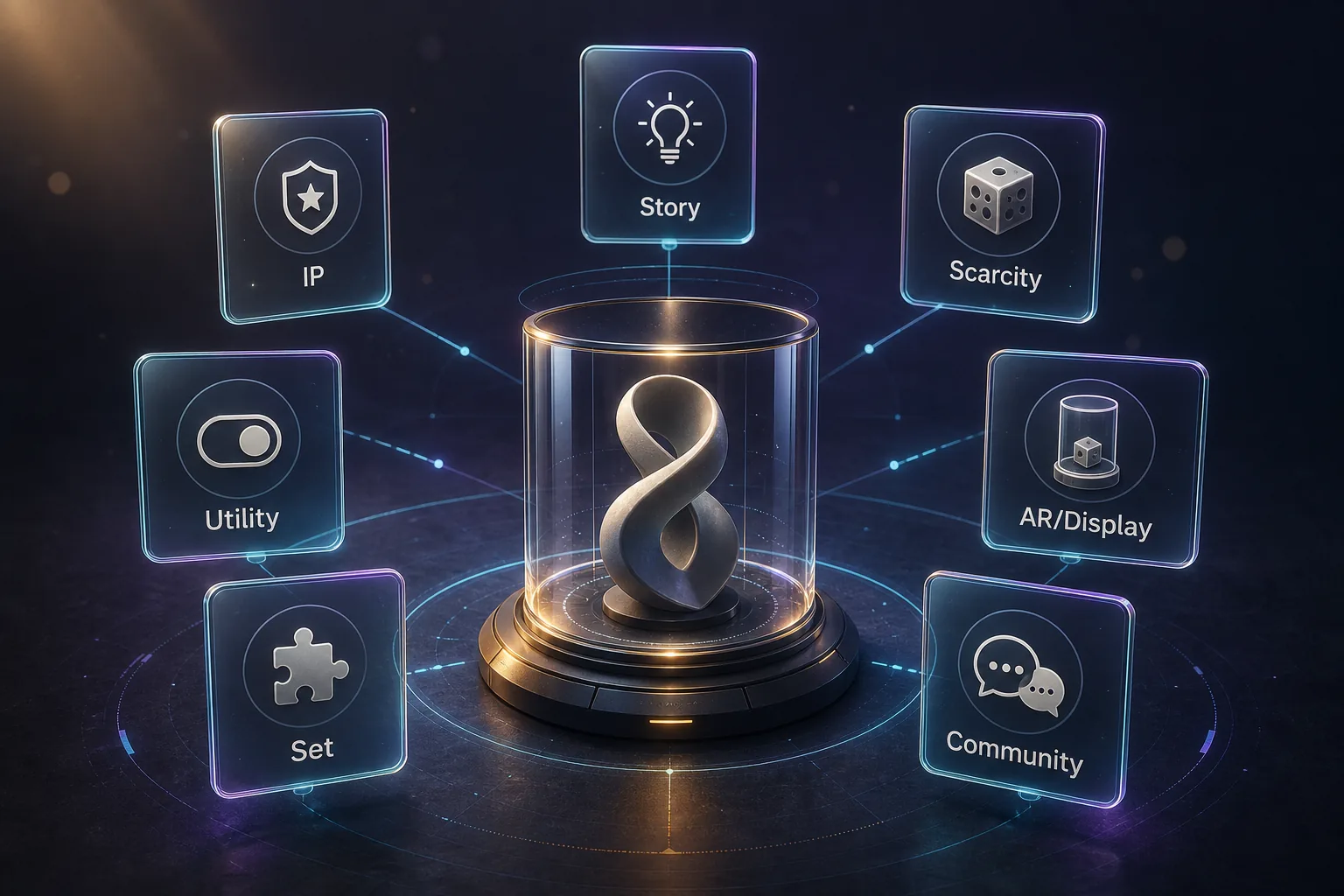
TL;DR: 7 factors that make digital collectibles worth collecting
- IP: How strong, recognizable, and collector-friendly is the brand or character?
- Story: Does the item represent a clear moment, character connection, or cultural context?
- Edition and scarcity: Are the edition type, rarity, and edition count clear?
- Utility: Does it have confirmed features, eligibility, or uses rather than just rumors?
- Display and AR: Does the collectible actually look great in a collection, Showcase, or AR?
- Set synergy: Does it complement a series, IP theme, or personal collecting goal?
- Community signal: Is there genuine collector interest rather than short-term hype?
Why a framework beats gut instinct
Gut instinct is part of collecting. With pop culture, nostalgia, and favorite characters, the emotional impulse often comes first. There is nothing wrong with that—a collection should be personal.
Examples of different collector profiles on VeVe include Marvel Wolverine on VeVe: 50 Years of Logan as a Digital Collectible, Piet Mondrian x Doodles on VeVe: Classic Art Meets the Doodleverse, Running Mon Series 2 on VeVe, Coca-Cola Neon Signs, and Assassin’s Creed Valhalla on VeVe.
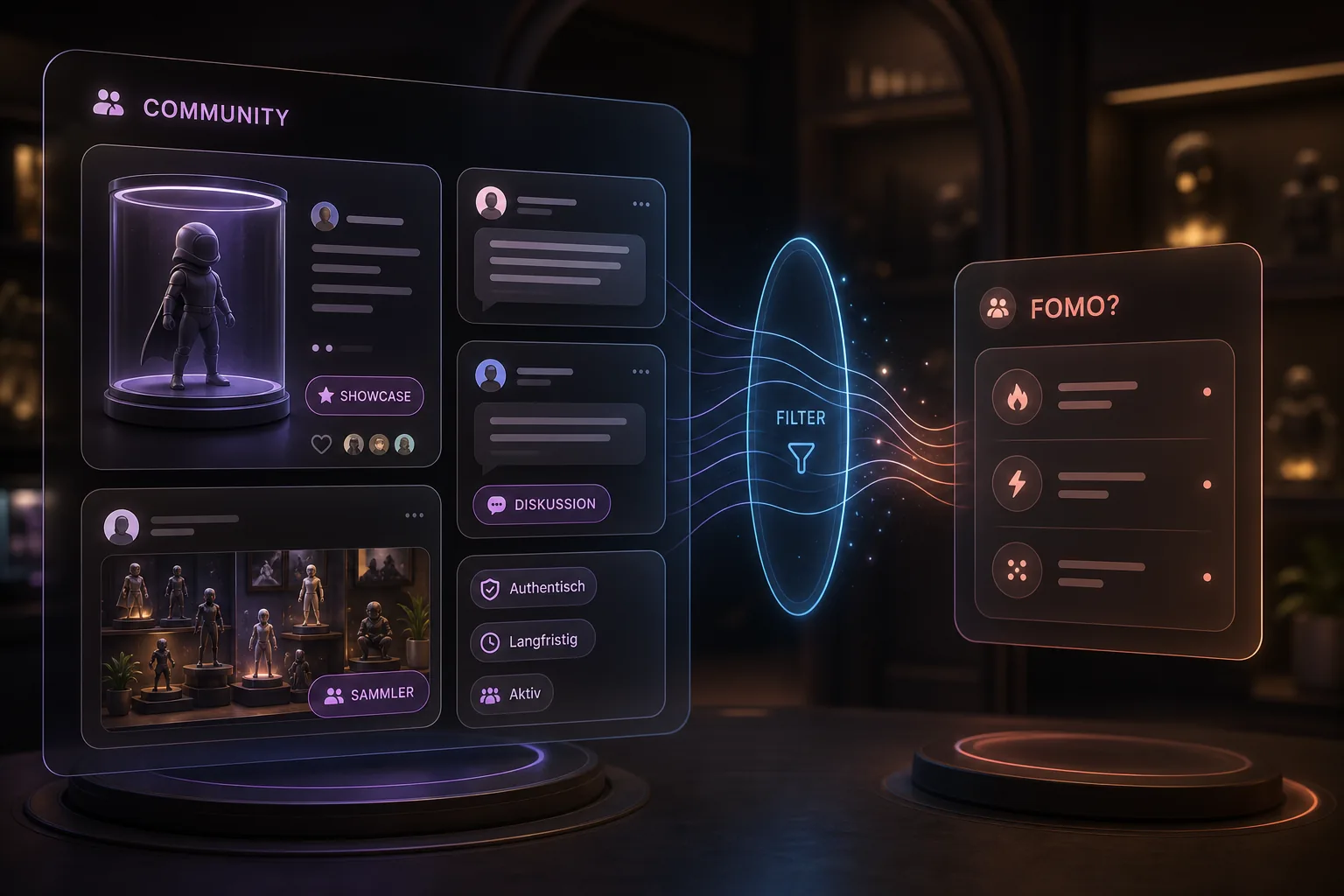
It becomes a problem when every decision is driven by FOMO, Drop hype, or Market activity. At that point, you are no longer buying because a piece fits your collection—you are buying because everyone is talking about it.
A framework slows down that reflex. It does not force you to collect with cold logic; it simply gives your enthusiasm some structure. You can love a collectible and still consider whether its story, edition, display value, and set context work together.
1. IP: How strong is the brand behind the collectible?
IP stands for intellectual property—the brand, character, franchise, or creative universe. On VeVe, examples include Disney, Marvel, Star Wars, Alien, Street Fighter, Coca-Cola, and artist IP. For collectors, the IP is often the first filter.
But a strong IP is not enough on its own. What matters is the role the specific collectible plays within that IP. A Darth Vader item carries a different level of cultural significance than a supporting character, while an iconic vehicle has a different impact than a generic object.
If you collect by IP, consider three things: Do you genuinely know the brand? Is the character or object relevant to its fan community? And does the item fit a collection you would still want to display without short-term hype?
For a deeper look at specific IPs, explore resources such as the Disney Collectibles Guide, the overview of Star Wars Collectibles on VeVe, or the Alien guide to the Xenomorph, Facehugger, and Ovomorph.
2. Story: What moment am I actually collecting?
A collectible’s appeal often comes not only from the object itself, but also from the story behind it. A digital collectible can capture a character, scene, prop, variant, or specific design moment.
In Star Wars, a droid, trooper, vehicle, or diorama may appeal to different collectors. With Marvel, a character from a particular comic era may be more compelling than a generic pose. In Alien, the life-cycle sequence involving the Ovomorph, Facehugger, and Xenomorph is itself part of the story.
One simple question can help: Can I explain in one sentence why this item is interesting? If the only answer is “because it is rare,” the narrative foundation may be missing. But if you can identify the character, design, or moment it captures, it may have greater collector value for your personal collection.
3. How to evaluate edition, rarity, and scarcity
Scarcity matters, but it is often overvalued. A smaller edition count can make a collectible more interesting, but it does not automatically replace IP, story, quality, or demand. Rarity is an amplifier, not a substitute for substance.
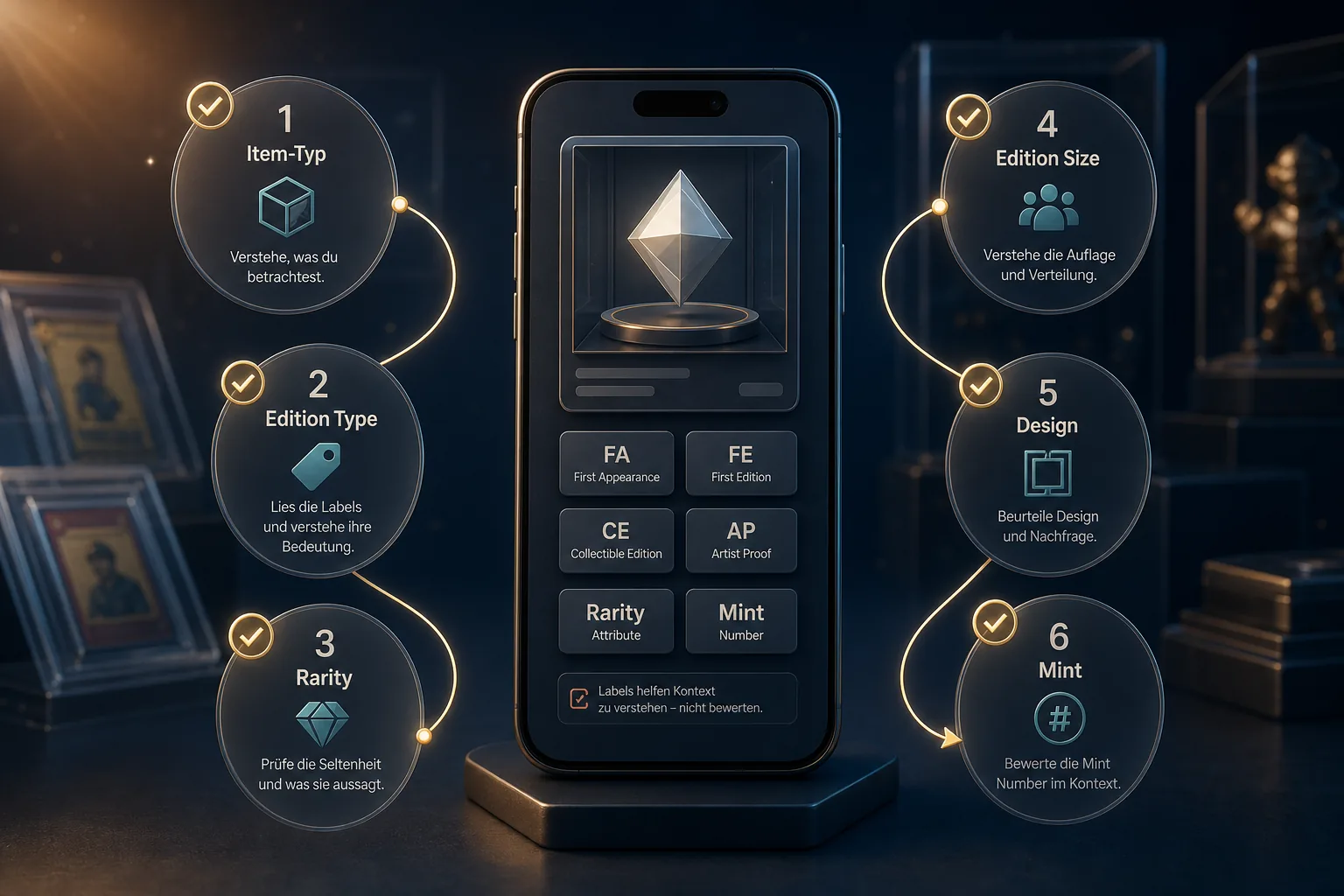
On VeVe, you should distinguish among several layers: rarity level, edition size, edition type, mint number, and special designations. Labels such as FA, FE, CE, AP, or Special Edition may matter to collectors, but they must be understood in the context of the specific item.
If you want a clear breakdown of these terms, the guide to VeVe Edition Types, FA, FE, CE, AP, and Mint Numbers is a useful next step. It explains why a label should not be evaluated in isolation.
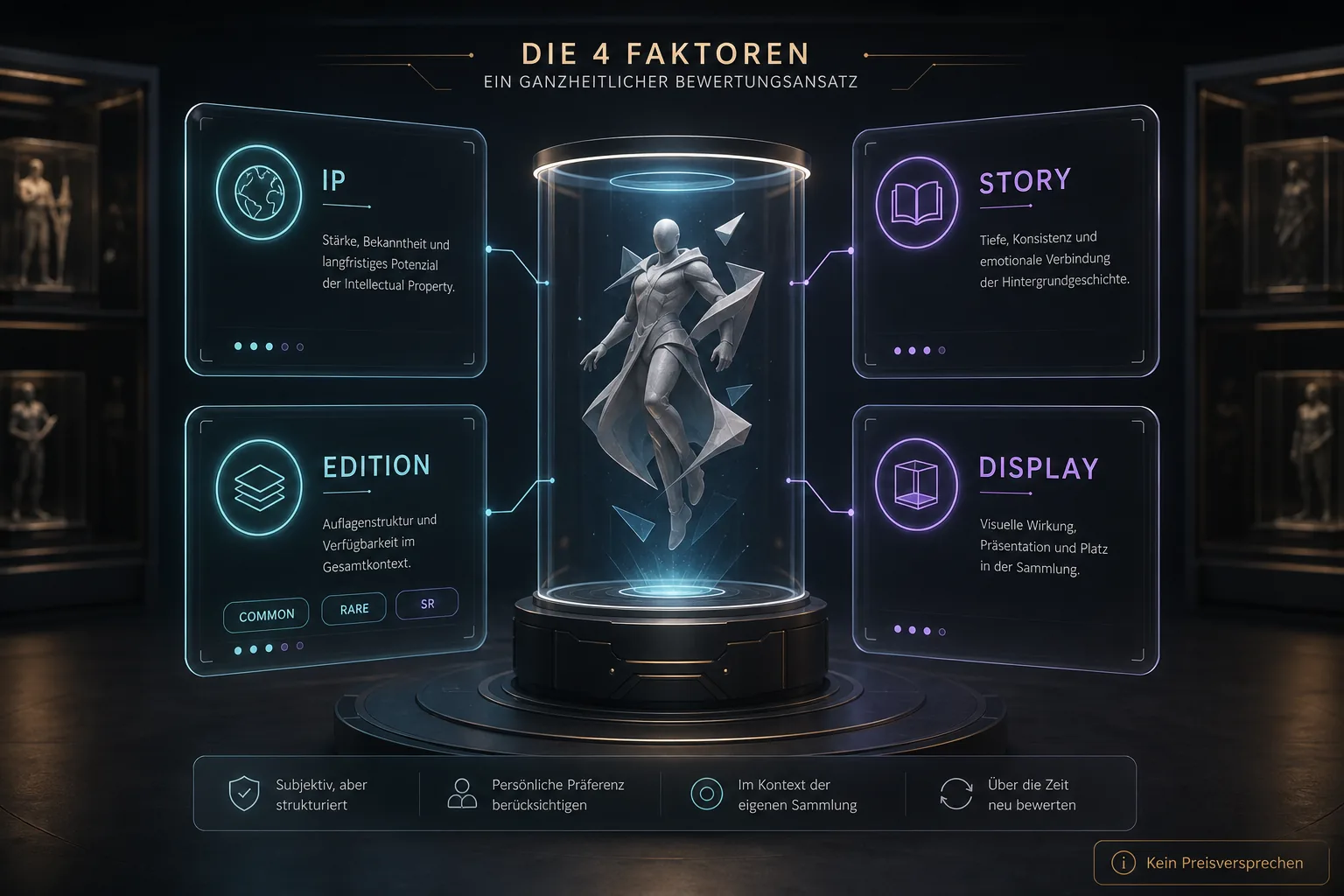
A common mistake is seeing “Secret Rare” or a low mint and ignoring everything else. A better approach is to use a matrix: Start with IP and story, then consider edition and rarity, followed by display value, set fit, and personal relevance.
4. Utility: Features matter, but only when they are specific
In a collecting context, utility does not automatically mean financial benefit. It may involve eligibility, crafting, airdrops, challenges, MCP points, display features, AR use, or other platform-specific mechanics.
The key is distinguishing confirmed functionality from expectations. A collectible may be relevant to certain activities, but every activity has its own requirements. Whether an item counts toward crafting, rewards, or airdrops depends on the specific event and its official rules.
Especially with Store Only requirements, Market eligibility, crafting, or rewards, do not rely solely on screenshots from the community. Read the relevant announcement and check whether the purchase source, holding deadline, account status, or other eligibility requirements matter. The guide to Store Only vs. Market Eligible is a helpful place to start.
5. Display and AR value: Would you want to show it off?
Digital collectibles are more than data points in a list. Many VeVe items come to life when displayed in the Showcase, in AR, or as part of a themed collection. A strong display piece can be appealing even if it is not the rarest item in a series.
Consider its visual impact. Does the model have a clear silhouette? Does the pose work from multiple angles? Does it look good in a screenshot, in AR, or next to other collectibles? Does it work with dioramas or specific scenes?
Collectors who prioritize presentation may find features such as Snap to Location or VeVeVerse concepts particularly interesting. Learn more in the guide to Snap to Location and Dioramas and the overview of the VeVeVerse and Digital Collectibles.
6. Set synergy: Standalone piece or building block?
A collectible can work as a standalone display piece or as part of a broader collecting strategy. Both are valid. Problems arise only when you buy an item without knowing whether you are a standalone-piece collector, set collector, or IP collector.
Set synergy means the item complements something you already collect. That could be a complete series, a group of characters, a franchise theme, a comic focus, or a display concept. A single droid may be more exciting to a Star Wars droid collector than to someone who only collects main characters.
If you are just getting started with VeVe, keep your first purchases intentionally small and collector-focused. The VeVe Sign-Up and Starter Credit Guide walks you through registration; when an eligible promotion is available, you will receive $10 in free starter credit. This is not a purchase recommendation, but a possible starting point for exploring the platform cautiously.
Set synergy also has a practical side. Complete sets may have their own significance in the VeVe ecosystem, including in relation to collection management or programs such as the MCP. If you want to understand points, sets, and collection structure, start with MCP Basics 2026.
7. Community signal: Identify interest and filter out hype
Community signal may be the hardest criterion to evaluate. It does not mean, “Everyone is talking about it, so I have to buy.” It means asking whether there is genuine interest from collectors, fans, Showcase builders, IP collectors, or completionists beyond the day of the Drop.
Healthy signals include recurring discussions, creative Showcase ideas, collection photos, comparison questions, and long-term interest in the IP. Weak signals often consist of price calls, exaggerated claims, or discussions that disappear after a few days.
Use community sentiment as an additional signal, not your main reason. If the IP, story, display value, and personal fit are missing, loud hype will not save a collectible for your collection.
Quick start: How to evaluate a VeVe collectible in 10 minutes
You do not need a complicated spreadsheet. A quick routine is enough to make better decisions. A calm process is especially useful before Drops or Market purchases.
- Identify the item: What character, series, IP, and type of item is it?
- Check the story: What moment or character connection makes it interesting to collectors?
- Read the edition details: Do not confuse rarity, edition size, edition type, and mint number.
- Separate utility from speculation: Consider only confirmed features, not rumors.
- Test its display value: Would you show it in your Showcase or in AR?
- Confirm the set fit: Does it complement your collection, or does it just start another unfinished project?
- Set a budget: Decide the maximum you are willing to spend before buying.
- Take a break: If the purchase is driven only by FOMO, log out and revisit it later.
For purchases and sales on the secondary market, it is also worth considering liquidity, spread, fees, and timing. These factors may not be the romantic side of collecting, but they can help protect you from poor decisions. Learn more in the VeVe Market Guide.
Collector checklist: Questions to ask before buying
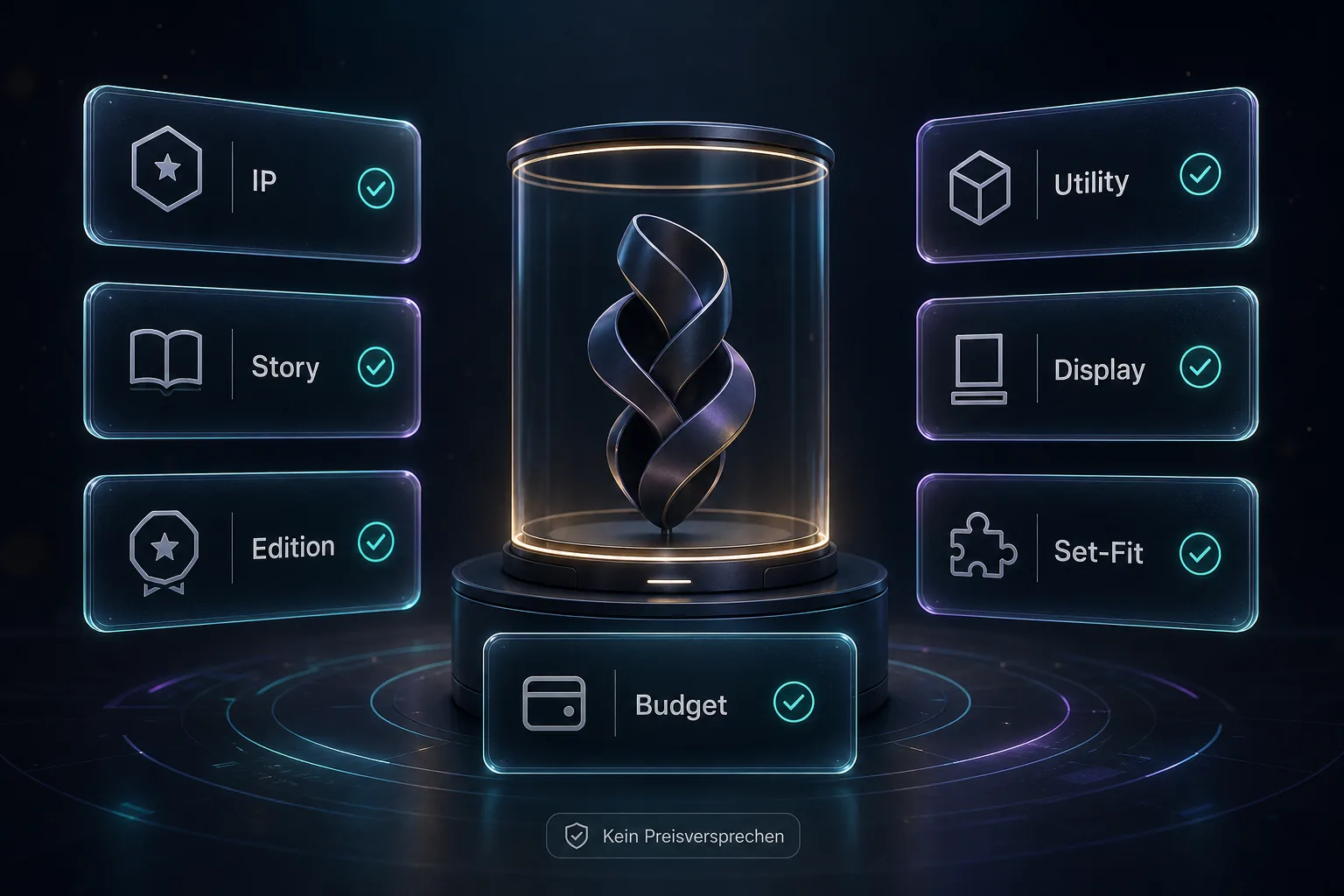
- Would I still keep this collectible if it received less attention tomorrow?
- Can I explain why this specific version interests me?
- Is the rarity genuinely relevant, or is it just the loudest detail in the listing?
- Does the item support an existing collecting goal?
- Have I checked the purchase source and any potential eligibility rules?
- Have I taken enough distance from hype, Discord rumors, and social media pressure?
- Is my budget set at a level where I will not need to justify the purchase?
Common mistakes collectors should avoid
Mistake 1: Confusing rarity with collector appeal
A rare variant can be exciting, but rarity alone does not make a strong collectible. Without IP, story, or display value, scarcity often remains abstract.
Mistake 2: Treating every expectation of utility as fact
If an item might potentially be relevant to something, that does not make it confirmed utility. Read the rules, check eligibility, and separate official statements from community interpretations.
Mistake 3: Starting too many collecting paths at once
Disney, Star Wars, Marvel, comics, dioramas, artist Drops, and one-off nostalgia purchases can quickly become too much. A core focus with room for occasional favorites is usually better.
Mistake 4: Misunderstanding ownership and rights
Owning a digital collectible does not automatically mean you can commercially use the underlying brand. If you are interested in ownership, licensing, and IP rights, see the guide What Are You Buying on VeVe?.
Mistake 5: Evaluating comics and collectibles the same way
Digital comics often follow a different collecting logic than 3D collectibles. Covers, issues, reading value, key-issue status, and variants play a larger role. The comparison VeVe Comics vs. Collectibles helps explain the differences.
Examples: How the framework works on VeVe
Star Wars: Darth Vader, Yoda, BB-8, or the Millennium Falcon may stand out because of the strength of the IP and their cultural recognition. The specific execution comes next: pose, edition, display value, series, and collector focus.
Alien: The story structure is especially strong here. The Ovomorph, Facehugger, Chestburster, and Xenomorph are not just individual creatures; they represent stages in an iconic sci-fi horror sequence. Franchise collectors can intentionally use that progression as a collection concept.
Marvel: With Marvel, much depends on the character, costume era, comic context, and variant structure. A Spider-Man collectible, a Phoenix Five character, and a key-issue comic each appeal to different types of collectors.
Disney and Coca-Cola: Nostalgia, brand identity, display impact, and iconic designs often matter most here. Not every item needs to be action-packed; sometimes a calm, instantly recognizable design has strong collector appeal.
Conclusion: Worth collecting does not automatically mean expensive
A digital collectible worth collecting does not have to be the most expensive, rarest, or most discussed item. It needs to make sense for your collection. The best decisions are made where personal enthusiasm meets careful evaluation.
Use IP, story, edition, utility, display value, set synergy, and community signal as seven lenses. When several align positively, you have a stronger reason than simply “the floor is moving” or “everyone is talking about it.”
And if a collectible excels in only one area, that is not an automatic no. It is simply a reason to take a closer look.
FAQ
Does a low mint automatically make a collectible better?
No. A low mint may interest certain collectors, but it does not replace IP, story, design, or personal relevance. It is an additional factor.
Is a Secret Rare always more collectible than a Common?
Not necessarily. A Secret Rare may be scarcer, but a Common may have the more iconic pose, better presentation, or stronger story. Always compare the specific items.
Should I collect only well-known brands?
Not necessarily. Established IPs provide a useful point of reference, but artist IP, smaller brands, and original designs can be just as appealing for your collection. What matters is knowing your reason for collecting them.
How can I avoid FOMO during Drops?
Set your budget, wish list, and walk-away criteria in advance. If you wait until the countdown to decide, pressure often takes over. New collectors may also find the VeVe Beginner’s Guide 2026 helpful.
Can this framework predict prices?
No. This framework is not financial advice or a price prediction. It helps you evaluate collector appeal, personal fit, and common risks more systematically.
If you want to try VeVe, start with small amounts, use official channels, and collect intentionally rather than impulsively. When you sign up through our affiliate link, you will receive $10 in free starter credit: Sign up for VeVe with $10 in starter credit. Disclosure: VeVeInsider may receive a commission; there is no additional cost to you, and you will receive $10 in free starter credit.